



The Powerless Brokers
Visit The Powerless Brokers' main page page
Contents
Executive Summary
Introduction
Transit Authorities
Case Studies
Reform Proposals
Conclusion
Acknowledgements
Endnotes
EXECUTIVE SUMMARY
In California, building transit is slow and expensive. The transit we need to meet our climate and mobility goals too often remains aspirational.
Even when public transit projects are approved by elected officials or through ballot measures by the voters themselves, transit authorities do not have the power to construct them. Before they can build, they must seek third-party permits from local governments, special districts, state agencies, and public and private utilities.
This report focuses on the many third-party permitting challenges facing transit that are arbitrary, excessive, and avoidable. Within this report are case studies from across California documenting permitting issues that added costs and delays for needed transit projects. They range from the largest project in California – High-Speed Rail – to a small busway on the central coast.
The report tittle is a play on Robert Caro’s legendary biography of Robert Moses, “The Power Broker.” While Moses was the infamous and unstoppable master builder of New York, many transit agencies in California struggle to build, and find themselves powerless.
In recent decades, many reforms were adopted to prevent the abuses of Moses-style planning. Those same reforms have created their own challenges, adding an array of new hurdles and veto points, limiting state capacity to get projects done quickly and cost-effectively. For California to secure abundant public transit, it must empower transit authorities to build. This report contains a variety of recommendations, including to:
- Reassign permitting responsibility from third-parties to transit authorities themselves,
- Incentivize local governments to prioritize transit, adopt transparent standards, and streamline permitting,
- Extend CEQA exemptions for sustainable transportation, and
- Encourage more transit leadership from Caltrans.
INTRODUCTION
In the United States, building transit is slow and expensive. Domestic transit projects can cost many times more to build than in peer developed countries. [1] Transit projects in California face similar challenges, with recent rail projects roughly two to three times more expensive than international averages. [2] Delays can be measured not in months or weeks, but decades.
The sooner that projects are built, the sooner we can realize the social, economic, and environmental benefits of those investments. When projects cost too much and take too long, we get fewer of them, and public support for public transit wanes.
A growing body of research has documented the drivers of costs and delays for public transit capital projects in the United States. The reasons are many, including political interference, a lack of upfront funding for project development, inadequate cost controls, decisions that are outsourced to the private sector, legal systems that privilege the individual over the collective, and regulatory challenges. This report focuses on one particular type of regulatory challenge, the pre-construction permitting process. Pre-construction permitting describes the process of gaining approvals (permits) from third-parties to construct capital projects, usually on rights-of-way that the transit agency does not own.
Many of the challenges facing transit authorities are outside the scope of this report but bear mentioning. Transit stations in the United States are substantially larger than in peer countries, which is a leading driver of hard costs. [3] Environmental review, especially under California’s CEQA process, can create costs and substantial risks of litigation. [4] While station sizes may be budget busters, and Governor Jerry Brown considered CEQA reform “the Lord’s work.” [5]neither are the focus of this report.
Project sponsors that beat the odds and secure environmental approval and enough funding to build the project are not in the clear. They can still face a gauntlet of additional permitting requirements from third-parties, including local governments, special districts, and public and private utilities, especially when projects cross multiple jurisdictions.
This report documents some of the challenges that transit authorities encounter to obtain third-party permits before construction can begin. This report relies on case studies of transit projects in California to demonstrate these challenges and recommends reforms that can remove unnecessary barriers to transit construction.
Powerless Brokers and State Capacity
Robert Caro’s legendary book “The Power Broker,” details the career of Robert Moses, New York’s unelected master builder. [6] His efforts saw the construction of many great infrastructure projects, still useful today. Though notably, he resisted building public transit.
Moses also earned infamy for destroying neighborhoods and bulldozing through community opposition. His decisions had large and negative impacts to the working-class and to communities of color. Moses was rightly criticized in “The Power Broker,” and beyond, for operating as an unaccountable power unto himself. Top-down Moses-style planning was replicated across the United States, through the interstate highway system, federal urban renewal programs, state departments of transportation, and more. Highways in particular have displaced communities in California, like the East Los Angeles Interchange that was built through Boyle Heights in Los Angeles, [7] and the 5 Freeway that bifurcated the Barrio Logan neighborhood in San Diego. [8] Those impacts have been disproportionally borne by communities of color. [9]
The reaction to Moses-style planning included a decades-long push to decentralize power. Many advocates shifted their approach from empowering government to restricting government from abusing its power. [10] Laws and practices have been revised to prevent government agencies from operating like Moses. Public input is more routinely required before projects are selected and approved. Citizens are allowed to bring lawsuits to stop projects that do not account for environmental or other concerns. Public infrastructure projects often require multiple levels of review by different government agencies, with many requirements to ensure broad consensus before any project can move forward. [11]
The modern policy landscape to require large amounts of process before government can act has created public benefits that should be celebrated. Our air and water are cleaner. Many communities no longer must experience changes to their environments without a voice in the process.
Despite the benefits of many modern policies, the move toward proceduralism and decentralization of authority has begun to be reconsidered. [12] Many have argued that the policies adopted to counter the abuses of the middle of the twentieth century have themselves led to the new problems we face today.
“Abundance” by Ezra Klein and Derek Thompson, [13] and the broader abundance movement, [14] argue that our own rules have diminished state capacity to create things we need, such as clean energy, housing, and transit. Efforts to diminish state capacity have come from both the right and the left of the political spectrum. [15]
Transit is one of many things we need, for which it is extremely difficult to build. A central challenge is that, with few exceptions, transit agencies do not own the rights-of-way (roads, highways, or railroads) that they need to use to provide service. Another central challenge is that public transit corridors often traverse multiple jurisdictions. This is a problem of state capacity, government’s ability to accomplish its goals. [16]
The policies meant to restrict highways from separating communities, are now preventing the construction of public transit, meant to stitch communities together. The public expects transit authorities to build transit, but we have a system of laws and processes that prevent the public sector from achieving the goals it sets out for itself. While Robert Moses was the titular “Power Broker,” modern transit authorities often find themselves powerless.
The public is growing frustrated that the rules governing infrastructure prevent us from building. In “Why Nothing Works,” Marc Dunkelman describes supporters of public transit who cautiously whispered to him that “This is why we need another Robert Moses.” [17]
Transit Does Not Need Another Robert Moses
The abuses of Moses-style planning were real, and policymakers were correct to restrain government actors from repeating them. Requiring more transparency and accountability were important and necessary corrections.
In “Why Nothing Works,” Dunkelman argues that many policy shifts are centered around two competing impulses, the Jeffersonian impulse to disaggregate power, and the Hamiltonian impulse to centralize it. The reforms inspired in part by Moses and “The Power Broker” are all in the Jeffersonian direction. New laws limited the authority of individual government actors to do things, with more complicated processes and more veto points to slow or stop projects.[18]
We have seen a gradual accretion into a system where transit authorities are tasked with building, but lack the authority to do so. That power is instead distributed across many agencies, and many local jurisdictions. Transit projects chosen by elected officials, or voted on by the public, are not able to be built. No one is in charge, so no one is to blame when needed projects do not happen. The result is not more accountability, but less.
The solution is not to go full Hamilton in the other direction. We should not unlearn the lessons of “The Power Broker” and Moses-style planning. We do not need to resurrect the abuses of the past in order to secure the transit of the future.
Nevertheless, some shift in the Hamiltonian direction is necessary to restore state capacity. The path forward is to allocate more responsibility to democratically accountable public agencies that are tasked with building transit. A move in this direction would not restore power to unelected master builders. Instead, modern transit authorities are governed by elected officials and their appointees. California transit authorities are accountable and subject to public scrutiny, and they should be given the tools necessary to build the projects we need.
Value of Transit
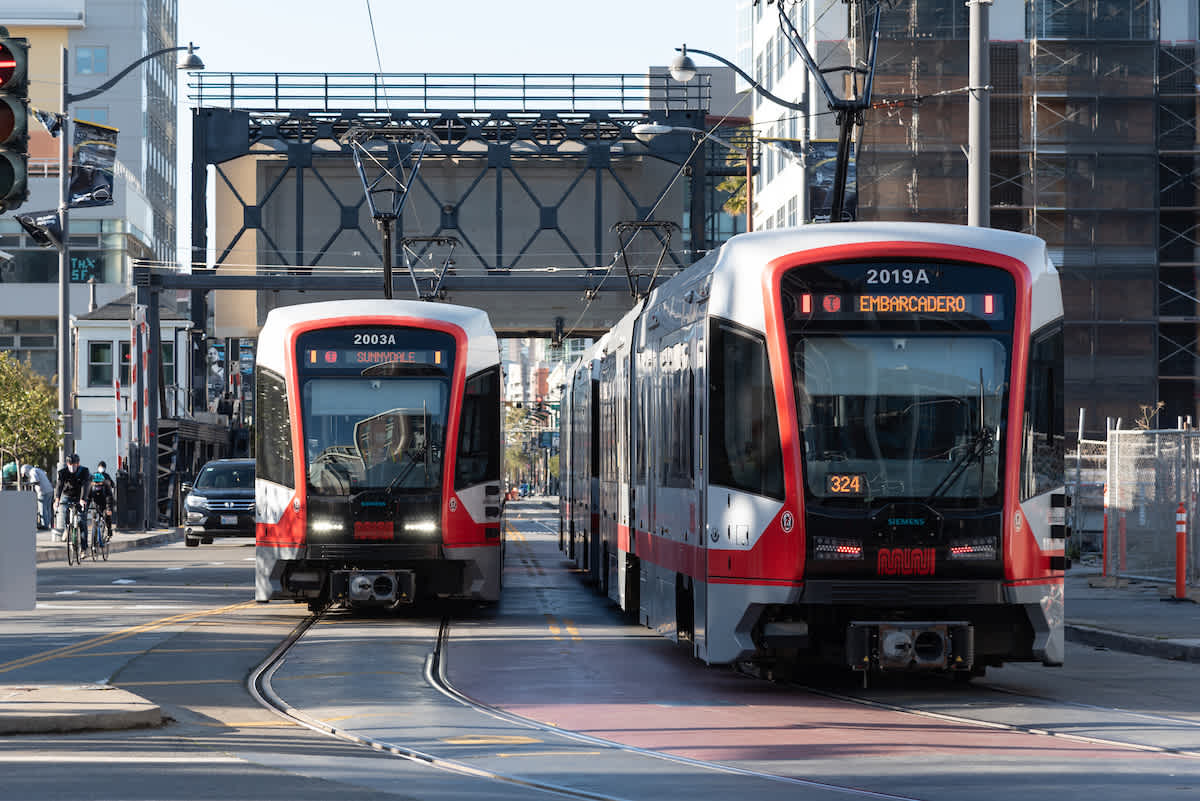
Transit provides a diverse array of public value. High capacity vehicles carry far more passengers per lane than private cars, meaning the same right-of-way efficiently delivers many more trips while using far less energy and space. Riders that choose transit free up scarce road capacity for deliveries, emergency vehicles, and those who truly need to drive, making the entire system work better for everyone.
Transit provides direct value to individuals. It is especially important for those who cannot rely on an automobile. Transit is disproportionately used by lower income people and communities of color. [19] Federal funding for transit capital projects generally requires elevated pay and benefits for construction workers. [20] Operators like bus drivers and maintenance workers are often unionized. During the COVID-19 pandemic, 36 percent of transit riders were classified as essential workers nationwide. [21] The statistics were similar in California jurisdictions. [22]
There are substantial environmental benefits to transit. Replacing just one 10-mile solo-driver commute with transit saves the typical household 4,600 pounds of CO₂ per year, an 8 percent cut in that household’s carbon footprint. [23] Transit is a major part of climate action plans for the State of California[24] and local jurisdictions. [25]
Transit that is slow or expensive delivers far fewer of these benefits, frustrating everyone. Worse yet, when transit is promised but delayed, or never materializes, it undermines both our transportation networks and public trust. One over budget and behind schedule transit project erodes support for the next proposed project because people simply stop believing that it will get done as promised.
Transit Authorities
Transit Authorities Defined
This report uses the term “transit authority” to refer broadly to the many different types of public agencies that are tasked with planning, approving, and ultimately building public transit projects.
Transit governance is very complex, especially in California. Transit authorities include a number of different types of entities with different responsibilities in different regions. Transit authorities are famously diverse in their structure and operations. For example, in California, an entity that serves as the federally-designated Municipal Planning Organization (MPO) is not always the same entity – or does not have the same geographic boundaries – as the relevant state-designated Regional Transportation Planning Agency. [26] In some areas, the county takes the lead, and in others, a separate entity manages some parts of transit functions across multiple counties.
The diversity of structure and responsibility among transit authorities is not unique to California. It is a national phenomenon. As former Federal Transit Administration Administrator Peter Rogoff is fond of saying, “If you’ve seen one transit agency, you’ve seen one transit agency.” [27]
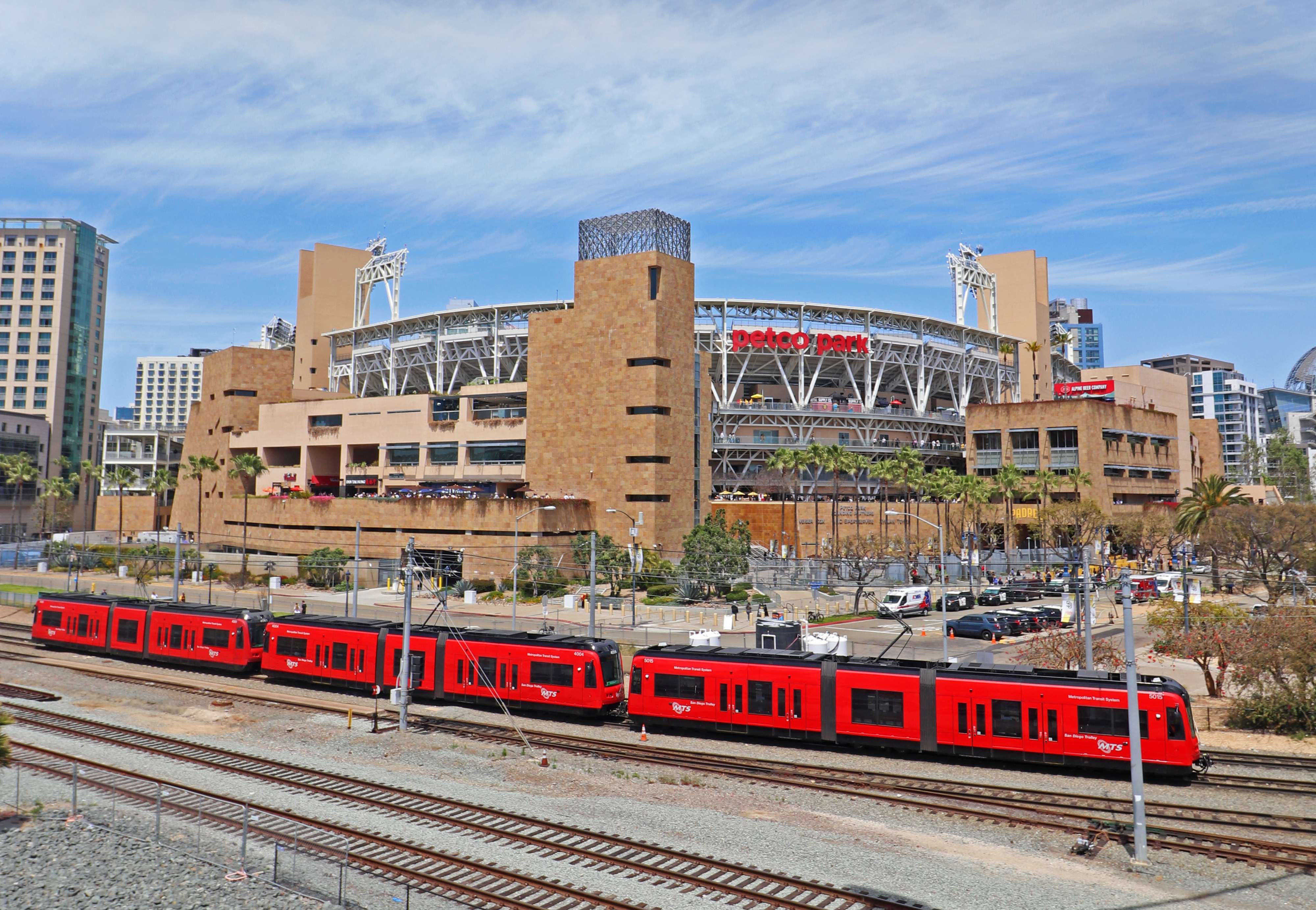
For this report, a transit authority is an entity that serves as the project sponsor that designs and builds new transit infrastructure. There are many variations within this broad definition. Some entities, like the Los Angeles County Metropolitan Transportation Authority (LA Metro), are responsible for planning, building, funding, and ultimately operating a transit system. It also includes entities like the San Diego Association of Governments (SANDAG), which has responsibilities for planning, funding, and building transit, but which leaves transit operations to other entities, specifically the San Diego Metropolitan Transit System (MTS) and the North County Transit District. The term also can refer to transit operators like San Diego’s MTS. Generally, MTS does not take the lead to build new large-scale transit projects, but the agency does have its own capital program[28] that builds certain transit facilities and even bus-only lanes on city streets. [29]
Governance of California Transit Authorities
Transit authorities start their lives when the legislature, a group of local governments, or the voters themselves create them. In California, a state statute usually defines and creates a new transit authority. Sometimes a group of local governments will agree to create a transit authority, delegating some of their own responsibilities and obligations through a joint powers authority. Other times, the voters will create the entity directly by a public vote. The below provides an example of each method of creation:
State Statute: The California High Speed Rail Authority was established by the legislature via Senate Bill 1420 in 1996. [30]
Local Agreement: Monterey Salinas Transit (MST) was created by an agreement among Monterey County cities in 1981. [31] In 2009, the Legislature passed Assembly Bill 644, making MST a creature of statute. [32]
Public Vote: The Valley Transportation Authority was created by a public vote in Santa Clara County in 1972. [33]
Once formed, transit authority staff answer to boards of directors that are directly elected to the board, are elected officials that represent a jurisdiction served by the transit agency, or are appointed by elected officials. Their meetings must comply with open meeting laws, and major actions require recorded votes. The below provides an example of each organizational structure:
Directly Elected: Alameda-Contra Costa Transit District’s seven directors are directly elected, one per geographic ward and two at-large under the district’s enabling act. [34]
Local Elected Officials Representing Jurisdictions: Los Angeles Metro’s 14-member board includes five of the county supervisors, the Mayor of Los Angeles, three mayoral appointees (including one city council member), four representatives elected by other cities within the county, and a nonvoting director appointed by the Governor of California.[35]
Appointed by Elected Officials: The California High-Speed Rail Authority board consists of nine voting members. Five are appointed by the Governor, two by the Senate Committee on Rules, and two by the Speaker of the Assembly. Each director serves a four year term. [36]
How Transit Authorities Approve Their Projects
Transit authorities must undergo a rigorous and multi-step process to determine which projects to build and how to build them.
Every transit project is unique, and there are different processes undertaken for different sorts of projects. Still, there are some common processes that most agencies follow in California. They are roughly similar to the processes in other states.
Transit authorities have a list of potential projects that they can pursue. Usually these projects are selected by the authority’s board of directors. Increasingly, the voters themselves choose which transit projects to build through the ballot box. Many transportation ballot measures pair new local taxes with mandatory project lists, [37] committing transit authorities to projects that the voters have directly blessed. There is interplay here with the obligations of MPOs, which are required by federal rules to prepare fiscally constrained lists of all surface transportation projects. [38] These MPOs are often responsible for setting priorities for future transit projects, and may even be tasked with planning and building the transit projects themselves. [39]
When planning an individual project, a transit authority usually conducts a variety of community engagement activities to collect input. Presentations are made to community and business groups, and input is solicited from key stakeholders. Studies are commissioned to determine the route for a new transit project. Specific details about a project can be determined by in-house planners and engineers, or some of the work may be outsourced to technical professionals. Establishing a project scope at this stage may often include substantial design work, commissioning geotechnical surveys, proceeding with advanced engineering, and procurement for specialized equipment. Sometimes those activities occur later in a project’s lifecycle, after a project is approved and a construction firm is selected.
Before a project can be approved by a transit authority’s board of directors, it often must undergo an environmental review process. Environmental review generally requires a lead agency to publish a document analyzing and disclosing any potential environmental impacts. Lead agencies must mitigate those impacts if possible and seek input from the public. There are substantial opportunities for individuals and organizations to litigate the adequacy of environmental documents, which can delay the approval and construction of a transit project. Once environmental issues are resolved, a project can be approved by a transit authority board of directors in an open and public meeting.
Among projects funded by the Federal Transit Administration, 95 percent are considered categorically exempt from environmental review under the National Environmental Policy Act. [40] California has its own similar policy called the California Environmental Quality Act (CEQA), which often applies to more projects. Recent legislation has exempted a variety of sustainable transit projects from CEQA. [41]
After a project is approved, a transit authority will develop a funding plan that describes how it will pay for the project. California transit authorities receive funds from a variety of state and federal sources. [42] Many transit authorities receive formula funds on an annual basis. Some agencies also have resources available through a voter-approved local tax measure. Local funds may be insufficient, and transit authorities often secure competitive grants from the state or federal government to fund transit. While transit authorities are often in conversation with funders far in advance of any grant applications, projects are typically approved by the transit authority’s board of directors prior to securing all of the project funding required to begin construction.
Once funding is secured, a transit authority can proceed to construction. Most often this is done through a request for proposals, and bids are solicited from private construction firms. A budget for the project is determined internally, and the contract is usually awarded to the lowest cost responsible bidder.
The process by which transit authorities approve their projects is long and difficult. Every step is open to the public. Decisions are usually made by locally elected officials. The public is consulted. Individuals and advocacy groups have opportunities to review environmental impacts, and to litigate to enforce agency obligations. Yet that is not the end of the story. Once a project is approved by a transit authority, the next step is permitting.
Powerlessness of Transit Authorities to Permit their Projects
Transit authorities may not unilaterally build the projects they approve. They must seek permits and agreements to build from third-parties, including local governments, special districts, and public and private utilities. Transit authorities can plan and fund projects as they see fit, but third-parties decide whether those projects receive permission to build. While transit authorities have been tasked with building transit, to a significant degree they are powerless to do so.
Third-parties in the area where the project is to be built have regulatory power delegated by the state to require approvals and permits for a broad array of activities. This means transit authorities must secure approvals for many aspects of a project, sometimes amounting to hundreds of permits including for street closures, noise impacts, tree removal, trench dewatering licenses, utility sign offs, and lane closure calendars.
This process gets more difficult as a transit line gets bigger, or if it involves tunneling or any impacts below the surface. For example, LA Metro’s Purple Line Extension traverses the cities of Los Angeles and Beverly Hills, [43] and passes beneath the I-405 freeway within the Caltrans right-of-way. [44] The different parts of the project are subject to three different jurisdictions and their standards for construction. California High Speed Rail Phase One goes through dozens of cities, counties, irrigation districts, and other California state agency lands. [45] Each entity has its own fee schedule, review cycle, and political incentives.
Common Third-Party Permitting Challenges
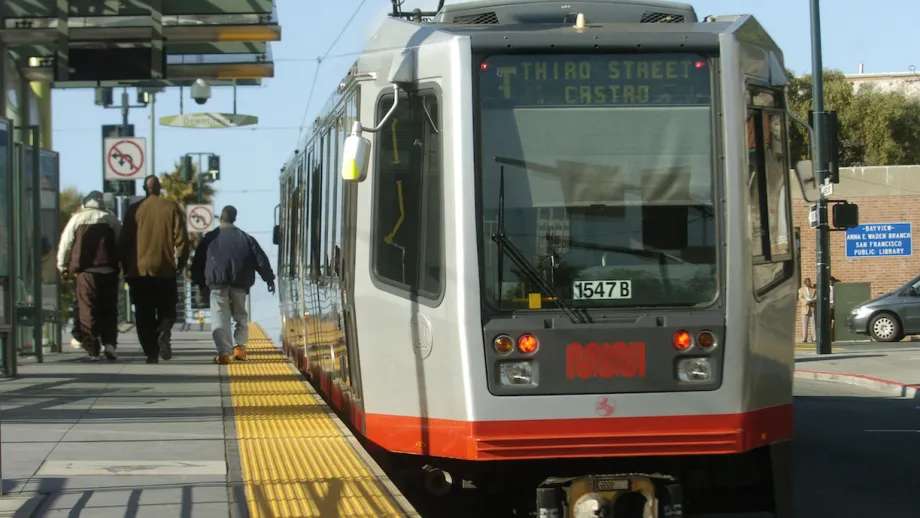
This report focuses on the challenges that transit authorities face after their board has approved a project and seeks to move on to construction. It focuses on the third-party agreements and permits that must be obtained from other local or state government agencies, or from public or private utilities, before transit authorities and their construction contractors may begin to build.[46] This is referred to as the “pre-construction permitting process.”
Some of the decisions to grant permits are made by other elected bodies. City councils or irrigation districts may require votes of their elected members to grant permission to build. Sometimes, permits are issued by unelected staff within public works or utilities departments. This means that both elected officials and non-elected staff have the ability to exercise power to delay, change, or stop any part of a project that requires a permit.
Below is a description of some common issues that arise in the pre-construction permitting process for public transit.
Ordinary unforeseen difficulties.
This report is not focused on the permits that are required to ensure safe construction and operations. Instead, it is focused on addressing the third-party permitting challenges that are arbitrary, excessive, or avoidable. Unforeseen third-party permitting issues are common, and not necessarily pernicious. Construction contracts routinely provide contingency budgets, with an understanding that planners cannot predict every difficulty or cost that a project will face throughout its construction. Moving utilities is the classic example, because underground electrical lines and sewer pipes are not always where the maps say they should be. Archeological issues are also a relatively common and blameless surprise.
While some reforms might help minimize the costs associated with these ordinary difficulties, there is a degree to which they are inevitable and must be accommodated. This report focuses on the third-party permitting challenges that are avoidable, and could be solved by providing more authority to the entities tasked with building transit. Further, many ordinary and appropriate changes to a project scope can be used as leverage by third-party permitting entities, to delay or extract from transit projects, including through the means described below.
Third-parties have little incentive to comply.
When transit authorities seek permits from third-parties, those entities often have very little incentive to comply. A recalcitrant city or special district can delay approvals or seek exactions. The Inspector General for California High-Speed Rail did not mince words, noting that the transit authority “lacks leverage to help ensure that third-parties do not themselves needlessly delay negotiations.” [47]
The power of delay.
The lack of leverage by transit authorities provides third-party permitting entities with the opportunity to delay. While a transit authority is tasked with building a project, many third-parties are agnostic or even antagonistic to those goals. Delay can be relatively innocent, insofar as the third-party may have other priorities for their resources or attention. Or delay can be in bad faith, with the goal to pressure a transit authority to make some other concession about the project. As the Inspector General for California High-Speed Rail described it, because third-parties are “not under any particular time pressure, there is a resulting imbalance in these negotiations.” [48]
Third-parties may ask for out-of-scope exactions.
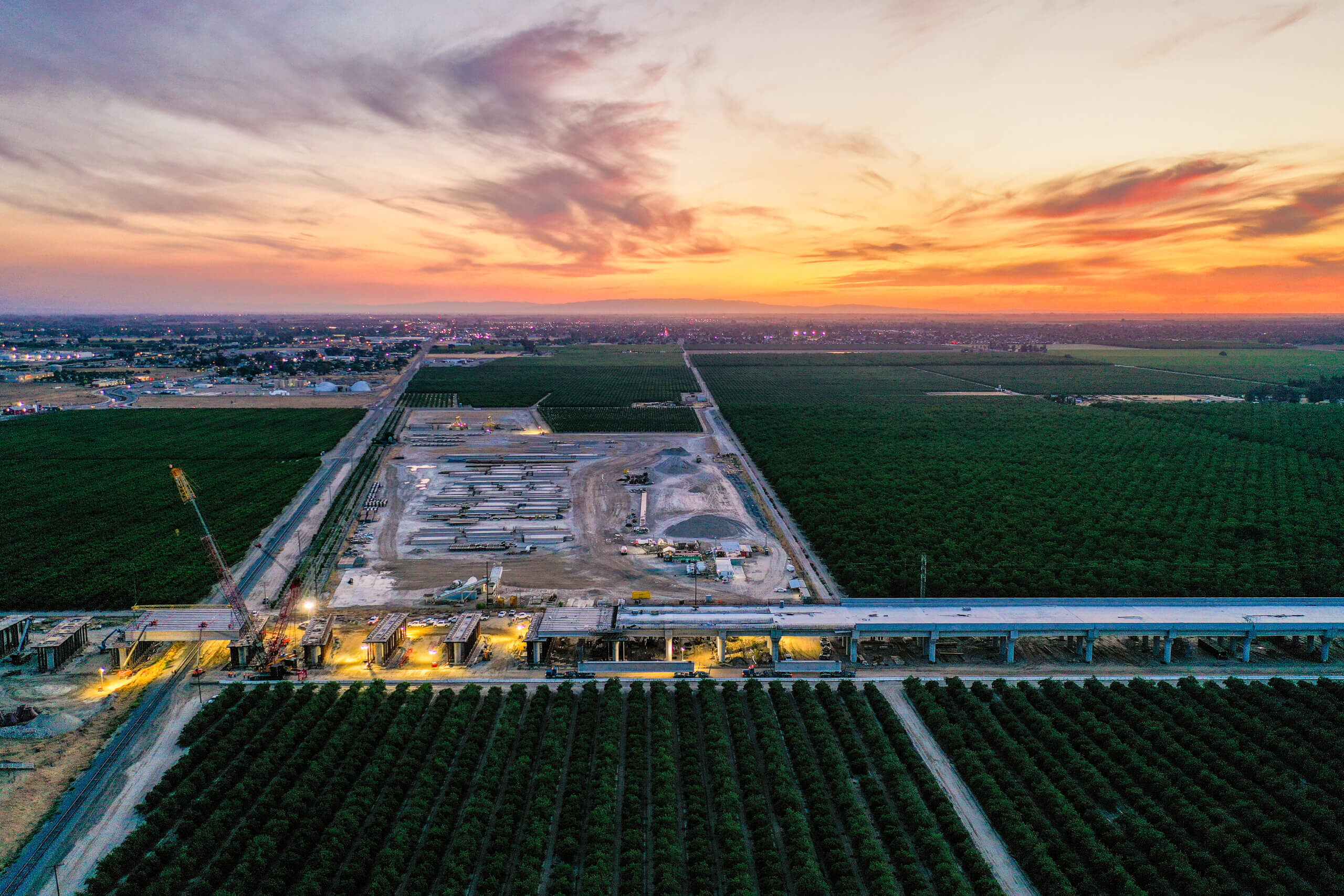
Third-parties often have an incentive to extract conditions that are outside of the scope of the transit project. This is an especially severe risk for projects with large budgets moving through small jurisdictions. Sometimes third-parties are fairly transparent about their motivations. Explaining the City of Shafter’s engagement with the California High-Speed Rail project, their city manager stated that the project provided an opportunity to extract “this very expensive infrastructure for the city, earlier than when we would’ve been able to accomplish it by ourselves.” [49]
Timeliness of scope expansions or design changes.
Some third-party requests to expand a project’s scope are made in good faith, and even improve the overall project. Still, the timing of those changes matters. With adequate consultation between the transit authority and the third-party, the scope should be settled earlier in the process to ensure new elements are studied in the environmental process, and incorporated into the project budget. Both third-parties and transit authorities themselves have an obligation to effectively consult one another in a timely manner. Sometimes either party can be to blame for inadequate collaboration.
For example, a package of quick-build treatments for bus routes in the Alameda–Contra Costa Transit District included late requests from the City of Berkeley[50] and the City of Oakland[51] to expand the scope of the project. Both requests sought improvements to the project and were paid for by the two cities. Still, they were made late in the process, with the request from the City of Oakland being made after the construction contract had already been awarded. While the projects ultimately were improved, the late requests complicated and delayed implementation.
Unclear or subjective standards.
Transit authorities seeking third-party approval sometimes have difficulty determining the standards required by those entities. When a transit authority wishes to move a utility, or make changes to the right-of-way, it can find itself submitting for permits that do not meet the expectations of the third-party, despite its best efforts. A study commissioned by the LA Metro Office of the Inspector General struggled to get written documentation of design standards from cities within the LA Metro jurisdiction. [52] Tellingly, the contracted engineering firm for the City of Paramount told the study authors that they did not even have objective standards, explaining that they “assess every project and tailor it for the City.” [53]
Different standards.
Transit authorities may themselves have certain design standards that are not universally shared by every third-party from which they need permits. Compounding this problem, transit projects that extend beyond multiple jurisdictions may have to comply with different standards for the same project depending on which segment is within which local jurisdiction. Standards are often not generated in-house, but rely on the Standard Plans and Specifications for Public Works Construction (the Greenbook), the American Public Works Association (APWA), and Caltrans. [54] Different jurisdictions may prioritize some of those sources, or use different sources for different types of projects. [55]
Same standards and duplication of effort.
When transit authorities prepare permit applications, they follow procedures common for government entities. They prepare engineering diagrams and ensure compliance with legally required design standards. They submit those plans to third-parties who often review them from scratch, to evaluate their compliance with those same standards.
This process might be valuable when a transit authority is unfamiliar with a third-party’s standards. However, this commonly occurs even when the standards of the transit authority are the same as that for the third-party. A study found that when LA Metro’s Technical Specifications and Rail Design Criteria were compared to 11 constituent cities, 99.5 percent of the specifications were essentially the same. [56] Yet third-parties often insist on an entire de novo review of permit applications, adding costs and delays.
Ad hoc processes.
For some transit projects, a transit authority may need to work with a third-party with whom they do not have a prior relationship. Unfamiliarity with a third-party’s processes, standards, or personnel can make permitting more difficult. Some transit authorities have standing agreements to detail inter-agency processes, especially when there is common interaction, like between LA Metro and the City of Los Angeles. [57] Transit authorities are not able to rely on those pre-established agreements when dealing with third-parties with whom they have less frequent interactions. Agreements are also possible on a project-level basis, like the agreement between SANDAG and the City of San Diego for their Mid-Coast Trolley project. [58]
Inexperience.
Transit authorities and third-party entities both may not have in-house staff with the expertise to prepare or review permit applications. Third-parties like small cities and special districts may not have any meaningful experience with public transit projects. Similarly, even large transit agencies may not have experts on staff with knowledge about every jurisdiction through which a project needs to be permitted. Lack of expertise can lead to flawed permit applications or third-party entities unsure of how to consider even properly prepared permit submissions.
Early commitments.
Grant funds are usually available only after the completion of any required environmental review process. This means that transit authorities face pressure to finish the environmental analyses early, hoping to use grant funds to resolve foreseeable third-party planning and permitting issues later. [59] This can have the result of locking in elements of a project, precluding more affordable options to adjust the design when issues arise. Projects that go too early into the contracting stage face comparable challenges. Without adequate pre-award planning, a contract can underrate the challenges with third-party permitting. [60]
Transit projects approved by ballot measures also lock agencies into those projects before adequate cost estimation or project evaluation. Those projects may represent only one to two percent of design completion, meaning a transit authority is committed to building projects for which they have not had an opportunity to fully think through what will be required to build them. [61]
Contractor financial incentives.
While transit authorities have both financial and political reasons to avoid change orders, their contractors often do not. Researchers have found through interviews that contractors make the most money on change orders. [62] However, even reforms to curb these practices can drive up costs, with contractors responding by bidding with higher contingency budgets.
The permitting process gives third-parties a large amount of leverage and very little incentive to do extra work to prioritize transit permits. This makes every permitting process a negotiation, costing time and effort, and introducing uncertainty to every project.
This report provides recommendations for permitting reform in a later section. Options for reform are across a spectrum. A maximalist approach might involve transit authorities receiving the responsibility to unilaterally self-permit on any transit project they approve. More modest reforms could still be valuable, like requiring permitting agencies to make decisions within specified timelines. Other reforms could require common construction standards across jurisdictions.
Getting the safe, fast, and convenient public transit system we need requires giving public transit agencies the appropriate level of authority to design and build that system.
Case Studies
This report presents several case studies that illustrate the costs and delays that can be attributed to arbitrary, excessive, or avoidable pre-construction permitting challenges. These case studies have been selected to represent a diverse set of projects and transit authorities. They range from the largest project in California – High-Speed Rail – to a small busway project on the central coast of California. They include both rail lines and express bus. The local permitting jurisdictions involved are cities, counties, and even other state agencies.
California High-Speed Rail
The California High-Speed Rail Authority (CHSRA) is charged with delivering a 220-mph electrified rail line from the Los Angeles basin to downtown San Francisco, eventually expanding to San Diego and spanning 800 miles. Planning and construction is being carried out in stages. Construction started in the Central Valley between Merced and Bakersfield in 2015.
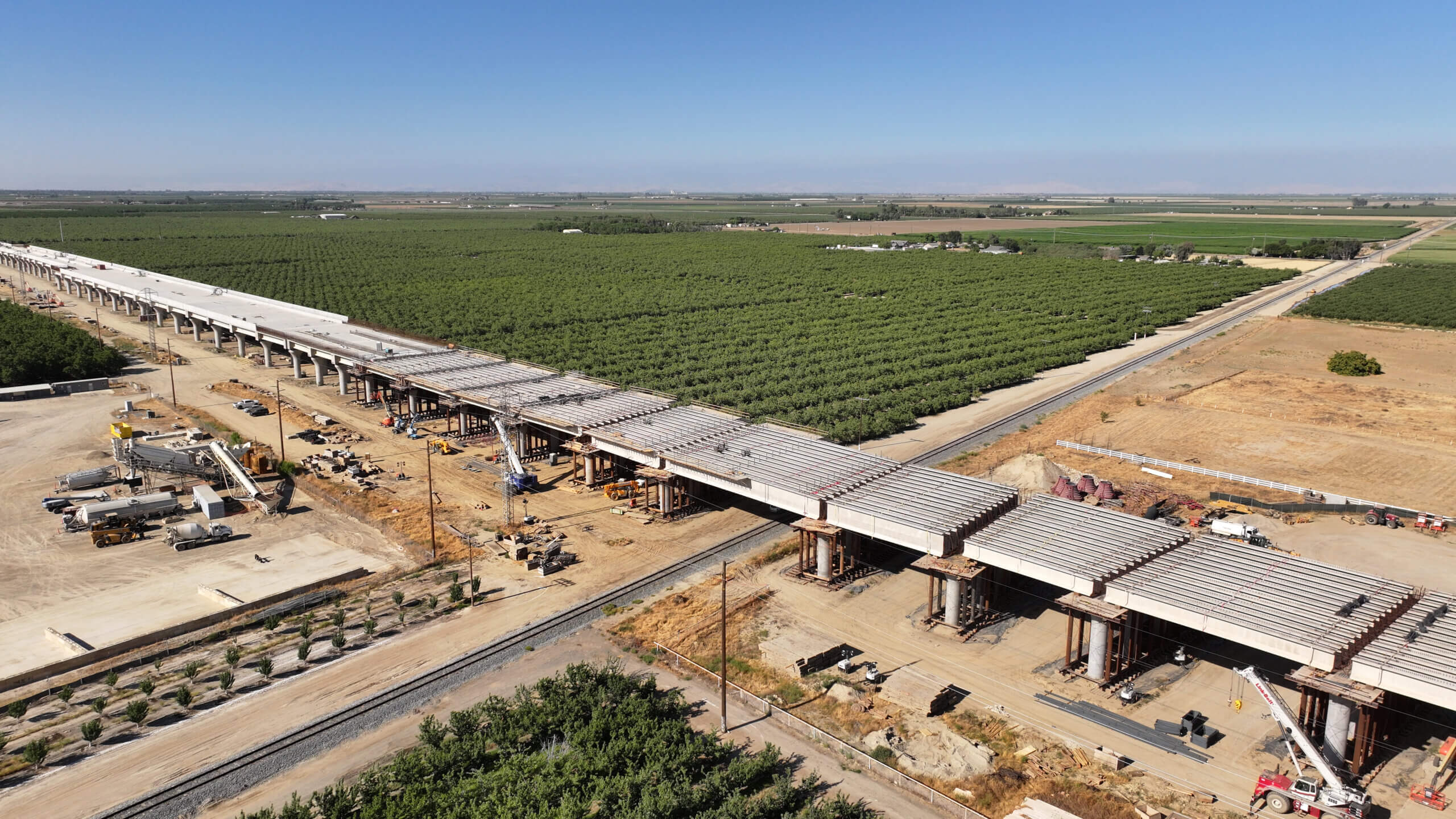
Voters approved Proposition 1A in November 2008, authorizing $9.95 billion in state general-obligation bonds for the project. [63] CHSRA also received billions in federal grants, including $2.5 billion from the federal American Recovery and Reinvestment Act of 2009, and $3.1 billion from the Federal-State Partnership for Intercity Passenger Rail Grant Program in 2023. [64] The Trump administration announced plans to pull back federal funding in 2025. [65] Through Senate Bill 862, California continuously appropriates 25 percent of annual cap-and-trade auction revenues to the project. [66] The CHSRA’s business plan assumes between $500 million to $1 billion in cap-and-trade revenues each year. [67]
Much has been written about the escalating cost and slow progress of the California high-speed rail project. [68] The agency has responded to critics by pointing out that it has been audited more than 100 times. [69] The CHSRA is unusually transparent, listing on their website information about business plans, copies of audit reports, and instructions for how to contact the Office of the Inspector General. They even provide a detailed and comprehensive website listing every change order since 2014. [70] Currently that dataset includes 1,554 entries totaling more than $5 billion. This report focuses only on third-party pre-construction permitting challenges after project segments have been approved. The CHSRA identified issues related to third-party permitting to be a “top risk” facing the authority. [71]
Formation and governance – California High-Speed Rail Authority.
The CHSRA was created by the California Legislature in 1996 through the California High-Speed Rail Act. [72] This act gave CHSRA the authority to plan, construct, and operate a statewide high-speed railway. [73] The CHSRA is governed by a board with nine voting members, all of whom are appointed by elected officials. Five directors are appointed by the Governor, two by the Senate Committee on Rules, and two by the Speaker of the Assembly. [74] Directors serve staggered four-year terms. The board sets policy, certifies environmental documents, approves contracts, hires an executive team that manages day-to-day operations, [75] and approves change orders above certain thresholds. [76]
Below are two examples of somewhat typical situations where the CHSRA was obligated to seek third-party permitting approvals from local governments.
Costs and delays associated with permitting – City of Wasco.
The route planned by the CHSRA through the City of Wasco was established during the planning of the Fresno-Bakersfield section of the project. In January 2016, the CHSRA board authorized Construction Package 4 to be awarded to design-build contractor California Rail Builders. [77] This contract covered about 22 miles of the high-speed rail alignment in Tulare and Kern Counties, including the City of Wasco. [78] The board authorized a total contract price of $444 million and an approximately three-year construction schedule. [79]
The initial construction scope included underpasses for city streets beneath the rail corridor at Poso Avenue and 6th Street. [80] Roughly a year into design, the CHSRA approached the City of Wasco to propose a change to permanently close 6th Street at the rail line. [81] The Wasco City Council agreed to this change in 2017, contingent on a written agreement. [82] An agreement was never executed and uncertainty caused the relationship between Wasco and CHSRA to deteriorate. In 2020, with no written agreement in place, the Wasco City Council withdrew its support for closing 6th Street. [83] Wasco’s City Manager vividly summed up the leverage that Wasco had over the situation: “If they plan on building from Bakersfield to Los Angeles, the HSR will have to come up with additional monies.” [84]
Eventually CHSRA would resolve its negotiation with the City of Wasco, but only after substantial delay. [85] There were numerous other disputes between Wasco and CHSRA, not limited to the 6th Street and Poso Avenue underpass situation. Ultimately, there were $26 million of increased costs and five years of delay across thirty-seven construction change orders that reference issues with the City of Wasco. [86] The construction timeline was planned for three years starting in 2016, but only reached substantial completion in 2023. [87]
Costs and delays associated with permitting – County of Madera.
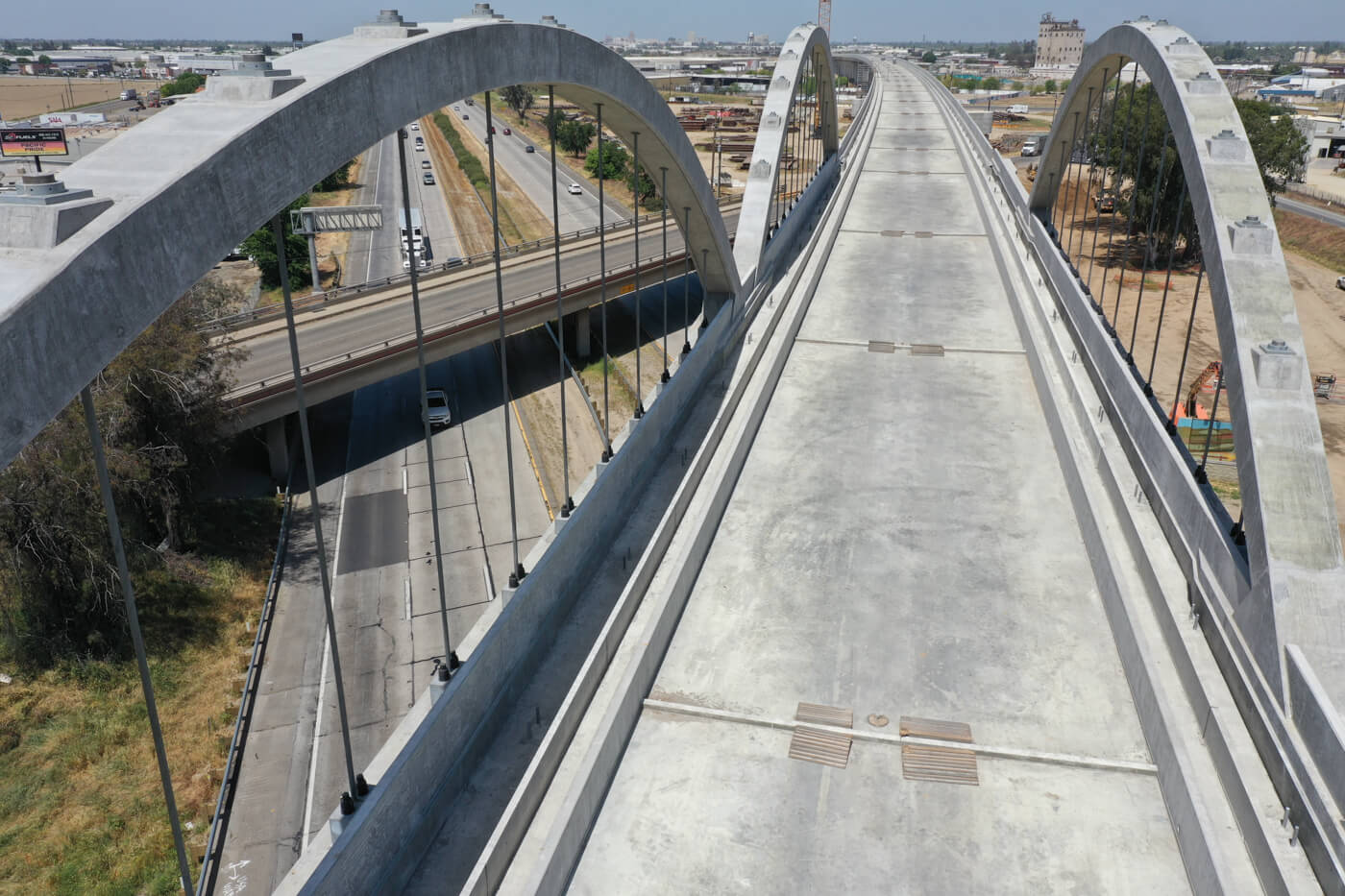
The CHSRA chose a route through the unincorporated areas of Madera County during the Fresno-Bakersfield section planning, certifying its final environmental impact report on May 3, 2012. [88] The Federal Railroad Administration approved that route under the National Environmental Policy Act later that year in September 2012. [89]
The 2012 environmental analysis deferred decision on the particulars of the “Central Valley Wye.” This is the interchange where the planned rail line coming from the south would split into the San Francisco-bound track heading west and the Sacramento-bound track continuing north. [90] On September 10, 2020, the CHSRA certified its final supplemental environmental impact report resolving this and all other outstanding issues[91] and approving the “SR 152 (North) to Road 11 Wye Alternative.” [92] This supplemental review also satisfied the National Environmental Policy Act under a July 2019 agreement between the CHSRA and the Federal Railroad Administration. [93]
The route was the subject of litigation in 2012, with a settlement the subsequent year. [94] After the settlement, on June 6, 2013, CHSRA approved a final contract for Construction Package 1. [95] Shortly thereafter, it executed a contract with the joint venture of Tutor Perini, Zachry Construction Corporation, and Parsons Corporation to design and build the Madera-Fresno segment. [96] This segment runs from Avenue 19 in Madera County to East American Avenue in Fresno. [97] The contract was valued at about $985 million. [98]
During construction, the contractor had to accommodate a number of third-party permitting requirements from the County of Madera that were not part of the original contract. While some were likely appropriate and necessary, combined they represent significant costs.
These included particular requirements to maintain temporary street signals and detours during construction, particularly but not exclusively, during the period from 2022 to 2024 as work was being done at the Road 26 and Road 27 grade separations. All told, these would total $975,159 in additional expenses. [99]
The county further insisted upon pavement condition index monitoring on all haul and detour routes used or occasioned by the project. They also required the contractor to obtain additional surety bonds as conditions for issuing encroachment permits to use Madera County properties during the construction. These change orders added $454,348 to the project cost. [100]
In another instance, the county required the contractor to use a more expensive technique than that planned, a “directional bore,” to install conduits under Road 33. This change added $323,733. [101]
The most significant changes were to fulfill the requirements of the 2013 legal settlement. The realignment of the Avenue 15 and 15½ overpasses occasioned a total additional cost of $9,990,145 accounting for both the realignment itself and the redesign and maintenance of emergency access to adjacent properties. [102] Similar realignments of the Avenue 9, 12, and 13 overpasses added another $18,629,963. [103]
In Wasco, navigating permitting issues inside a developed city limits created challenges, expenses, and delay. The experience was similar in unincorporated Madera County, where third-party pre-construction issues added over $30 million in costs even through one of the most rural stretches along the entire route. [104]
LA Metro Purple Line Extension
The LA Metro Purple Line Extension is a three-section, nine mile heavy rail subway extension from Koreatown to Westwood/VA Medical Center. Construction began in 2019. Section One is set to open to riders in 2025, with Sections Two and Three scheduled for 2026 and 2027 respectively. The project adds seven new stations, twin 21 foot diameter bored tunnels beneath Wilshire Boulevard, and new traction power, ventilation and systems cores sized for future headways as low as four minutes. [105] LA Metro estimates that the new Purple Line will carry 59,000 daily riders a day when completed. [106]
LA Metro divided the Purple Line Extension into three sections, each bid out as major design-build contracts. Section One includes Wilshire/Western to Wilshire/La Cienega. The contract was awarded in 2014 to a joint venture led by Skanska, with partners Traylor Bros. and J.F. Shea. The LA Metro board voted in July 2014 to approve this $1.6 billion contract, citing the team’s local transit experience. [107] The Section One scope included 3.9 miles of twin tunnels and three new underground stations at Wilshire/La Brea, Wilshire/Fairfax, and Wilshire/La Cienega. [108] The original schedule anticipated roughly nine years of work, aiming for a mid-2023 completion. [109]
Section One faced a variety of high-profile challenges. There was significant litigation from the Beverly Hills Unified School District over tunneling beneath Beverly Hills High School, which was partially resolved in 2016, allowing the project to continue. [110] The disputes between the City of Beverly Hills and LA Metro resulted in extensive settlement agreements which covered many issues that may otherwise have arisen during the third-party permitting process.
Formation and governance – LA Metro.
LA Metro was created by the California Legislature in 1992[111] through the merger of the Southern California Rapid Transit District and the Los Angeles County Transportation Commission. [112] The intent was to place planning, funding, construction, and operation of multi-modal transit under a single county-wide body accountable to local elected officials. Its 14 member board is made up of the five of LA County supervisors, the Mayor of Los Angeles, three mayoral appointees, including one Los Angeles city councilmember, four representatives of the county’s other cities, and a non-voting Caltrans District 7 director. [113]
Relationship between LA Metro and the City of Los Angeles.
The City of Los Angeles has substantial representation on the LA Metro board. The Purple Line received strong political support from the City of Los Angeles. During planning for the Purple Line, LA Metro met frequently with the Office of the Mayor to coordinate activities. [114] The majority of the Purple Line runs under City of Los Angeles streets. LA Metro was required to receive permission for most of its work from the City of Los Angeles. This has been true of many LA Metro projects. In order to coordinate between LA Metro and the city, both parties entered into a Master Cooperation Agreement (MCA) in 1991 and renewed it in 2003. In 2020, LA Metro terminated that MCA. For three years, Metro proceeded without a master agreement. [115] This period occurred within part of the period of construction for the Purple Line.
In 2023, LA Metro and the City of Los Angeles entered into a new MCA for a period of ten years that called for quarterly executive task-force meetings, [116] clarified escalation steps, [117] and provided for explicit waiver of certain city permits. [118] The agreement designates LA Metro projects like the Purple Line as “high priority public works projects,” [119] provides for 30-day turnaround targets[120] and specifies or waives many types of fees. [121]
Costs and delays associated with permitting – City of Los Angeles
The City of Los Angeles was a supporter of the Purple Line from the outset. Yet, LA Metro faced many third-party challenges when seeking permits from the city and its various departments.
The Purple Line’s initial scope included a large contingency budget and contemplated a variety of changes and permit conditions that were unknowable at the time the project was scoped. The total number of unforeseen challenges exhausted the contingency budget with three years still remaining for the project, and in 2020, the agency added another $200 million to the project’s scope. [122] Within the City of Los Angeles, permitting challenges included $1.4 million for the Wilshire/La Brea Station in response to the demands of the Los Angeles Department of Water and Power and the Los Angeles Bureau of Engineering. [123] Those costs were related to storage for high voltage equipment and new utility supports. Third-party costs also included $8 million for instrumentation to monitor utilities along Wilshire Boulevard during tunneling and station construction. [124]
Many of the City of Los Angeles’ requirements forced plan revisions for utilities. At the Century City station, this resulted in a complex series of revisions involving stormwater and sewage pipes. One storm drain was known at the beginning of construction, but one sewer line was not in any plans and was discovered only when excavation started. [125] This added substantial work to cover the construction of the sanitary sewer and storm drain relocation adding $10,064,000 to the cost of the project. [126]
At the same station, the discovery of an unforeseen group of sewer facilities that were not in the city utility plans required substantial additional work, adding $1,670,998 to the contract. [127] It is not uncommon to find unexpected old utility infrastructure in excavation, but every such instance requires that the transit authority get an additional set of permits to do the additional work for such lines.
This case study is not meant to be an exhaustive review of every additional cost or delay related to third-party permitting issues. The diversity and scale of the permit changes listed, however, do show the pervasiveness of permitting challenges, even for a transit project that enjoys broad support from the jurisdiction in which the construction occurs.
Monterey-Salinas Transit SURF! Busway Project
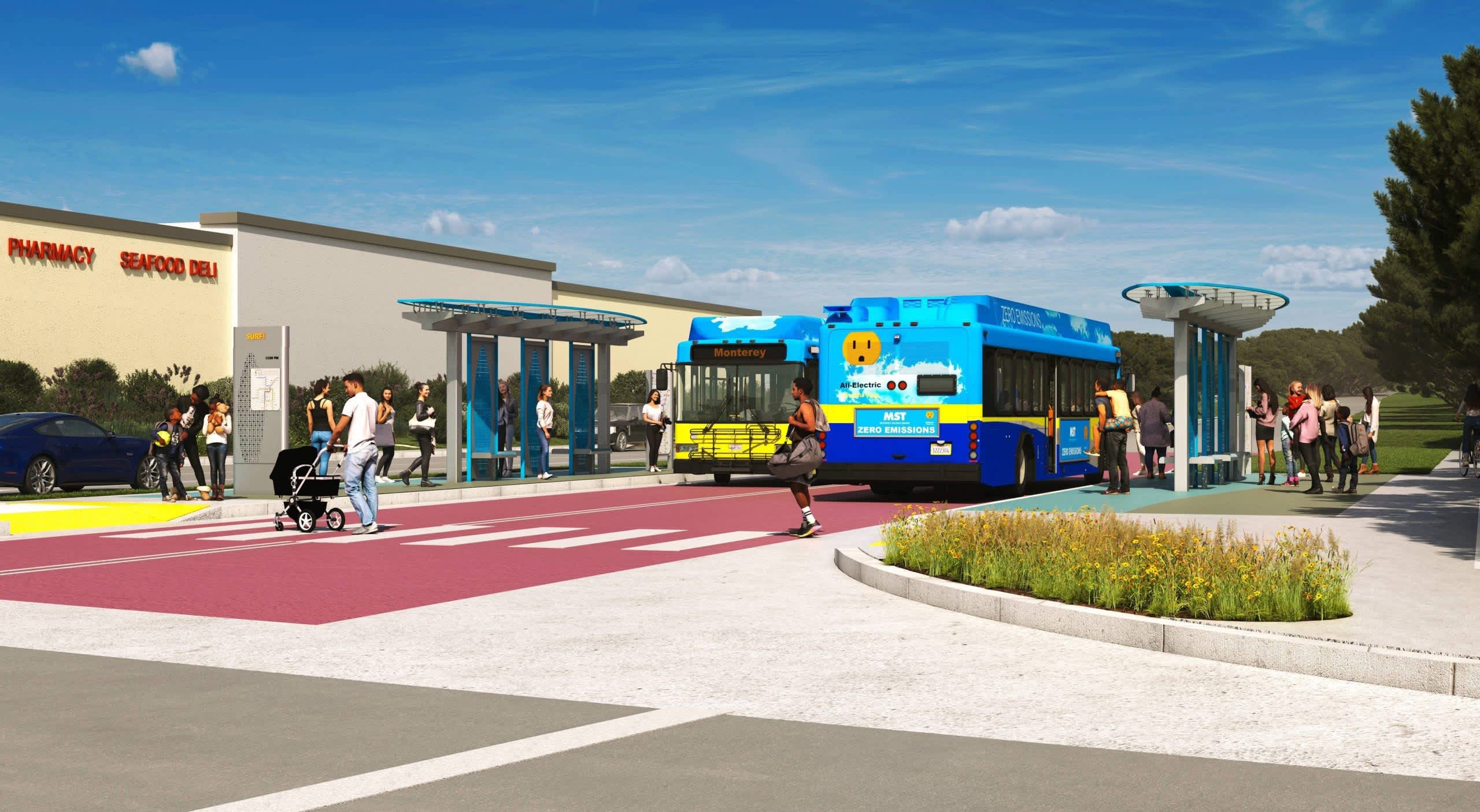
The SURF! Busway is a six mile, two lane, center-running busway proposed within the dormant Monterey Branch Line rail corridor. The project sponsor is the Monterey-Salinas Transit District (MST). The 20 mile route will link the City of Monterey and the City of Salinas and will include stops at the City of Marina, Sand City, and the City of Seaside. [128] The proposed bus route will provide substantial environmental benefit and shift an estimated 2,300 daily riders from Highway 1 auto trips to zero or low emission buses. [129]
The SURF! Busway faced a variety of challenges in the planning and approval stages, including litigation. Some of that litigation was dismissed after the agency used recent CEQA reforms, [130] and some is ongoing. [131] In addition to the lawsuits, the project was subject to review and permitting by five different agencies, including the Coastal Commission, Caltrans, the City of Marina, Sand City, and the Transportation Agency for Monterey County (TAMC), which owns the Monterey Branch Line railway that the SURF! project would utilize. [132] Each of these required third-party permitting beyond the project planning. [133]
This case study focuses on challenges encountered in pre-construction permitting from the California Coastal Commission, which unlike those evaluated in other sections of this report, is a state agency rather than a city or county.
Formation and governance – Monterey-Salinas Transit.
MST was codified by statute. [134] Its 13-member board is made almost entirely of elected officials and includes five Monterey County supervisors, one at large appointee, and one councilmember from each of the district’s seven incorporated cities. The agency holds monthly public meetings and must adopt budgets and capital plans by majority vote under the Brown Act. [135]
Costs and delays associated with permitting – California Coastal Commission.
The California Coastal Commission is a statewide agency governed by appointees from the Governor and leaders of the California Legislature. Because the SURF! Busway project would be within the Coastal Zone, it required a third-party coastal development permit from the California Coastal Commission (hereafter Coastal Commission).
One might imagine that the Coastal Commission, with its mandate to protect California’s environmental resources, would welcome a new public transit line which would reduce greenhouse gas emissions. Unfortunately, the Surf! Busway faced many permitting challenges from the Coastal Commission. Circulate San Diego has previously published research on the practice of the Coastal Commission to delay and deny climate-friendly transportation projects. [136]
In July 2021, the governing board of MST approved the Surf! Busway. [137] In July 2024, the Coastal Commission staff report recommended denial of the coastal development permit for the project. [138] Staff recommended denying the permit due to impacts of the project on the Monterey dune complex, including direct dune loss, fragmentation of the dune ecosystem, and reductions to habitat value and coastal resilience. Staff also recommended denying the permit because it is located near part of the California Coastal Trail, and argued that bus service would interrupt the public view as well as the calming and “contemplative” experience that the scenic trail provides. Finally, the staff expressed a preference for using existing highway infrastructure to its highest and best use, which would entail converting an existing highway lane for carpools and buses or using a highway shoulder, avoiding impacts to an environmentally sensitive habitat area entirely. Ultimately, Coastal Commission staff found that the project was inconsistent with the Coastal Act, recommending that the project permit be denied.
In response, MST staff requested a postponement of the item at the Coastal Commission to September 2024. [139] MST then filed a letter to correct what they described as “42 omissions, errors, and misunderstandings” in the Coastal Commission report. [140] A key area of disagreement focused on how much the project would impact environmentally sensitive habitat areas, given that the alignment is in an area already degraded by human development due to the existing railway, with dueling habitat and environmental analyses. [141] The MST letter argued that the Coastal Commission staff report:
[O]verstates the impacts to [environmentally sensitive habitat areas] and Coastal Access while simultaneously undervaluing the significant benefits the project brings in support of important Coastal Act goals and policies related to coastal access, climate change/ sea level rise, environmental/ social justice, coastal access, affordable housing, and coastal dune habitat restoration. [142]
Refuting the Coastal Commission report, MST stated that the project will only affect “0.1 acres of dune scrub” and “3.9 acres of Coastal Scrub,” much of which is not a sensitive habitat, and ”one-thousand times less” than the “100 acres” alleged in the Coastal Commission report. [143]
Ultimately, the issue escalated politically such that State Senator John Laird, Assemblymember Dawn Addis, and Congressman Jimmy Panetta got involved in support of the project. [144] Senator Laird ultimately brokered an agreement between the Coastal Commission, MST, and the TAMC. [145]
On August 30, 2024, the Coastal Commission staff reversed their position and recommended approval of the coastal development permit with conditions. [146] The conditions included relocating much of the planned busway to the current right-of-way occupied by the tracks and ballasts of the dormant Monterey Branch Line, rather than adjacent to it, which would reduce direct impacts to dunes. [147] Staff also acknowledged that although the entire TAMC-owned corridor is an environmentally sensitive area, the corridor’s habitat value was already significantly degraded due its prior use as a diesel railway, echoing arguments made earlier by MST. [148] As such, the new alignment would have minimal impact on significant coastal resources and warranted approval. [149]
Collectively, Coastal Commission permit conditions and alignment relocation added significant costs and delays.
Because of delays by the Coastal Commission, MST missed the deadline with the Federal Transit Administration to secure additional federal funding counted on for the project. [150] Fortunately for MST, the recent Senate Bill 125 provided $1.1 billion of one-time funding to transit agencies through the Zero Emission Transit Capital Program, which was distributed by formula to metropolitan planning organizations. TAMC allocated a portion of its funds for the project. MST dedicated $2 million more to cover the new third-party permitting requirements from the Coastal Commission. MST staff estimated that the requirements from the Coastal Commission increased the project costs by about $10.5 million. [151] The impact to transit funding in Monterey County was potentially even larger, because the Coastal Commission permitting delays prevented an opportunity for MST to receive additional federal grants, depriving it of the ability to fund other transit projects.
SANDAG Mid-Coast Trolley Extension
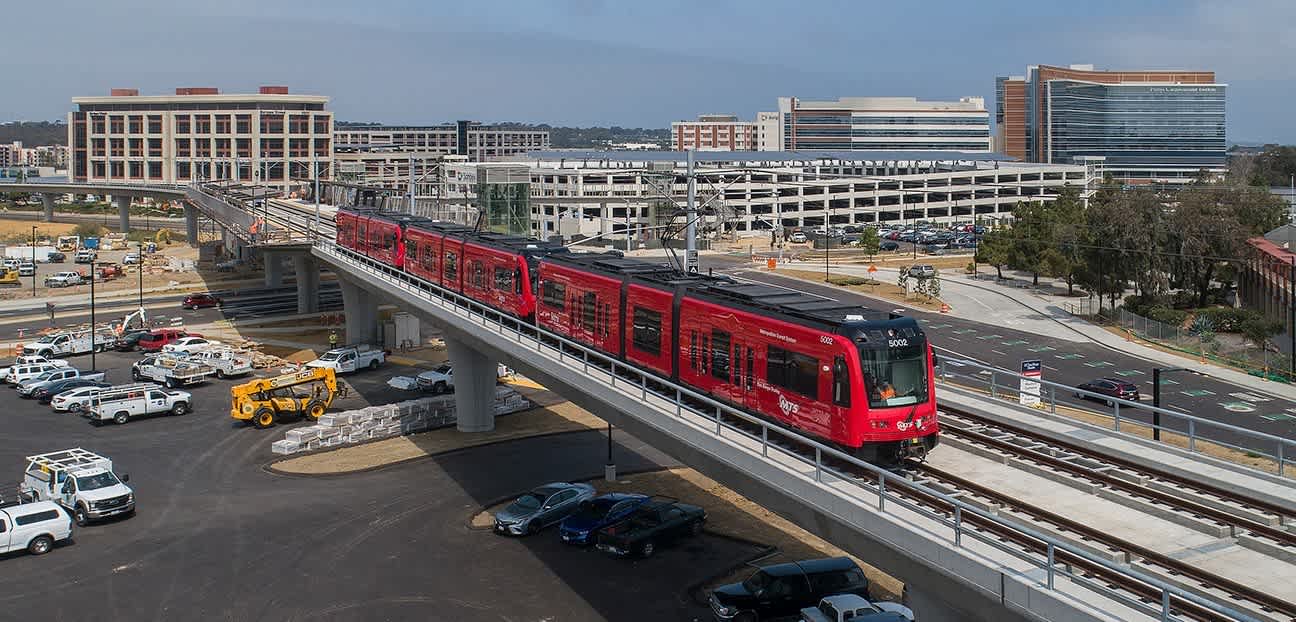
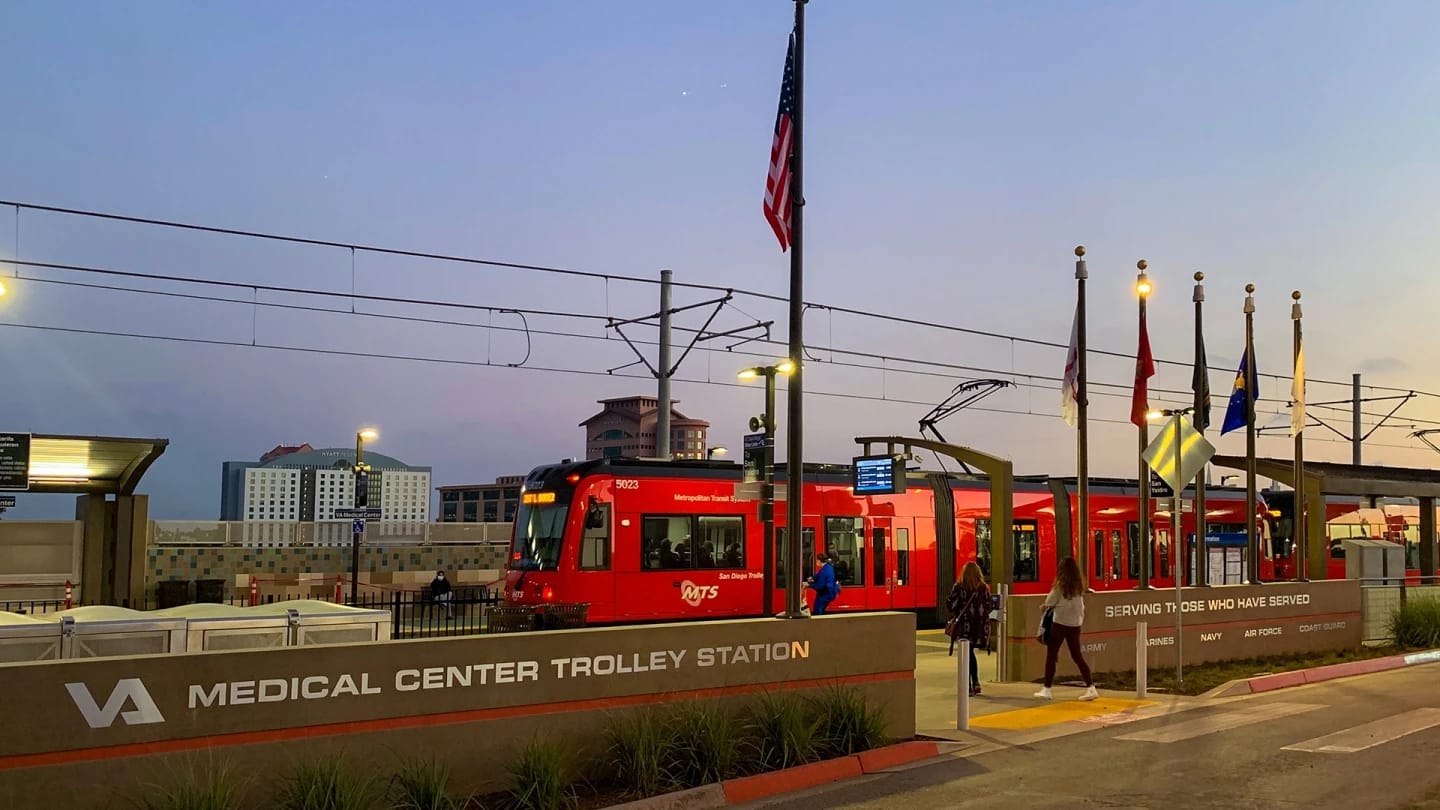
The Mid-Coast Trolley extension is a $2.2 billion, light rail project extending the preexisting Blue Line Trolley 10.9 miles from Santa Fe Depot station in Downtown San Diego to the University Community area, all within the City of San Diego. The project sponsor was the San Diego Association of Governments (SANDAG). It began construction in 2016, and opened for service in 2021.
The preexisting Blue Line ran from the San Ysidro Border to downtown San Diego, and had one of the highest farebox recovery rates of any light rail line in the United States, with many riders traveling as pedestrians across the US-Mexico border. [152] With the extension, travelers can now take a one-seat ride from the San Ysidro border crossing all the way to UC San Diego.
The earlier examples in this report identify projects, for which transit authorities faced substantial challenges with third-party permitting. In contrast, the Mid-Coast had smoother sailing. The San Diego region has a reputation for collaboration between public agencies when it comes to transportation. That collaboration was on display during the construction of the Mid-Coast Trolley. This section examines some of the potential sources of this collegiality, which could be implemented in other regions.
Formation and governance – San Diego Association of Governments.
SANDAG was originally formed as a joint powers agency, under an agreement between the County of San Diego and all 18 of the incorporated cities in the county. SANDAG was vested with additional powers by the legislature in 2002. [153] It absorbed the responsibility to plan, finance, and build transit projects from the region’s two transit operators, the Metropolitan Transit System (MTS) and the North County Transit District (NCTD). The most recent substantial change to SANDAG’s governance was through Assembly Bill 805, which reformed the board voting structure to more closely align with principles of one-person-one-vote, and proportional representation. [154] That bill received substantial input and support from Circulate San Diego. [155]
SANDAG’s board of directors is made up of elected officials sent by its 18 constituent cities and the county’s board of supervisors. It also includes advisory non-voting members from MTS, NCTD, the Department of Defense, Caltrans, the Airport Authority, and other groups. [156]
Costs and delays associated with permitting – City of San Diego.
Unlike the other examples in this report, the Mid-Coast Trolley Extension faced relatively few challenges in the pre-construction permitting phase. It has been considered a fairly successful project in terms of both speed and implementation. [157] This was the result of several factors, including collegial culture between transportation agencies, advance work done to coordinate between different entities, and certain statutory authorities that SANDAG enjoys.
The San Diego region is unusual in that it contains a relatively less-fragmented structure of public agencies tasked with planning, funding, building, and operating transit. For example, SANDAG is a single entity that performs a variety of functions. SANDAG is the region’s Council of Governments, Municipal Planning Organization, Regional Transportation Planning Agency, and County Transportation Commission. In many other regions, those responsibilities are spread across separate entities, with different staff, and overseen by separate boards of different elected officials.
With relatively few agencies involved in San Diego, staff are able to develop relationships with key players, and better understand the needs and policies of their interlocutors. The situation in San Diego is quite different from some of the other major regions in California. The Los Angeles region[158] and the Bay Area[159] each contain 27 separate transit operators. In San Diego, there are only two transit operators, MTS and NCTD. The Metropolitan Transit Commission in the Bay Area needs to coordinate with a total of nine constituent counties, whereas SANDAG contains only the County of San Diego.
Coordination was an important element of success for the Mid-Coast. The project includes a substantial portion within the UC San Diego campus. SANDAG’s relatively easy delivery of the project has been credited with early and consistent coordination with campus leadership. [160] The City of San Diego and SANDAG entered into formal agreements for how to coordinate throughout the life of the Mid-Coast project. [161] These relationships helped decide in advance how the agencies would operate. This was especially important because the entire project would occur within the City of San Diego.
The project sponsor SANDAG also enjoyed certain statutory authorities that helped navigate and prevent pre-construction permitting challenges. The legislation that authorizes SANDAG states that it is “excluded from the requirements of a ‘local agency’ set forth in Section 53091 of the Government Code,” [162] which frees SANDAG from being bound to local zoning and building codes. SANDAG was able to exercise that authority when the City of San Diego refused to issue a building permit for a parking garage SANDAG intended to construct for Mid-Coast passengers. [163] In response, SANDAG adopted its own building code, with the express purpose to permit the parking garage under their own authority. [164]
SANDAG is not unique to be free from the zoning and building requirements of other jurisdictions. California law provides that “rapid transit districts,” are not “local agencies,” and are not bound by the building and zoning ordinances of the county or city in which they are located. [165] However, not all transit authorities are “rapid transit districts” under California law. For example, the Alameda–Contra Costa Transit District was only granted that status in 2021. [166]
In addition to being free from zoning and building code decisions of other public agencies, SANDAG enjoys the use of any right-of-way available to any jurisdiction within its boundaries. This authority was originally granted to MTS, [167] but was transferred along with construction responsibilities to SANDAG. [168] The text of the statute is arguably ambiguous as to whether SANDAG received both the “responsibilities” for construction previously held by MTS, as well as all of its “powers,” but several MOUs between SANDAG and its constituent jurisdictions concede that it did. [169] SANDAG’s relatively strong statutory authority helped it in its negotiations with the City of San Diego, securing the City of San Diego’s commitment to move utilities for the Mid-Coast at the city’s expense. span>[170]
SANDAG’s statutory powers are not universally enjoyed by all other transit authorities. For example, LA Metro’s authorizing legislation explicitly requires that it pays for the movement of any utilities. [171] As a result, LA Metro has often been required to pay for relocation. [172]
While the Mid-Coast project was relatively smooth during the pre-construction permitting process, it was not without its challenges. The project was considerably more expensive than peer light rail projects. [173] The coordination with UC San Diego avoided contentious or unforeseen issues during permitting, but that came at substantial financial costs. To satisfy the university, the Mid-Coast route included an expensive elevated track design near the campus, and $45 million for on-campus infrastructure improvements. ">[174] This arrangement was similar to an earlier agreement when San Diego’s trolley network was extended to the campus of San Diego State University. Those negotiations resulted in the project sponsor spending an additional $103 million to build on campus the only underground trolley station in the region. [175] While an added expense, it is widely seen as a major success for student transportation access. [176]
The San Diego region’s collaborative culture, and SANDAG’s statutory authorities have not allowed SANDAG to easily build all of its projects. SANDAG was an early mover in funding and building bicycle facilities, but has struggled to permit those projects especially within the City of San Diego. At one point, the agency had spent $61 million on a bicycle program, and had built only 4 miles of protected bikeways. [177] Nevertheless, the circumstances that helped SANDAG build the Mid-Coast offer lessons for reforms to help other transit authorities build.
Reform Proposals
Fundamentally, the way to help transit authorities achieve their goals to build transit, is to actually allow them to build transit. Improving the state capacity of transit authorities will help achieve important public policy goals and reinvigorate public trust in what government can accomplish.
Increasing transit ridership at the scale that is required by the state’s climate goals requires a large expansion in the total amount of frequent, reliable, and safe transit service. This requires a commensurate expansion of transit infrastructure.
The Approach to Reform
There is a spectrum of potential policy interventions that can improve the speed and cost of transit project delivery. Some options are fairly bold and would firmly reassign the authority to build from third-parties to the transit authorities themselves. Others are more modest and would put stronger obligations and timelines on third-parties, while preserving their ultimate authority to approve or deny a permit. Other reforms are less centered about the locus of authority for permitting but can help transit authorities navigate the permitting process. Most of the recommendations in this report focus on legislation, or actions that state agencies can undertake administratively. Political realities and evolving legislative coalitions will determine which are viable.
State leadership is essential.
The overall premise of this report is that transit authorities do not have adequate leverage to always ensure fair dealings with third-parties. For major reforms to occur, action by the state is required.
Fortunately, the state of California has already begun to scrutinize the drivers of transit construction costs and timelines. The state has enacted meaningful legislation to speed up project implementation. [178] Governor Newsom issued an executive order for inter-agency streamlining. [179] The Assembly recently undertook a year-long effort to consult with topic experts, culminating in a white paper on permitting reform across a wide range of infrastructure categories. [180]
Local governments that support transit can and should take the initiative and adopt supportive policies for transit permitting. They can proactively enter into agreements with transit authorities to streamline routine activities like signal upgrades, or moving utilities. Individual transit authorities have some tools to encourage smoother permitting, and they can be proactive about coordinating with third-parties early and throughout the transit construction process.
Incrementalism is okay.
These changes do not all have to happen at once. Successful policy reform is often accomplished gradually. [181] Incremental reforms can be easier for policymakers to swallow, and they are forgiving, allowing relevant actors time and space to work out implementation difficulties. One successful reform to improve state capacity, even at small scale, can help build momentum for the next. [182]
This report is written in the spirit of political realism. Politics, after all, is the art of the possible. Still, it should be noted that as the recommendations get further from “just let transit authorities build what we want them to build,” the policy options become increasingly more like inelegant workarounds to avoid making the changes most likely to be effective. Generally, if complexity is creating an unsatisfactory status quo, the solution is usually simplicity, not further complexity. The more kludge-y options may still be the best approach, depending on the political circumstance. Even half-a-loaf reforms are better than nothing. Nevertheless, it should be understood that more modest near-term reforms will likely require subsequent reforms.
Shifting responsibility for permitting could be limited to certain projects or agencies.
Some reforms to streamline transit permitting could be applied broadly, to many types of transit projects in California. More likely, the most impactful reforms will be applied to some subset of projects that are deemed to have special significance to the state across one or more policy goals, such as supporting economic growth or providing resilience against climate disasters. The Assembly Select Committee on Permitting Reform explicitly suggests creating “distinct permitting pathways for important transit projects.” [183]
The Bay Area research and advocacy organization SPUR suggests making all categories of projects that qualify for a CEQA exemption enacted under Senate Bill 922 be eligible for additional permit streamlining, as the state has already granted them special status. [184] These include projects as small as sidewalks and bicycle lanes and as large as busways and light rail systems. Specific permitting reform could be limited to a mega-project like California’s High-Speed Rail, which is in a class all of its own. The original version of Senator Scott Weiner’s permit streamlining legislation, Senate Bill 445, proposed granting special permitting responsibility for projects with budgets over $25 million. [185]
Other triggering methods are conceivable. Individual priority projects could receive permitting streamlining if chosen by the Governor, similar to how a variety of past laws allow the governor to select projects for CEQA streamlining. [186] State capital grant programs could be created or amended to provide not only money, but special permitting rules for projects that meet grant criteria. The Transit Cost Project recommended this policy for federal grants, and it could also be incorporated into grant programs in California. [187]
Special permitting rules could also be available to only certain limited transit authorities. Permitting reforms could primarily apply for larger transit authorities, since they tend to have more substantial in-house expertise, and have experience processing large numbers of permits across many different jurisdictions. Large regional agencies like LA Metro and SANDAG could be considered differently than smaller transit operators like the Antelope Valley Transit Authority. Different levels of streamlining could also be applied under different triggers.
Shift Permitting Responsibility to Transit Authorities
The clearest way to help transit authorities to receive permits, is to shift the responsibility of permitting toward transit authorities themselves. This could be accomplished through a few different methods. The suggestions below are presented generally in descending order of potential impact and an ascending order of political viability.
Grant transit authorities full responsibility to self-permit.
The clearest and most complete way to help transit authorities to build their projects is to allow them to build their projects. Instead of requiring transit authorities to obtain permission from the various third-parties, transit authorities could be empowered to self-permit. A best practice for large infrastructure projects internationally is to identify one entity to be a “one-stop-shop” for permitting, like a national or regional agency. [188] This has been referred to elsewhere as master permitting authority. [189]
This model of reform is fairly strong medicine. It is unlikely to be politically palatable as a solution for all California transit authorities in every circumstance. However, it might be appropriate for high priority projects, where there is a significant state-level interest.
Legislation along these lines has been suggested by the California High Speed Rail Authority (CHSRA), to fundamentally invert the relationship between the transit authority and third-party permitting entities. Its proposal is to grant CHSRA the ability to promulgate its own regulations for permitting, and require third-parties to comply with those rules. [190] It received a favorable recommendation from the CHSRA’s Office of the Inspector General. [191]
Allow third-parties to retain permitting, with conditions enforceable by transit authorities.
A more modest approach than self-permitting is to allow third-parties to maintain their permitting authority, but to allow transit authorities to enforce timelines and fair standards.
Senator Scott Weiner introduced Senate Bill 445 in 2025 that followed this approach. [192] The initial language gave third-party permitting entities time limits to approve or deny applications. If they missed those deadlines, the transit authority would be automatically authorized to self-permit. Similar policies are also being considered by the staff for the CHSRA. [193] While this policy would be a change for transit permitting in California, it is not unheard of. As of 2024, Caltrans is required to approve or deny transit permits within 60 days, or the permits will be deemed approved. [194]
In the Canadian Provinces of Quebec and Ontario, similar laws exist. [195] They shift the locus of responsibility toward transit authorities and allow them to self-permit if third-parties do not reach an agreement within a prescribed time frame.
The challenges facing transit permitting are similar to the challenges faced by telecommunications. Both require submitting permits to various distinct organizations, with lines crossing many jurisdictional boundaries. Recent efforts to reform permitting for telecommunications may have lessons for transit. For example, the Federal Communications Commission required permitting decisions to be made within specified timelines as early as 2009. [196] Separately, Caltrans also requires a short turnaround times for broadband permits, and other regional agencies are exploring similar reforms. [197] The successes for broadband permitting reform should make policymakers more comfortable with applying similar reforms to public transit.
Allow third-parties to retain permitting, and encourage delegation to transit authorities.
State action can encourage agreements whereby a third-party can delegate certain permitting responsibility to a transit authority. State grants could rank applications more favorably when the lead agency has secured such an agreement. [198] This could encourage transit authorities to invest the time and energy to negotiate these agreements. A preference in state grants can also signal to third-parties an expectation of cross-agency collaboration. Beyond self-permitting, these agreements can also create clarity, help reduce friction, and save time and resources for both parties. An MOU is also an appropriate place for transit authorities and third-parties to agree in advance to common design and engineering criteria.
Even absent state efforts, transit authorities and frequent third-party permitting entities should choose for themselves to enter into these sorts of agreements. LA Metro and the City of Los Angeles have a Memorandum of Understanding that waives the requirement for the transit authority to seek certain kinds of permits. [199] The LA Metro Office of the Inspector General recommends expanding self-permitting, especially for items where the transit authority and the city have common design standards. [200] The Los Angeles MOU also describes a variety of ways in which the two agencies will coordinate, including quarterly executive task-force meetings and clarified escalation steps.
The City of San Diego and SANDAG signed a similar MOU in 2015 to help facilitate the construction of the Mid-Coast Trolley extension. [201]
Allow third-parties to retain permitting, according to statewide standards.
Common statewide standards and processes could help transit agencies navigate their permit applications with third-parties.
Currently, transit authorities must navigate a confusing jumble of different procedures for permit applications that can vary widely between different third-parties. There are no common forms or processes for evaluation.
Senate Bill 960 recently required that Caltrans adopt a common “project intake, project evaluation, and encroachment permit review” process for transit and active transportation projects on Caltrans property by 2027. [202] Because of Caltrans’ role throughout the entirety of the state, this will create the first statewide system for evaluating transit permits.
Legislation could extend these forthcoming permitting processes to agencies beyond Caltrans. Third-parties could still maintain their authority to review, approve, or deny applications by transit authorities, but their discretion could be confined to rational and consistent processes.
An option could go further and require that a state agency promulgate a statewide design manual for transit, and require third-party permitting entities to abide by it. Existing local design standards are often incredibly similar. A review of standards in the Los Angeles area showed that LA Metro’s standards were 99.5 percent the same as its constituent cities. [203] Cities already have experience complying with statewide standards, including Caltrans standards for how local streets and roads must interact with the state highway system. [204] Creating statewide design rules for transit would be a fairly modest change to current policy.
Allow third-parties to retain permitting, with transparency of standards.
The most modest of policy reforms would be to require third-party entities to publish their design standards and clearly articulate their processes for permitting. Even if third-parties retained all of their ability to review, approve, or deny permits, transit authorities would have an easier time preparing permit applications if they knew what standards to follow.
Currently, when transit authorities seek permits, they draft applications according to the standards they understand the third-parties to require. Yet those engineering and design standards are sometimes unavailable to transit authorities preparing applications. [205] Some third-parties even admit to exercising government authority according to no objective standards at all. [206] A better policy would be to require third-parties to clearly and publicly share information on the standards by which permits will be evaluated.
California recently required a similar level of transparency and objectivity for housing developments. Senate Bill 330 prohibits local governments from enforcing aesthetic rules that are not an “objective design standard.” [207] Transit authorities would benefit from similar assurances that their permits will be considered according to knowable criteria.
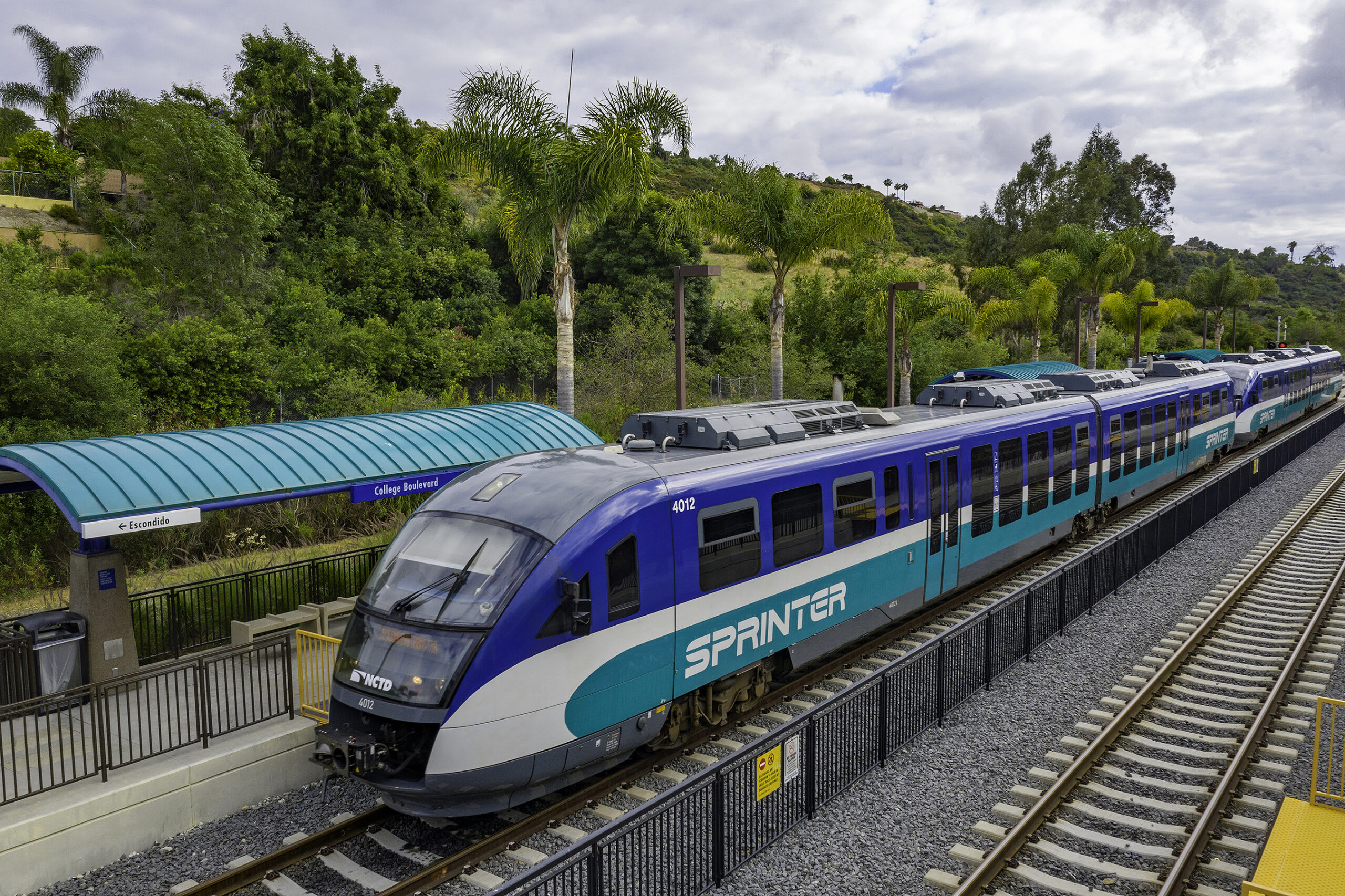
Other State Efforts to Improve Transit Permitting
The most impactful way for California to improve permitting for transit authorities is to grant them more responsibility for permitting. Still, there are other tools available for California policymakers to make indirect improvements.
CEQA reform should help avoid early commitment problems.
In 2020, the California legislature adopted meaningful CEQA reform, exempting sustainable transportation projects from the bulk of CEQA review. [208] It was extended in 2021, [209] and expanded to zero-emission rail projects in 2024. [210] Senator Scott Wiener proposed making the exemption permanent in 2025. [211]
California’s sustainable transportation exemption is not “plain-bagel streamlining,” with no strings attached. [212] To qualify, a project must use skilled and trained labor, and larger projects must conduct racial equity analyses and entertain public comment in various stages of the project. [213] Even with these substantive and procedural requirements, the reforms are not “everything bagel liberalism,” with so many well-intentioned requirements that the reforms are not useful. [214] SPUR reports that the policy is making a real impact, with the exemption being used to build at least 92 projects so far. [215]
While this report is explicitly not about how transit projects can avoid CEQA litigation, reform to California’s environmental process can help with pre-construction permitting. State and federal grant funds are often only available to transit authorities once environmental clearance is achieved. This means that transit authorities have pressure to rush through an environmental process, before important planning and third-party considerations are made. For projects that require full CEQA analysis, project scopes can be effectively locked in, precluding more practical or affordable changes during the permitting process. Extending the CEQA exemption for sustainable transportation projects will help avoid these problems of early commitment around core elements of a project.
Lawmakers should also evaluate the implementation of this reform, to ensure that transit authorities have an easy path to re-exempt their projects after later scope changes. That can help transit authorities to affordably address third-party concerns, without having to abandon the valuable risk-mitigation of a CEQA exemption.
State funding grants could also be made available earlier in the process, before the completion of environmental review. [216] Especially for projects that require a full CEQA analysis, earlier funding in the planning stages would allow transit projects to avoid early commitment problems, and more fully develop a project before undergoing environmental review. That will help transit authorities pick more feasible and environmentally friendly projects before being locked into specific scopes.
Caltrans can play an important leadership role.
Caltrans is a statewide agency with a substantial ability to influence and support the construction of public transit. In their report “Making Roads work for Transit,” SPUR identified a number of ways where leadership from Caltrans can support transit implementation. [217]
Caltrans could accomplish this by creating an expedited approval pathway for exceptions to Caltrans design standards that are commonly needed for transit projects. These might include exceptions related to lane widths, striping, and line-of-site requirements. [218]
Not only would these approaches help transit authorities build directly on the Caltrans right-of-way, but they would help Caltrans lead by example. Local governments are naturally resistant to being forced to adopt outside standards for their streets. But they are already accustomed to following Caltrans standards related to connecting local streets to state highways. Leadership from Caltrans can show local governments the way forward, and elevate expectations among public works professionals to prioritize transit.
As suggested in the above section, state funding can provide leverage for other bodies of government to enter into streamlining MOUs. Similar, CalSTA and Caltrans grants could prioritize funding to localities that adopt policies that streamline approvals for transit.
Caltrans could also take its leadership role a step further, and offer its expertise to jurisdictions that are too small to have in-house transit professionals. Following the lead of the Governor’s executive order on permitting, [219] Caltrans could establish its own office for technical assistance to coordinate transit permitting between different bodies of government. [220]
Conclusion
The challenges that transit faces in California are real. Beyond the heavily-covered difficulties of High-Speed Rail, even smaller transit authorities face a struggle to get their projects from conception to shovels in the ground.
The modern array of processes and veto points have served an important function to prevent abuses, yet they have also made building transit extremely difficult and expensive. If we want to see California build the transit that we need, then we must entertain real reforms.
Fortunately, California does not need to recreate the abuses of the unaccountable Robert Moses to construct more transit. Instead of unelected master builders, we have democratically accountable transit agencies, governed by elected officials and their appointees. We can secure the transit we need by providing transit agencies with more authority to build what we want them to build.
Reform on this issue has already begun. Policymakers should build on the momentum to further empower transit agencies and remove obstacles to new transit.
ACKNOWLEDGEMENTS
Colin Parent, Author
Chief Executive Officer and General Counsel, Circulate San Diego
Colin Parent is Chief Executive Officer and General Counsel at Circulate San Diego. He is the author of a number of reports and academic publications detailing how local land use and transportation policy can be improved to advance equity, promote economic development, and address climate change. Colin is a former elected member of the City Council of La Mesa, California, and served in the Jerry Brown administration at the California Department of Housing and Community Development.
About Circulate San Diego
Circulate San Diego is a nonprofit think tank whose mission is to create excellent mobility choices and vibrant, healthy neighborhoods. Circulate promotes public transit, safe streets, and sustainable growth. Circulate has successfully led campaigns to transform empty parking lots into affordable homes, to implement free transfers for transit riders, and for local jurisdictions to adopt Vision Zero to end traffic fatalities and serious injuries.
For more information, visit www.circulatesd.org.
Special Thanks
Laura Tolkoff, Transportation Policy Director at SPUR, provided significant research for the case studies, and valuable edits on the initial draft. Special thanks to Circulate team members Carlisle Dockery, Davida Garcia, and Octavio Garcia for assisting in designing and publishing the report. The content of this report was informed by the expertise and feedback from an advisory committee of Circulate Board members, including Chris Schmidt, Mark Baza, Sarah Buchanan, David Dekozan, and Alex Moffat. Thank you to our interns, Sean Duffy-Polanco, Hannah Bollinger, and Samantha Katz for their valuable research, citation, and design assistance.
We are grateful to Arnold Ventures for their generous support.
ENDNOTES
[1] Jerusalem Demsas, “Why does it cost so much to build things in America?,” Vox, June 28, 2021, available at https://www.vox.com/22534714/rail-roads-infrastructure-costs-america.
[2] Ethan Elkind, Katie Segal, Ted Lamm, and Michael Maroulis, Getting Back on Track: Policy Solutions to Improve California Rail Transit Projects, Berkeley Law Center for Law, Energy & the Environment (January 2022), page 14, available at https://www.law.berkeley.edu/research/clee/research/climate/transportation/ analyzing-transit-project-costs-and-delays.
[3] Eric Goldwyn, Alon Levy, Elif Ensari, and Marco Chitti, Transit Costs Project: Understanding Transit Infrastructure Costs in American Cities, NYU Marron Institute of Urban Management (February 11, 2023), at page 13, available at https://transitcosts.com/final-report.
[4] Jennifer Hernandez, David Friedman, and Stephanie DeHerrera, In the Name of the Environment, Holland & Knight (2015), available at https://www.hklaw.com/en/insights/publications/2015/08/in-the- name-of-the-environment-litigation-abuse-un; Alastair Bland, “Weakling or bully? The battle over CEQA, the state’s iconic environmental law,” CalMatters, March 27, 2025, available at https://calmatters.org/ economy/2019/05/weakling-or-bully-ceqa-environmental-law-california-development-battles
[5] Dan Walters, “Brown talks CEQA reform, but hasn’t done it,” CalMatters, August 2, 2018, available at https:// org/environment/2018/08/brown-talks-ceqa-reform-but-hasnt-done-it.
[6] Robert A. Caro, The Power Broker: Robert Moses and the Fall of New York, New York: Knopf (1974).
[7] Hadley Meares, “Why A.’s Freeways Are Symbolic Sites of Protest,” Curbed, June 11, 2020, available at https://la.curbed.com/2020/6/11/21281263/los-angeles-freeway-history-protests.
[8] Soumya Karlamangla, “San Diego’s Chicano Park Celebrates Its Anniversary,” New York Times, April 19, 2022, available at https://www.nytimes.com/2022/04/19/us/chicano-park-anniversary.html.
[9] Liam Dillon and Ben Poston, “Freeways force out residents in communities of color — again,” Los Angeles Times, November 11, 2021, available at https://www.latimes.com/projects/us-freeway-highway- expansion-black-latino-communities.
[10] See Paul Sabin, Public Citizens: The Attack on Big Government and the Remaking of American Liberalism, W. W. Norton & Company (2021); Jane Jacobs, The Death and Life of Great American Cities, Random House (1961).
[11] Steven Teles, “Kludgeocracy in America,” National Affairs, Fall 2013, available at https://www.nationalaffairs.com/publications/detail/kludgeocracy-in-america.
[12] Nicholas Bagley, The Procedure Fetish, 118 L. REV. 345, 400 (2019), available at: https://repository. law.umich.edu/mlr/vol118/iss3/2.
[13] Ezra Klein and Derek Thompson, Abundance, Avid Reader Press (2025).
[14] See Colin Parent, “Circulate San Diego Has Always Been an Abundance Organization,” Substack, March 17, 2025, available at https://open.substack.com/pub/colinparent/p/circulate-san-diego-has-always-been.
[15] Brink Lindsey, State capacity: what is it, how we lost it, and how to get it back, Niskanen Center (November 18, 2021), available at https://www.niskanencenter.org/state-capacity-what-is-it-how-we-lost- it-and-how-to-get-it-back.
[16] Suzanne Kahn, “What 50 Years of Weakened State Capacity Means for Progressive Policy Wins,” Roosevelt Institute, March 11, 2024, available at https://rooseveltinstitute.org/blog/what-50-years-of-weakened- state-capacity-means-for-progressive-policy-wins.
[17] Marc J. Dunkelman, Why Nothing Works: Who Killed Progress - and How to Bring It Back, Public Affairs (2025), at page 5 (The introduction is available online at https://www.amazon.com/Why-Nothing-Works- Killed-Progress_and/dp/154170021X).
[18] Francis Fukuyama, Political Order and Political Decay: From the Industrial Revolution to the Globalization of Democracy, Farrar, Straus and Giroux (2014).
[19] Hugh M. Clark, Who Rides Public Transportation, American Public Transportation Association (January 2017), available at https://www.apta.com/wp-content/uploads/Resources/resources/ reportsandpublications/Documents/APTA-Who-Rides-Public-Transportation-2017.pdf.
[20] Ross Eisenbrey, Testimony in a Hearing before Committee on Education and the Workforce, Subcommittee on Workforce Protection, S. House of Representatives, EPI Testimony (April 14, 2011), page 2 of the PDF, available at https://files.epi.org/page/-/img/041411-eisenbreytestimony.pdf.
[21] “Transit Is Essential: 8 Million U.S. Essential Workers Ride Transit to Their Jobs,” TransitCenter, March 24, 2020, available at https://transitcenter.org/2-8-million-u-s-essential-workers-ride-transit-to-their-jobs.
[22] Colin Parent and Maya Rosas, Essential Transit, Circulate San Diego (May 15, 2020), available at https:// circulatesd.org/essential_transit.
[23] U.S. Department of Transportation, Climate Change Center, Public Transit Expansion, page 5, available at https://rosap.ntl.bts.gov/view/dot/79400/dot_79400_DS1.pdf.
[24] California Air Resources Board, California’s 2017 Climate Change Scoping Plan (November 2017), pages 73-77, available at https://ww2.arb.ca.gov/sites/default/files/classic/cc/scopingplan/scoping_plan_2017. pdf.
[25] See Climate Action Plans: Local Examples, Institute for Local Government, available at https://www.ca-ilg. org/post/climate-action-plans-local-examples, last visited July 22, 2025.
[26] See Map of Metropolitan Planning Organizations (MPOs) and Regional Transportation Planning Agencies (RTPAs), Caltrans Division of Transportation Planning (October 2009), available at https://www.ca-ilg.org/ sites/main/files/file-attachments/mpo-rtpa_1-10_0.pdf?1402610911.
[27] Jolie Lee, “New federal oversight of subways, buses replaces state ‘patchwork,’” Federal News Network, October 17, 2012, available at https://federalnewsnetwork.com/the-federal-drive-with-terry- gerton/2012/10/new-federal-oversight-of-subways-buses-replaces-state-patchwork; Santi Ruiz, “How the Federal Transit Administration Works,” Statecraft, May 14, 2025, available at https://www.statecraft.pub/p/ how-the-federal-transit-administration.
[28] MTS, “Press Release: MTS Board Approves $243 Million Capital Budget for Transit Improvements,” March 14, 2024, available at https://www.sdmts.com/inside-mts/media-center/news-releases/mts-board-approves- 243-million-capital-budget-transit.
[29] Mischa Wanek-Libman, “San Diego opens Boulevard Bus Way pilot project,” Mass Transit Magazine, January 10, 2020, available at https://www.masstransitmag.com/bus/article/21120837/san-diego-opens- boulevard-bus-way-pilot-project.
[30] Senate Bill 1420 (1996); Public Utilities Code § 185020.
[31] Monterey-Salinas Transit, “Press Release: MST Celebrates 50 Years of Providing Safe, Dependable, Friendly Service,” August 30, 2023, available at https://mst.org/news_items/mst-celebrates-50-years-of-providing- safe-dependable-friendly-service.
[32] Assembly Bill 644 (2009); Public Utilities Code § 106010.
[33] LAFCO of Santa Clara County, Special Districts Service Review, page 1, available at https://santaclaralafco.org/sites/default/files/service_reviews/7fVTA.pdf.
[34] Public Utilities Code 24830; Alameda-Contra Costa Transit District, Board of Directors Web Page, available at https://www.actransit.org/board-of-directors, last visited July 22, 2025.
[35] Public Utilities Code § 130051; LA Metro, Metro Board of Directors Web Page, available at [36] Public Utilities Code 185020; California High-Speed Rail Authority, Board of Directors Web Page, available at https://hsr.ca.gov/about/board-of-directors, last visited July 22, 2025.
[37] See Proposed Ordinance #16-01, Measure M, Los Angeles County Traffic Improvement Plan (2017), LA Metro, at Section 7 on page 10 of the PDF, available at https://www.dropbox. com/scl/fi/1w42urj5ou6xetljee9kv/2017-MeasureM-ordinance-with-expenditure-plan.pdf?rlkey=yetcjlkdbcoxhviupuiujlaow&e=1&dl=0; TransNet Extension & Ordinance, San Diego Association of Governments (2004), page 2, available at https://www.sandag.org/-/media/SANDAG/Documents/PDF/ funding/transnet/transnet-extension-ordinance-and-expenditure-plan.pdf.
[38] 23 F.R. § 420.111 (2024); see also Federal Transit Administration, Metropolitan Planning Organization (MPO) Web Page, available at https://www.transit.dot.gov/regulations-and-guidance/transportation- planning/metropolitan-planning-organization-mpo, last visited July 22, 2025.
[39] Jesse O’Sullivan and Colin Parent, SANDAG Reboot, Circulate San Diego (November 2021), page 7, available at http://circulatesd.org/sandagreboot.
[40] Federal Transit Administration, Preparing Environmental Documents Web Page, available at https:// transit.dot.gov/regulations-and-programs/environmental-programs/preparing-environmental- documents, last visited July 22, 2025.
[41] Governor’s Office of Planning and Research, Technical Advisory: CEQA Review of Sustainable Transportation Projects (October 2021), available at https://lci.ca.gov/ceqa/docs/20211110-Sustainable_ pdf.
[42] Legislative Analyst’s Office, Overview of Transit Funding in California (February 6, 2025), available at https://lao.ca.gov/handouts/transportation/2025/Overview-of-Transit-Funding-in-CA-020625.pdf.
[43] LA Metro, D Line Subway Extension Project Web Page, available at https://www.metro.net/projects/ westside, last visited July 22, 2025.
[44] STV Incorporated, Section 3 of Metro Purple Line Extension Project Moves Forward in Los Angeles (January 5, 2022), available at https://stvinc.com/insight/section3-metro-purple-line, last visited July 22,
[45] California High-Speed Rail Authority, 2022 Proposition 1A Funding Plan (September 2022) pages 53, 62, available at https://hsr.ca.gov/wp-content/uploads/2022/09/2022-Proposition-1A-Funding-Plan-091622- A11Y.pdf
[46] There are many challenges to building transit, like environmental clearance, eminent domain disputes, and other lawsuits. Many of these have to be resolved before a project is approved by a transit authority or a funding partner. These challenges are generally not a part of this report.
[47] Office of the Inspector General California High Speed Rail, Pre-Construction Activities for the Merced and Bakersfield Extension – Persistent Delays in Securing Agreements with Third Parties Require New Solutions, Report 25-R-02 (February 21, 2025), page 2, available at https://hsr.ca.gov/wp-content/ uploads/2025/02/Early-Works-Engagement-FINAL-A11Y.pdf.
[48] Id. at 22.
[49] Kyle Harvey, “Shafter wins concessions from California High-Speed Rail Authority in legal settlement,” Bakersfield Now Eyewitness News, October 26, 2018, available at https://bakersfieldnow.com/news/local/ shafter-california-high-speed-rail-authority-reach-settlement.
[50] City of Berkeley, Council Agenda Item to Authorize a Funding Agreement with Alameda-Contra Costa Transit to Supplement the QuickBuild Durant Transit Lane Project (February 14, 2023), available at https:// gov/sites/default/files/documents/2023-02-14%20Item%2010%20Authorize%20a%20 Funding%20Agreement.pdf.
[51] City of Oakland, Council Agenda Item for International Boulevard Quick-Build Project Funding Authorization (April 4, 2024), available at https://oakland.legistar.com/View.ashx?GUID=FF084B33-27C6- 49E0-92D5-C484BC0C7E23&ID=12828237&M=F.
[52] LA Metro, Board Report: Office of the Inspector General Comparison of Metro Rail Design Criteria to 11 Cities Along the Southeast Gateway Line (July 17, 2024), pages 15–18 of the linked PDF, available at https://datamade-metro-pdf-merger.s3.amazonaws.com/2024-0220.pdf.
[53] Id. 17.
[54] Id. at 15.
[55] Id. at 15–18.
[56] Id. at 1–2.
[57] LA Metro, Construction Committee Minutes (September 21, 2023), page 1, available at https:// metro.net/board-report/2023-0560 (Board action authorizing “the Chief Executive Officer to execute the Master Cooperative Agreement between the City of Los Angeles and the Los Angeles County Metropolitan Transportation Authority for a term of ten years.”).
[58] Project Implementation Agreement Between San Diego Association of Governments and the City of San Diego Regarding the Mid-Coast Corridor Transit Project Agreement 5008300, City of San Diego (March 2015), page 58 of the linked PDF, available at https://docs.sandiego.gov/councilcomm_agendas_ attach/2015/Infra_150624_3.pdf.
[59] See Eric Goldwyn, Alon Levy, Elif Ensari, and Marco Chitti, How to Improve Domestic High-Speed Rail Project Delivery, NYU Marron Institute of Urban Management (July 11, 2024), page 34, available at https:// com/wp-content/uploads/HSR_Final_Report.pdf, citing Chantal Cantarelli, Bent Flyvbjerg, Bert van Wee, and Eric Molin, Lock-in and Its Influence on the Project Performance of Large-Scale Transportation Infrastructure Projects: Investigating the Way in Which Lock-in Can Emerge and Affect Cost Overruns, Environment and Planning B: Planning and Design 37, pages 792–807, available at https:// journals.sagepub.com/doi/10.1068/b36017.
[60] See Goldwyn et al., supra note 3, at 27.
[61] Id. at 22.
[62] Id. at 28.
[63] California Secretary of State, California Official Voter Information Guide for the California General Election on November 4, 2008, available at https://vigarchive.sos.ca.gov/2008/general/title-sum/prop1a-title-sum. htm, last visited July 22, 2025.
[64] California High-Speed Rail Authority, Federal Grants Web Page, available at https://hsr.ca.gov/about/ funding/federal-grants, last visited July 22, 2025.
[65] Ralph Vartabedian, “Trump’s Proposed Cut Would Deal Serious Setback to California High-Speed Rail,” June 7, 2025, available at https://www.nytimes.com/2025/06/07/us/high-speed-rail-california-federal-funding. html.
[66] Senate Bill 862 (2014); Health and Safety Code § 39719(b)(2).
[67] California High-Speed Rail Authority, supra note 45, at 31.
[68] See generally Goldwyn et , supra note 59; Colleen Shalby, “Despite some progress, state’s high-speed rail is $100 billion short and many years from reality,” Los Angeles Times, March 21, 2024, available at https:// www.latimes.com/california/story/2024-03-21/high-speed-rail; Ralph Vartabedian, “New cost estimate for high-speed rail puts California bullet train $100 billion in the red,” CalMatters, May 24, 2023, available at https://calmatters.org/economy/2023/03/california-high-speed-rail.
[69] Post from California High Speed Rail X (formerly Twitter) Account, February 20, 2025 (“CA High- Speed Rail has been audited over 100x, every dollar is accounted for & progress is real - 50 structures built, 14,600 jobs created & 171 miles under construction.”), available at https://x.com/CaHSRA/ status/1892697304726966484.
[70] California High-Speed Rail Authority, California High-Speed Rail Change Orders Web Page, July 9, 2025, available at https://hsr.ca.gov/about/transparency-accountability/change-orders, last visited July 23,
[71] Office of the Inspector General California High-Speed Rail, Merced to Bakersfield Segment: The Authority Is Unlikely to Complete the Segment as Currently Envisioned within Its Planned Schedule, Report 25-R-01 (February 2, 2025), page 14, available at https://hsr.ca.gov/wp-content/uploads/2025/02/Schedule- Engagement-Report-FINAL-A11Y.pdf.
[72] Public Utilities Codes §§ 185000–185511.
[73] Public Utilities Code § 185032(a).
[74] Public Utilities Code § 185020(b)–(d); Board of Directors Web Page, supra note 36.
[75] Board of Directors Web Page, supra note 36.
[76] Assembly Bill 2879 (2024); Public Utilities Code § 185036.2.
[77] California High-Speed Rail Authority, Resolution HSRA #16-01 (January 12, 2016), available at https://hsr. gov/wp-content/uploads/docs/brdmeetings/2016/brdmtg_011216_Item3_Final_Resolution_16_01_ Award_of_the_Design_Build_Services_Contract_for_Construction_Package4.pdf.
[78] Railway Pro, “California Rail Builders selected for HSR Construction Package 4,” January 6, 2016, available at https://www.railwaypro.com/wp/california-rail-builders-selected-for-hsr-construction-package-4; California High-Speed Rail Authority, Map of Construction Package 4, August 2018, available at https://buildhsr.com/ wp-content/uploads/2023/03/CP4_Map.pdf, last visited July 23, 2025.
[79] Resolution HSRA #16-01, supra note 77.
[80] Austin Westfall, “City of Wasco, Rail Authority, reach disagreement over 6th Street closure,” 23ABC, September 2, 2020, available at https://www.turnto23.com/news/local-news/city-of-wasco-rail-authority- reach-disagreement-over-6th-street-closure.
[81] Id.
[82] Id.
[83] Toni DeRosa, “Council rescinds part of deal with High Speed Rail,” Wasco Tribune, September 3, 2020, available at https://www.wascotrib.com/story/2020/09/03/news/council-rescinds-part-of-deal-with-high- speed-rail/1707.html.
[84] Id.
[85] California High-Speed Rail Authority, “PHOTO RELEASE: High-Speed Rail Authority Celebrates Completion of Grade Separation Project in City of Wasco,” August 3, 2023, available at https://hsr.ca.gov/2023/08/03/ photo-release-high-speed-rail-authority-celebrates-completion-of-grade-separation-project-in-city-of- wasco.
[86] See Appendix A of this report, available at http://www.circulatesd.org/powerlessbrokers.
[87] California High-Speed Rail Authority, supra note 85.
[88] California High-Speed Rail Authority, Resolution # HSRA 12-19 (May 3, 2012), available at https://hsr.ca.gov/wp-content/uploads/docs/programs/merced-fresno-eir/final_EIR_MerFres_FinalResolve12-19.pdf.
[89] Federal Railroad Administration, Record of Decision for California High-Speed Train Merced to Fresno Section (September 18, 2012), page 41, available at https://hsr.ca.gov/wp-content/uploads/docs/ programs/merced-fresno-eir/final_EIR_MerFres_FRA09182012.pdf.
[90] See at 2; California High-Speed Rail Authority, Resolution # HSRA 12-20 (May 3, 2012), available at https://hsr.ca.gov/wp-content/uploads/docs/programs/merced-fresno-eir/final_EIR_MerFres_ FinalResolve12-20.pdf.
[91] California High-Speed Rail Authority, Resolution # HSRA 20-06 (September 10, 2020), available at https://hsr.ca.gov/wp-content/uploads/docs/brdmeetings/2020/brdmtg_091020_Item10_Final_ Resolution_20-06_Wye_CEQA_Certification.pdf.
[92] California High-Speed Rail Authority, Resolution # HSRA 20-07 (September 10, 2020), available at https://hsr.ca.gov/wp-content/uploads/docs/brdmeetings/2020/brdmtg_091020_Item11_Final_ Resolution_20-07_Wye_CEQA_Findings.pdf.
[93] See California High-Speed Rail Authority, Project Section Environmental Documents Web Page for Merced to Fresno: Central Valley Wye, available at https://hsr.ca.gov/programs/environmental-planning/project- section-environmental-documents-tier-2/merced-to-fresno-central-valley-wye, last visited July 23, 2025.
[94] See Petition for Writ of Mandate, County of Madera v. California High-Speed Rail Authority, No. 2012- 80001165-CV (Cal. Ct. filed June 1, 2012); Settlement Agreement between the County of Madera and California High-Speed Rail Authority (April 16, 2013), available at https://hsr.ca.gov/wp-content/ uploads/2025/06/Settlement-Agreement-Madera-Co-only-and-CHSRA-fully-executed-with-Ex-A.pdf.
[95] California High-Speed Rail Authority, Resolution # HSRA 13-12 (June 6, 2013), available at https://hsr. gov/wp-content/uploads/docs/brdmeetings/2013/060613/AI_2_Resolution_HSRA_13_12_Approval_ to_Award.pdf.
[96] Tutor Perini, “Press Release: Tutor Perini Joint Venture Executes Contract for California High-Speed Rail Project,” August 20, 2013, available at https://investors.tutorperini.com/press-releases/press-release- details/2013/Tutor-Perini-Joint-Venture-Executes-Contract-for-California-High-Speed-Rail-Project/default. aspx.
[97] California High Speed Rail Authority, Construction Package 1 Web Page, available at https://buildhsr.com/ construction-packages/construction-package-1, last visited July 23, 2025.
[98] Tutor Perini, supra note 96.
[99] Appendix B, available at http://www.circulatesd.org/powerlessbrokers (change orders 175, 414,01, and 414.02).
[100] Appendix B, available at http://www.circulatesd.org/powerlessbrokers (change orders 506 and 369).
[101] Appendix B, available at http://www.circulatesd.org/powerlessbrokers (change orders 451 and 491)
[102] Appendix B, available at http://www.circulatesd.org/powerlessbrokers (change orders 363, 364, and 398)
[103] Appendix B, available at http://www.circulatesd.org/powerlessbrokers (change order 133).
[104] Appendix B, available at http://www.circulatesd.org/powerlessbrokers.
[105] LA Metro, D Line Subway Extension Project Web Page, available at https://www.metro.net/projects/ westside, last visited July 23, 2025.
[106] LA Metro, “L.A. Metro Announces Winners of Purple Line Extension Section 3 Tunnel Boring Machine Art and Naming Contest,” October 20, 2020, available at https://www.metro.net/about/l-a-metro-announces- winners-of-purple-line-extension-section-3-tunnel-boring-machine-art-and-naming-contest.
[107] Laura Nelson, “Metro picks Skanska venture to build first phase of Westside subway,” Los Angeles Times, July 24, 2014, available at https://www.latimes.com/local/countygovernment/la-me-westside-subway- contract-20140725-story.html.
[108] Skanska, “Press Release: Skanska-led joint venture awarded $1.6 billion contract to extend LA Metro Purple Line,” November 10, 2014, available at https://www.usa.skanska.com/who-we-are/media/press- releases/51507/Skanskaled-joint-venture-awarded-1.6-billion-contract-to-extend-LA-Metro-Purple-Line.
[109] Id.
[110] Joe Linton, “Beverly Hills School District Files New Lawsuit Against Purple Line Subway,” Streetsblog LA, January 29, 2018, available at https://la.streetsblog.org/2018/01/29/beverly-hills-school-district-files- new-lawsuit-against-purple-line-subway; see, for example, Samuel Braslow, “City Council Approves Settlement with Metro,” Beverly Hills Courier, November 18, 2020, available at https://beverlyhillscourier. com/2020/11/18/city-council-approves-settlement-with-metro.
[111] Public Utilities Code § 130050.2.
[112] LA Metro Transportation Research Library and Archive, Southern California Rapid Transit District (1964- 1993), available at https://metroprimaryresources.info/hub/scrtd, last visited July 23, 2025.
[113] Public Utilities Code 130051; LA Metro Board, Metro Board of Directors Web Page, available at https:// boardagendas.metro.net/board-members, last visited July 23, 2025.
[114] Elkind et al., supra note 2, at 34.
[115] LA Metro, Board Report: City of Los Angeles Master Cooperative Agreement (September 21, 2023), at page 2 of the PDF, available at https://datamade-metro-pdf-merger.s3.amazonaws.com/2023-0560.pdf (Board report recommending authorizing “the Chief Executive Officer to execute the Master Cooperative Agreement between the City of Los Angeles and the Los Angeles County Metropolitan Transportation Authority for a term of ten years.” The report recites the history since 1991 of prior cooperation agreements and lapses of agreements between LA Metro and the City of Los Angeles).
[116] at 3 (Summary § 3“Governance - The agreement establishes an MCA Executive Task Force, a standing task force that will meet quarterly and will, among other matters, review lessons learned, opportunities and challenges, and look-ahead to upcoming transportation projects and long-range resource planning.”).
[117] Id. (Summary § 5 “Issue Resolution”).
[118] Id. at 4 (Summary § 12 “Special Permitting Process - LACMTA and the City agree on the design and Construction requirements for Rearrangements of City facilities, agree on the permits that will be waived by the City and any required City fees applicable to transportation projects.”).
[119] Id. at 3.
[120] Id. at page 20 of the PDF
[121] Id. at 4.
[122] LA Metro, Board Report: Westside Purple Line Extension Section 1 Project (August 20, 2020), at page 1 of the PDF, available at https://boardagendas.metro.net/board-report/2020-0351.
[123] Id. at 3.
[124] Id.
[125] LA Metro, Board Report: Office of the Inspector General, Office of the Inspector General Construction Change Order Construction Spot Checks (File # 2024-0780) (January 20, 2022), at pages 4 and 26 of the PDF, available at https://datamade-metro-pdf-merger.s3.amazonaws.com/2021-0780.pdf.
[126] LA Metro, Change Order Log For Construction Committee (October 2022), at page 7 of the PDF, available at https://metro.legistar1.com/metro/attachments/e12fed93-d1fb-4a8a-b6c0-b4aef8aa191d.pdf.
[127] LA Metro, Board Report: Office of the Inspector General, Office of the Inspector General Construction Change Order Spot Checks (File # 2024-1075) (January 15, 2025), at page 3 of the PDF, available at https:// datamade-metro-pdf-merger.s3.amazonaws.com/2024-1075.pdf.
[128] Federal Transit Administration, “Press Release: Investing in America: Biden-Harris Administration Announces $22.2 Million to Support Bus Rapid Transit in California’s Central Coast Region,” January 13, 2025, available at https://www.transit.dot.gov/about/news/investing-america-biden-harris- administration-announces-222-million-support-bus-rapid.
[129] See Monterey-Salinas Transit, Monterey-Salinas Transit SURF! Busway and Bus Rapid Transit Project – Coastal Development Permit Application and Supporting Materials (March 31, 2023), pages 24–25 of the linked PDF, available at, https://mst.org/wp-content/media/MST-Coastal-Commission-Application- March-2023.pdf.
[130] Keep Fort Ord Wild v. Monterey-Salinas Transit District, No. 21CV002192 (Cal. Super. Ct. filed July 8, 2021), full docket available at https://portal.monterey.courts.ca.gov/case/MjFDVjAwMjE5Mg==#events; Mary Duan, “A lawsuit aims to halt a new Monterey-Salinas Transit project,” Monterey County Now, July 22, 2021, available at https://www.montereycountynow.com/opinion/local_spin/a-lawsuit-aims-to-halt-a-new- monterey-salinas-transit-project/article_9788a73a-ea71-11eb-b9c5-afcc4d1a980d.html; Monterey-Salinas Transit Board of Directors, Meeting Minutes, Item 7-3 (March 13, 2023), page 7, available at https://mst. org/wp-content/media/202303-March-Minutes.pdf; see also Monterey-Salinas Transit, Staff Report to Board of Directors regarding Item 7-3 SURF! Busway and Bus Rapid Transit Project (March 13, 2023), page 2 of the linked PDF, available at https://mst.org/wp-content/media/7-3-Staff-Report-and-Exhibits.pdf.
[131] Museum of Handcar Technology LLC v. Transportation Agency for Monterey County, No. 5:24cv08598 (N.D. Cal. filed Nov. 30, 2024); Museum of Handcar Technology LLC v. California Transportation Commission, 25WM000004 (Cal. Super. Ct. filed Jan. 3, 2025); David Schmalz, “A federal judge rules the handcars in Marina can remain operating indefinitely.,” Monterey County Now, April 17, 2025, available at https://www.montereycountynow.com/blogs/news_blog/a-federal-judge-rules-the-handcars-in-marina- can-remain-operating-indefinitely/article_2b1423bb-3b1a-4684-af65-934f56f42ca5.html.
[132] Monterey-Salinas Transit SURF! Busway and Bus Rapid Transit Project, supra note 129, pages 8–9 of the linked PDF, available at, https://mst.org/wp-content/media/MST-Coastal-Commission-Application- March-2023.pdf.
[133] Id. (Describing permit applications to the Coastal Commission, City of Marina, and Sand City at pages 1–2 of the linked PDF, Caltrans at page 40 of the linked PDF, TAMC at pages 8–9 of the linked PDF).
[134] Public Utilities Code § 106010.
[135] Public Utilities Code § 106031.
[136] Colin Parent and William Moore, A Better Coastal Commission, Circulate San Diego (June 2024), available at https://www.circulatesd.org/a_better_coastal_commission.
[137] Monterey-Salinas Transit, Board Meeting Agenda Item 3-1 (June 14, 2021), pages 3 of the linked PDF, available at https://mst.org/wp-content/media/Agenda_MST_202106-June.pdf.
[138] California Coastal Commission, Combined Staff Report: Appeal Number A-3-MRA-24-0026 (July 26, 2024), pages 1 and 3, available at https://documents.coastal.ca.gov/reports/2024/8/W15a-W16a/W15a-W16a-8- 2024-report.pdf.
[139] Monterey-Salinas Transit, Letter to California Coastal Commission (August 20, 2024), page 2, available at https://mst.org/wp-content/media/MST-Letter-to-CCC-Final-8-20-2024.pdf
[140] Id.
[141] Id. pages 2 and 4.
[142] Id. page 2.
[143] Id. page 5.
[144] Monterey-Salinas Transit, “Press Release: Monterey-Salinas Transit Finds Path for Coastal Commission Approval of the SURF! Busway Project,” August 30, 2024, available at https://mst.org/news_items/ monterey-salinas-transit-finds-path-for-coastal-commission-approval-of-the-surf-busway-project.
[145] David Schmalz, “Monterey-Salinas Transit’s embattled SURF! project is now riding a wave toward approval,” Monterey County Now, September 5, 2024, available at https://www.montereycountynow.com/news/ local_news/monterey-salinas-transit-s-embattled-surf-project-is-now-riding-a-wave-toward-approval/ article_ff814eb4-6b06-11ef-8412-431b43620b25.html.
[146] California Coastal Commission, Staff Report: Appeal Number A-3-MRA-24-0026 (August 30, 2024), pages 1 and 5, available at https://documents.coastal.ca.gov/reports/2024/9/Th8e-Th9a/Th8e-Th9a-9-2024-report. pdf.
[147] Id. at 4 and 8.
[148] Id. at 76.
[149] Id.
[150] Monterey-Salinas Transit, Board Meeting Agenda Item 3-1 (November 25, 2024), page 5 of the linked PDF, available at https://mst.org/wp-content/media/Special-Board-Meeting-Agenda-Packet-November-2024. pdf; Schmalz, supra note 145.
[151] Monterey-Salinas Transit District, supra note 150.
[152] Andrew Keatts, “Fact Check: ‘One of the Best Light Rail Lines’ In the Country,” Voice of San Diego, August 1, 2013, available at https://voiceofsandiego.org/2013/08/01/fact-check-one-of-the-best-light-rail-lines-in- the-country
[153] Senate Bill 1703 (2002); Pub. Util. Code §132000 et seq.
[154] Assembly Bill 805 (2017).
[155] Jim Stone, Policy Letter: Support for AB 805, Circulate San Diego (May 19, 2017), available at https://www. org/ab805.
[156] San Diego Association of Governments, Board of Directors Web page, available at https://www.sandag. org/meetings-and-events/board-of-directors, last visited June 9, 2025.
[157] See Mischa Wanek-Libman, “Mid-Coast Corridor Program Delivered with a Project-First Mentality,” Mass Transit Magazine, May 31, 2022, available at https://www.masstransitmag.com/rail/infrastructure/ article/21267569/mid-coast-corridor-program-delivered-with-a-project-first-mentality.
[158] LA Metro, Tap Agencies Website, available at https://www.taptogo.net/TAPAgencies, last visited July 23, 2025.
[159] Sara Barz, “The Definitive List of Bay Area Transit Agencies,” Seamless Bay Area, November 27, 2019, available at https://www.seamlessbayarea.org/blog/transitagencieslist.
[160] Elkind et al., supra note 2 at 48; Aileen Cho, “Key Light Rail Extension Connects San Diego Area, ENR West, July 22, 2019, available at https://www.enr.com/articles/47234-key-light-rail-extension-connects-san-diego-area.
[161] City of San Diego, Report to City Council: Execute Agreements with the San Diego Association of Governments for the Mid-Coast Corridor Transit Project (June 18, 2025), available at https://docs.sandiego. gov/councilcomm_agendas_attach/2015/Infra_150624_3.pdf.
[162] Senate Bill 1703 (2002); California Public Utilities Code § 132354.4.
[163] Adam Racusin, “Trolley extension disagreement could delay project in San Diego,” ABC 10 News, February 20, 2020, available at https://www.10news.com/news/local-news/trolley-extension-disagreement-could- delay-project.
[164] SANDAG, Board of Directors Meeting Agenda (February 28, 2020), pages 131-133, available at https://pub- escribemeetings.com/FileStream.ashx?DocumentId=1807.
[165] Public Utilities Code §§ 53090(a) and 53091; Rapid Transit Advocates, Inc. v. Southern Cal. Rapid Transit , 185 Cal. App. 3d 996, 1001 (1986) (“Moreover, the Legislature has removed transit districts from the definition of ‘local agency,’ thereby exempting the SCRTD from local zoning and building restrictions.”).
[166] Assembly Bill 784 (2021).
[167] Public Utilities Code § 120244.
[168] Public Utilities Code §§ 132353.2 and 132353.4.
[169] SANDAG and the City of San Diego, Wet Utility Reimbursement Agreement Between San Diego Association of Governments and City of San Diego Regarding the Mid-Coast Corridor Transit Project (September 22, 2015), available at https://www.sandiego.gov/sites/default/files/h166601.pdf (“Pursuant to California Public Utilities Code Sections 120244, 132353.4 & 132354, SANDAG may exercise all rights and powers granted to SANDAG that are necessary to carry out the PROJECT, including but not limited to all property rights granted to MTS.”); SANDAG and the City of San Diego, SANDAG and the City of San Diego, Wet Utility Reimbursement Agreement Between San Diego Association of Governments and City of San Diego Regarding the Elvira to Morena Double Track (EMDT) Project (September 22, 2015), available at https://www.sandiego.gov/sites/default/files/h166600.pdf (“Pursuant to California Public Utilities Code Sections 120244, 132353.4 & 132354, SANDAG may exercise all rights and powers granted to SANDAG that are necessary to carry out the PROJECT, including but not limited to all property rights granted to ”).
[170] Id.
[171] Public Utilities Code § 30631(b).
[172] See LA Metro, Construction Committee Board Report (June 21, 2018), available at https://datamade- metro-pdf-merger.s3.amazonaws.com/2018-0285.pdf (approving expenditures for utilities relocations from LA Metro funds); Pasadena Metro Blue Line Auth. v. Pac. Bell Tel. Co., 140 Cal. App. 4th 658, 666 (2006).
[173] Elkind et al., supra note 2 at 44.
[174] See also Chris Nichols, “Trolley link to La Jolla spikes to $1.7 billion,” San Diego Union Tribune, September 4, 2016, available at https://www.sandiegouniontribune.com/2012/12/18/trolley-link-to-la- jolla-spikes-to-17-billion.
[175] “Big Tram on Campus,” Building Design and Construction, August 11, 2020, available at https://www. com/home/article/55144042/big-tram-on-campus.
[176] Toni Botte Bates and Paul Jablonski, San Diego, California, Trolley’s New Green Line: Early Success for Distinctive Service, Transportation Research Record: Journal of the Transportation Research Board (2007), available at https://journals.sagepub.com/doi/abs/10.3141/2006-05; Jeff Ristine, “SDSU’s new connection: Trolley stop on expanded line proving popular with parking-weary students,” San Diego Union Tribune, September 20, 2005.
[177] Andrew Bowen, “$61 Million Spent On SANDAG’s Bike Program; Less Than 4 Miles Completed,” KPBS, January 10, 2018, available at https://www.kpbs.org/news/public-safety/2018/01/10/sandag-bike- program-less-4-miles-complete.
[178] Laura Tolkoff, Success on the Street: California’s CEQA exemption has helped cities build modern mobility faster — and become a foundation for future streamlining, SPUR (March 11, 2025), available at https:// spur.org/publications/policy-brief/2025-03-11/success-street.
[179] Governor Gavin Newsom, EXECUTIVE ORDER N-8-23, available at https://www.gov.ca.gov/wp-content/ uploads/2023/05/5.19.23-Infrastructure-EO.pdf.
[180] California Assembly Select Committee on Permitting Reform, Final Report (March 2025), available at https://a14.asmdc.org/select-committee-permitting-reform.
[181] Greg Berman and Aubrey Fox, Gradual: The Case for Incremental Change in a Radical Age, Oxford University Press (2023).
[182] Brink Lindsey, State capacity: what is it, how we lost it, and how to get it back, Niskanen Center (November 18, 2021), available at https://www.niskanencenter.org/state-capacity-what-is-it-how-we-lost- it-and-how-to-get-it-back
[183] California Assembly Select Committee on Permitting Reform, supra note 180, at 32.
[184] Tolkoff, supra note 178, at 15.
[185] Senate Bill 445 (2025) (Initial version introduced on February 18, 2025. The bill was subsequently amended significantly.)
[186] See Governor’s Office of Land Use and Climate Innovation, Judicial Streamlining Web Page, available at https://lci.ca.gov/ceqa/judicial-streamlining, last visited May 29, 2025, referencing Senate Bill 7 (2021) and Senate Bill 149 (2023).
[187] Goldwyn et al., supra note 59, at page 36.
[188] Mario Loyola, Global Infrastructure Permitting: A Survey of Best Practices, Competitive Enterprise Institute and The Permitting Institute (June 2023), page 3, available at https://cei.org/wp-content/ uploads/2023/07/Global-Infrastructure-Permitting.pdf.
[189] Elkind et al., supra note 2 at 35, citing Romic Aevaz, Brianne Eby, Paul Lewis, Robert Puentes, Saving Time and Making Cents: A Blueprint for Building Transit Better, Eno Center for Transportation, page 173, available at https://projectdelivery.enotrans.org/wp-content/uploads/2021/07/Saving-Time-and-Making- Cents-A-Blueprint-for-Building-Transit-Better.pdf.
[190] Office of the Inspector General California High Speed Rail, supra note 47, pages 24, 31.
[191] Id. at 31.
[192] Senate Bill 445 (2025)(The bill was subsequently amended to substantially remove these permitting shot clock rules).
[193] Office of the Inspector General California High Speed Rail, supra note 47, pages 23 and 31.
[194] Senate Bill 960 (2024); Streets and Highways Code § 671.5.
[195] Goldwyn et al., supra note 59, pages 36-37.
[196] Federal Communications Commission, Declaratory Ruling FCC 09-99 (November 18, 2009), available at https://docs.fcc.gov/public/attachments/fcc-09-99a1.pdf.
[197] Caltrans Encroachment Permits Manual, Section 201.5, available at https://dot.ca.gov/programs/traffic- operations/ep/ep-manual; SANDAG and the SCAG, Broadband Permitting Report (June 2024), available at https://scag.ca.gov/sites/default/files/2025-02/24-3190-permit-streamlining-broadband-report_ final-2024-09.pdf.
[198] Elkind et al., supra note 2 at 35.
[199] LA Metro, supra note 115, at 4 (Summary §12 “Special Permitting Process - LACMTA and the City agree on the design and Construction requirements for Rearrangements of City facilities, agree on the permits that will be waived by the City and any required City fees applicable to transportation projects”).
[200] LA Metro, supra note 52 at 33 of the PDF.
[201] City of San Diego, supra note 58, at 58 of the PDF.
[202] Senate Bill 960 (2024); Streets and Highways Code § 671.5.
[203] LA Metro, supra note 52, at 2.
[204] Right of Way Manual, California Department of Transportation (July 2023), available at https://dot.ca.gov/-/ media/dot-media/programs/right-of-way/documents/rw-manual/rw-manual-july-2023-a11y.pdf; See also 23 C.F.R. 710.201 (2020).
[205] LA Metro, supra note 52, pages 15-18 of the PDF.
[206] Id. at page 17 of the PDF (comments from the City of Paramount’s contract engineering firm stating that the city evaluates projects on an ambiguous case-by-case basis); See also Franz Kafka, The Trial, Verlag Die Schmiede, Berlin (1925).
[207] Senate Bill 330 (2019); Government Code 66300(a)(7)(“Objective design standard” is defined as “a design standard that involve no personal or subjective judgment by a public official and is uniformly verifiable by reference to an external and uniform benchmark or criterion available and knowable by both the development applicant or proponent and the public official before submittal of an application.”).
[208] Senate Bill 288 (2020); Public Resources Code § 21080.25.
[209] Senate Bill 922 (2021).
[210] Assembly Bill 2503 (2024).
[211] Senate Bill 71 (2025).
[212] Christopher Elmendorf and Clayton Nall, Plain-Bagel Streamlining? Notes from the California Housing Wars, 75 Case W. Rsrv. L. Rev. 263 (2024), available at: https://scholarlycommons.law.case.edu/caselrev/ vol75/iss1/10.
[213] Public Resources Code § 21080.25.
[214] Ezra Klein, “The Problem With Everything-Bagel Liberalism,” New York Times, April 2, 2023, available at https://www.nytimes.com/2023/04/02/opinion/democrats-liberalism.html.
[215] Tolkoff, supra note 178 at 6.
[216] Elkind et al., supra note 2 at, pages 28 and 33 (making similar recommendations).
[217] Jonathan Kass, Making Roads Work for Transit, SPUR (September 6, 2023), available at https://www.spur. org/publications/spur-report/2023-09-06/making-roads-work-transit.
[218] Id. at 33.
[219] Governor Gavin Newsom, supra note 179.
[220] Elkind et al., supra note 2 at 35.
EXECUTIVE SUMMARY
In California, building transit is slow and expensive. The transit we need to meet our climate and mobility goals too often remains aspirational.
Even when public transit projects are approved by elected officials or through ballot measures by the voters themselves, transit authorities do not have the power to construct them. Before they can build, they must seek third-party permits from local governments, special districts, state agencies, and public and private utilities.
This report focuses on the many third-party permitting challenges facing transit that are arbitrary, excessive, and avoidable. Within this report are case studies from across California documenting permitting issues that added costs and delays for needed transit projects. They range from the largest project in California – High-Speed Rail – to a small busway on the central coast.
The report tittle is a play on Robert Caro’s legendary biography of Robert Moses, “The Power Broker.” While Moses was the infamous and unstoppable master builder of New York, many transit agencies in California struggle to build, and find themselves powerless.
In recent decades, many reforms were adopted to prevent the abuses of Moses-style planning. Those same reforms have created their own challenges, adding an array of new hurdles and veto points, limiting state capacity to get projects done quickly and cost-effectively. For California to secure abundant public transit, it must empower transit authorities to build. This report contains a variety of recommendations, including to:
- Reassign permitting responsibility from third-parties to transit authorities themselves,
- Incentivize local governments to prioritize transit, adopt transparent standards, and streamline permitting,
- Extend CEQA exemptions for sustainable transportation, and
- Encourage more transit leadership from Caltrans.
INTRODUCTION
In the United States, building transit is slow and expensive. Domestic transit projects can cost many times more to build than in peer developed countries. [1] Transit projects in California face similar challenges, with recent rail projects roughly two to three times more expensive than international averages.[2] Delays can be measured not in months or weeks, but decades.
The sooner that projects are built, the sooner we can realize the social, economic, and environmental benefits of those investments. When projects cost too much and take too long, we get fewer of them, and public support for public transit wanes.
A growing body of research has documented the drivers of costs and delays for public transit capital projects in the United States. The reasons are many, including political interference, a lack of upfront funding for project development, inadequate cost controls, decisions that are outsourced to the private sector, legal systems that privilege the individual over the collective, and regulatory challenges. This report focuses on one particular type of regulatory challenge, the pre-construction permitting process. Pre-construction permitting describes the process of gaining approvals (permits) from third-parties to construct capital projects, usually on rights-of-way that the transit agency does not own.
Many of the challenges facing transit authorities are outside the scope of this report but bear mentioning. Transit stations in the United States are substantially larger than in peer countries, which is a leading driver of hard costs. [3] Environmental review, especially under California’s CEQA process, can create costs and substantial risks of litigation. [5] neither are the focus of this report.
Project sponsors that beat the odds and secure environmental approval and enough funding to build the project are not in the clear. They can still face a gauntlet of additional permitting requirements from third-parties, including local governments, special districts, and public and private utilities, especially when projects cross multiple jurisdictions.
This report documents some of the challenges that transit authorities encounter to obtain third-party permits before construction can begin. This report relies on case studies of transit projects in California to demonstrate these challenges and recommends reforms that can remove unnecessary barriers to transit construction.
Powerless Brokers and State Capacity
Robert Caro’s legendary book “The Power Broker,” details the career of Robert Moses, New York’s unelected master builder.[6] His efforts saw the construction of many great infrastructure projects, still useful today. Though notably, he resisted building public transit.
Moses also earned infamy for destroying neighborhoods and bulldozing through community opposition. His decisions had large and negative impacts to the working-class and to communities of color. Moses was rightly criticized in “The Power Broker,” and beyond, for operating as an unaccountable power unto himself. Top-down Moses-style planning was replicated across the United States, through the interstate highway system, federal urban renewal programs, state departments of transportation, and more. Highways in particular have displaced communities in California, like the East Los Angeles Interchange that was built through Boyle Heights in Los Angeles,[7] and the 5 Freeway that bifurcated the Barrio Logan neighborhood in San Diego.[8] Those impacts have been disproportionally borne by communities of color. [9]
The reaction to Moses-style planning included a decades-long push to decentralize power. Many advocates shifted their approach from empowering government to restricting government from abusing its power.[10] Laws and practices have been revised to prevent government agencies from operating like Moses. Public input is more routinely required before projects are selected and approved. Citizens are allowed to bring lawsuits to stop projects that do not account for environmental or other concerns. Public infrastructure projects often require multiple levels of review by different government agencies, with many requirements to ensure broad consensus before any project can move forward.[11]
The modern policy landscape to require large amounts of process before government can act has created public benefits that should be celebrated. Our air and water are cleaner. Many communities no longer must experience changes to their environments without a voice in the process.
Despite the benefits of many modern policies, the move toward proceduralism and decentralization of authority has begun to be reconsidered.[12] Many have argued that the policies adopted to counter the abuses of the middle of the twentieth century have themselves led to the new problems we face today.
“Abundance” by Ezra Klein and Derek Thompson,[13] and the broader abundance movement,[14] argue that our own rules have diminished state capacity to create things we need, such as clean energy, housing, and transit. Efforts to diminish state capacity have come from both the right and the left of the political spectrum.[15]
Transit is one of many things we need, for which it is extremely difficult to build. A central challenge is that, with few exceptions, transit agencies do not own the rights-of-way (roads, highways, or railroads) that they need to use to provide service. Another central challenge is that public transit corridors often traverse multiple jurisdictions. This is a problem of state capacity, government’s ability to accomplish its goals.[16]
The policies meant to restrict highways from separating communities, are now preventing the construction of public transit, meant to stitch communities together. The public expects transit authorities to build transit, but we have a system of laws and processes that prevent the public sector from achieving the goals it sets out for itself. While Robert Moses was the titular “Power Broker,” modern transit authorities often find themselves powerless.
The public is growing frustrated that the rules governing infrastructure prevent us from building. In “Why Nothing Works,” Marc Dunkelman describes supporters of public transit who cautiously whispered to him that “This is why we need another Robert Moses.”[17]
Transit Does Not Need Another Robert Moses
The abuses of Moses-style planning were real, and policymakers were correct to restrain government actors from repeating them. Requiring more transparency and accountability were important and necessary corrections.
In “Why Nothing Works,” Dunkelman argues that many policy shifts are centered around two competing impulses, the Jeffersonian impulse to disaggregate power, and the Hamiltonian impulse to centralize it. The reforms inspired in part by Moses and “The Power Broker” are all in the Jeffersonian direction. New laws limited the authority of individual government actors to do things, with more complicated processes and more veto points to slow or stop projects.[18]
We have seen a gradual accretion into a system where transit authorities are tasked with building, but lack the authority to do so. That power is instead distributed across many agencies, and many local jurisdictions. Transit projects chosen by elected officials, or voted on by the public, are not able to be built. No one is in charge, so no one is to blame when needed projects do not happen. The result is not more accountability, but less.
The solution is not to go full Hamilton in the other direction. We should not unlearn the lessons of “The Power Broker” and Moses-style planning. We do not need to resurrect the abuses of the past in order to secure the transit of the future.
Nevertheless, some shift in the Hamiltonian direction is necessary to restore state capacity. The path forward is to allocate more responsibility to democratically accountable public agencies that are tasked with building transit. A move in this direction would not restore power to unelected master builders. Instead, modern transit authorities are governed by elected officials and their appointees. California transit authorities are accountable and subject to public scrutiny, and they should be given the tools necessary to build the projects we need.
Value of Transit
Transit provides a diverse array of public value. High capacity vehicles carry far more passengers per lane than private cars, meaning the same right-of-way efficiently delivers many more trips while using far less energy and space. Riders that choose transit free up scarce road capacity for deliveries, emergency vehicles, and those who truly need to drive, making the entire system work better for everyone.
Transit provides direct value to individuals. It is especially important for those who cannot rely on an automobile. Transit is disproportionately used by lower income people and communities of color.[19] Federal funding for transit capital projects generally requires elevated pay and benefits for construction workers.[20] Operators like bus drivers and maintenance workers are often unionized. During the COVID-19 pandemic, 36 percent of transit riders were classified as essential workers nationwide.[21] The statistics were similar in California jurisdictions.[22]
There are substantial environmental benefits to transit. Replacing just one 10-mile solo-driver commute with transit saves the typical household 4,600 pounds of CO₂ per year, an 8 percent cut in that household’s carbon footprint.[23] Transit is a major part of climate action plans for the State of California[24] and local jurisdictions.[25]
Transit that is slow or expensive delivers far fewer of these benefits, frustrating everyone. Worse yet, when transit is promised but delayed, or never materializes, it undermines both our transportation networks and public trust. One over budget and behind schedule transit project erodes support for the next proposed project because people simply stop believing that it will get done as promised.
Transit Authorities
Transit Authorities Defined
This report uses the term “transit authority” to refer broadly to the many different types of public agencies that are tasked with planning, approving, and ultimately building public transit projects.
Transit governance is very complex, especially in California. Transit authorities include a number of different types of entities with different responsibilities in different regions. Transit authorities are famously diverse in their structure and operations. For example, in California, an entity that serves as the federally-designated Municipal Planning Organization (MPO) is not always the same entity – or does not have the same geographic boundaries – as the relevant state-designated Regional Transportation Planning Agency.[26] In some areas, the county takes the lead, and in others, a separate entity manages some parts of transit functions across multiple counties.
The diversity of structure and responsibility among transit authorities is not unique to California. It is a national phenomenon. As former Federal Transit Administration Administrator Peter Rogoff is fond of saying, “If you’ve seen one transit agency, you’ve seen one transit agency.”[27]
For this report, a transit authority is an entity that serves as the project sponsor that designs and builds new transit infrastructure. There are many variations within this broad definition. Some entities, like the Los Angeles County Metropolitan Transportation Authority (LA Metro), are responsible for planning, building, funding, and ultimately operating a transit system. It also includes entities like the San Diego Association of Governments (SANDAG), which has responsibilities for planning, funding, and building transit, but which leaves transit operations to other entities, specifically the San Diego Metropolitan Transit System (MTS) and the North County Transit District. The term also can refer to transit operators like San Diego’s MTS. Generally, MTS does not take the lead to build new large-scale transit projects, but the agency does have its own capital program[28] that builds certain transit facilities and even bus-only lanes on city streets.[29]
Governance of California Transit Authorities
Transit authorities start their lives when the legislature, a group of local governments, or the voters themselves create them. In California, a state statute usually defines and creates a new transit authority. Sometimes a group of local governments will agree to create a transit authority, delegating some of their own responsibilities and obligations through a joint powers authority. Other times, the voters will create the entity directly by a public vote. The below provides an example of each method of creation:
State Statute: The California High Speed Rail Authority was established by the legislature via Senate Bill 1420 in 1996.[30]
Local Agreement: Monterey Salinas Transit (MST) was created by an agreement among Monterey County cities in 1981.[31] In 2009, the Legislature passed Assembly Bill 644, making MST a creature of statute.[32]
Public Vote: The Valley Transportation Authority was created by a public vote in Santa Clara County in 1972.[33]
Once formed, transit authority staff answer to boards of directors that are directly elected to the board, are elected officials that represent a jurisdiction served by the transit agency, or are appointed by elected officials. Their meetings must comply with open meeting laws, and major actions require recorded votes. The below provides an example of each organizational structure:
Directly Elected: Alameda-Contra Costa Transit District’s seven directors are directly elected, one per geographic ward and two at-large under the district’s enabling act.[34]
Local Elected Officials Representing Jurisdictions: Los Angeles Metro’s 14-member board includes five of the county supervisors, the Mayor of Los Angeles, three mayoral appointees (including one city council member), four representatives elected by other cities within the county, and a nonvoting director appointed by the Governor of California.[35]
Appointed by Elected Officials: The California High-Speed Rail Authority board consists of nine voting members. Five are appointed by the Governor, two by the Senate Committee on Rules, and two by the Speaker of the Assembly. Each director serves a four year term.[36]
How Transit Authorities Approve Their Projects
Transit authorities must undergo a rigorous and multi-step process to determine which projects to build and how to build them.
Every transit project is unique, and there are different processes undertaken for different sorts of projects. Still, there are some common processes that most agencies follow in California. They are roughly similar to the processes in other states.
Transit authorities have a list of potential projects that they can pursue. Usually these projects are selected by the authority’s board of directors. Increasingly, the voters themselves choose which transit projects to build through the ballot box. Many transportation ballot measures pair new local taxes with mandatory project lists,[37] committing transit authorities to projects that the voters have directly blessed. There is interplay here with the obligations of MPOs, which are required by federal rules to prepare fiscally constrained lists of all surface transportation projects.[38] These MPOs are often responsible for setting priorities for future transit projects, and may even be tasked with planning and building the transit projects themselves.[39]
When planning an individual project, a transit authority usually conducts a variety of community engagement activities to collect input. Presentations are made to community and business groups, and input is solicited from key stakeholders. Studies are commissioned to determine the route for a new transit project. Specific details about a project can be determined by in-house planners and engineers, or some of the work may be outsourced to technical professionals. Establishing a project scope at this stage may often include substantial design work, commissioning geotechnical surveys, proceeding with advanced engineering, and procurement for specialized equipment. Sometimes those activities occur later in a project’s lifecycle, after a project is approved and a construction firm is selected.
Before a project can be approved by a transit authority’s board of directors, it often must undergo an environmental review process. Environmental review generally requires a lead agency to publish a document analyzing and disclosing any potential environmental impacts. Lead agencies must mitigate those impacts if possible and seek input from the public. There are substantial opportunities for individuals and organizations to litigate the adequacy of environmental documents, which can delay the approval and construction of a transit project. Once environmental issues are resolved, a project can be approved by a transit authority board of directors in an open and public meeting.
Among projects funded by the Federal Transit Administration, 95 percent are considered categorically exempt from environmental review under the National Environmental Policy Act.[40] California has its own similar policy called the California Environmental Quality Act (CEQA), which often applies to more projects. Recent legislation has exempted a variety of sustainable transit projects from CEQA.[41]
After a project is approved, a transit authority will develop a funding plan that describes how it will pay for the project. California transit authorities receive funds from a variety of state and federal sources.[42] Many transit authorities receive formula funds on an annual basis. Some agencies also have resources available through a voter-approved local tax measure. Local funds may be insufficient, and transit authorities often secure competitive grants from the state or federal government to fund transit. While transit authorities are often in conversation with funders far in advance of any grant applications, projects are typically approved by the transit authority’s board of directors prior to securing all of the project funding required to begin construction.
Once funding is secured, a transit authority can proceed to construction. Most often this is done through a request for proposals, and bids are solicited from private construction firms. A budget for the project is determined internally, and the contract is usually awarded to the lowest cost responsible bidder.
The process by which transit authorities approve their projects is long and difficult. Every step is open to the public. Decisions are usually made by locally elected officials. The public is consulted. Individuals and advocacy groups have opportunities to review environmental impacts, and to litigate to enforce agency obligations. Yet that is not the end of the story. Once a project is approved by a transit authority, the next step is permitting.
Powerlessness of Transit Authorities to Permit their Projects
Transit authorities may not unilaterally build the projects they approve. They must seek permits and agreements to build from third-parties, including local governments, special districts, and public and private utilities. Transit authorities can plan and fund projects as they see fit, but third-parties decide whether those projects receive permission to build. While transit authorities have been tasked with building transit, to a significant degree they are powerless to do so.
Third-parties in the area where the project is to be built have regulatory power delegated by the state to require approvals and permits for a broad array of activities. This means transit authorities must secure approvals for many aspects of a project, sometimes amounting to hundreds of permits including for street closures, noise impacts, tree removal, trench dewatering licenses, utility sign offs, and lane closure calendars.
This process gets more difficult as a transit line gets bigger, or if it involves tunneling or any impacts below the surface. For example, LA Metro’s Purple Line Extension traverses the cities of Los Angeles and Beverly Hills,[43] and passes beneath the I-405 freeway within the Caltrans right-of-way.[44] The different parts of the project are subject to three different jurisdictions and their standards for construction. California High Speed Rail Phase One goes through dozens of cities, counties, irrigation districts, and other California state agency lands.[45] Each entity has its own fee schedule, review cycle, and political incentives.
Common Third-Party Permitting Challenges
This report focuses on the challenges that transit authorities face after their board has approved a project and seeks to move on to construction. It focuses on the third-party agreements and permits that must be obtained from other local or state government agencies, or from public or private utilities, before transit authorities and their construction contractors may begin to build.[46] This is referred to as the “pre-construction permitting process.”
Some of the decisions to grant permits are made by other elected bodies. City councils or irrigation districts may require votes of their elected members to grant permission to build. Sometimes, permits are issued by unelected staff within public works or utilities departments. This means that both elected officials and non-elected staff have the ability to exercise power to delay, change, or stop any part of a project that requires a permit.
Below is a description of some common issues that arise in the pre-construction permitting process for public transit.
Ordinary unforeseen difficulties.
This report is not focused on the permits that are required to ensure safe construction and operations. Instead, it is focused on addressing the third-party permitting challenges that are arbitrary, excessive, or avoidable. Unforeseen third-party permitting issues are common, and not necessarily pernicious. Construction contracts routinely provide contingency budgets, with an understanding that planners cannot predict every difficulty or cost that a project will face throughout its construction. Moving utilities is the classic example, because underground electrical lines and sewer pipes are not always where the maps say they should be. Archeological issues are also a relatively common and blameless surprise.
While some reforms might help minimize the costs associated with these ordinary difficulties, there is a degree to which they are inevitable and must be accommodated. This report focuses on the third-party permitting challenges that are avoidable, and could be solved by providing more authority to the entities tasked with building transit. Further, many ordinary and appropriate changes to a project scope can be used as leverage by third-party permitting entities, to delay or extract from transit projects, including through the means described below.
Third-parties have little incentive to comply.
When transit authorities seek permits from third-parties, those entities often have very little incentive to comply. A recalcitrant city or special district can delay approvals or seek exactions. The Inspector General for California High-Speed Rail did not mince words, noting that the transit authority “lacks leverage to help ensure that third-parties do not themselves needlessly delay negotiations.”[47]
The power of delay.
The lack of leverage by transit authorities provides third-party permitting entities with the opportunity to delay. While a transit authority is tasked with building a project, many third-parties are agnostic or even antagonistic to those goals. Delay can be relatively innocent, insofar as the third-party may have other priorities for their resources or attention. Or delay can be in bad faith, with the goal to pressure a transit authority to make some other concession about the project. As the Inspector General for California High-Speed Rail described it, because third-parties are “not under any particular time pressure, there is a resulting imbalance in these negotiations.”[48]
Third-parties may ask for out-of-scope exactions.
Third-parties often have an incentive to extract conditions that are outside of the scope of the transit project. This is an especially severe risk for projects with large budgets moving through small jurisdictions. Sometimes third-parties are fairly transparent about their motivations. Explaining the City of Shafter’s engagement with the California High-Speed Rail project, their city manager stated that the project provided an opportunity to extract “this very expensive infrastructure for the city, earlier than when we would’ve been able to accomplish it by ourselves.”[49]
Timeliness of scope expansions or design changes.
Some third-party requests to expand a project’s scope are made in good faith, and even improve the overall project. Still, the timing of those changes matters. With adequate consultation between the transit authority and the third-party, the scope should be settled earlier in the process to ensure new elements are studied in the environmental process, and incorporated into the project budget. Both third-parties and transit authorities themselves have an obligation to effectively consult one another in a timely manner. Sometimes either party can be to blame for inadequate collaboration.
For example, a package of quick-build treatments for bus routes in the Alameda–Contra Costa Transit District included late requests from the City of Berkeley[50] and the City of Oakland[51] to expand the scope of the project. Both requests sought improvements to the project and were paid for by the two cities. Still, they were made late in the process, with the request from the City of Oakland being made after the construction contract had already been awarded. While the projects ultimately were improved, the late requests complicated and delayed implementation.
Unclear or subjective standards.
Transit authorities seeking third-party approval sometimes have difficulty determining the standards required by those entities. When a transit authority wishes to move a utility, or make changes to the right-of-way, it can find itself submitting for permits that do not meet the expectations of the third-party, despite its best efforts. A study commissioned by the LA Metro Office of the Inspector General struggled to get written documentation of design standards from cities within the LA Metro jurisdiction.[52] Tellingly, the contracted engineering firm for the City of Paramount told the study authors that they did not even have objective standards, explaining that they “assess every project and tailor it for the City.”[53]
Different standards.
Transit authorities may themselves have certain design standards that are not universally shared by every third-party from which they need permits. Compounding this problem, transit projects that extend beyond multiple jurisdictions may have to comply with different standards for the same project depending on which segment is within which local jurisdiction. Standards are often not generated in-house, but rely on the Standard Plans and Specifications for Public Works Construction (the Greenbook), the American Public Works Association (APWA), and Caltrans.[54] Different jurisdictions may prioritize some of those sources, or use different sources for different types of projects.[55]
Same standards and duplication of effort.
When transit authorities prepare permit applications, they follow procedures common for government entities. They prepare engineering diagrams and ensure compliance with legally required design standards. They submit those plans to third-parties who often review them from scratch, to evaluate their compliance with those same standards.
This process might be valuable when a transit authority is unfamiliar with a third-party’s standards. However, this commonly occurs even when the standards of the transit authority are the same as that for the third-party. A study found that when LA Metro’s Technical Specifications and Rail Design Criteria were compared to 11 constituent cities, 99.5 percent of the specifications were essentially the same.[56] Yet third-parties often insist on an entire de novo review of permit applications, adding costs and delays.
Ad hoc processes.
For some transit projects, a transit authority may need to work with a third-party with whom they do not have a prior relationship. Unfamiliarity with a third-party’s processes, standards, or personnel can make permitting more difficult. Some transit authorities have standing agreements to detail inter-agency processes, especially when there is common interaction, like between LA Metro and the City of Los Angeles.[57] Transit authorities are not able to rely on those pre-established agreements when dealing with third-parties with whom they have less frequent interactions. Agreements are also possible on a project-level basis, like the agreement between SANDAG and the City of San Diego for their Mid-Coast Trolley project.[58]
Inexperience.
Transit authorities and third-party entities both may not have in-house staff with the expertise to prepare or review permit applications. Third-parties like small cities and special districts may not have any meaningful experience with public transit projects. Similarly, even large transit agencies may not have experts on staff with knowledge about every jurisdiction through which a project needs to be permitted. Lack of expertise can lead to flawed permit applications or third-party entities unsure of how to consider even properly prepared permit submissions.
Early commitments.
Grant funds are usually available only after the completion of any required environmental review process. This means that transit authorities face pressure to finish the environmental analyses early, hoping to use grant funds to resolve foreseeable third-party planning and permitting issues later.[59] This can have the result of locking in elements of a project, precluding more affordable options to adjust the design when issues arise. Projects that go too early into the contracting stage face comparable challenges. Without adequate pre-award planning, a contract can underrate the challenges with third-party permitting.[60]
Transit projects approved by ballot measures also lock agencies into those projects before adequate cost estimation or project evaluation. Those projects may represent only one to two percent of design completion, meaning a transit authority is committed to building projects for which they have not had an opportunity to fully think through what will be required to build them.[61]
Contractor financial incentives.
While transit authorities have both financial and political reasons to avoid change orders, their contractors often do not. Researchers have found through interviews that contractors make the most money on change orders.[62] However, even reforms to curb these practices can drive up costs, with contractors responding by bidding with higher contingency budgets.
The permitting process gives third-parties a large amount of leverage and very little incentive to do extra work to prioritize transit permits. This makes every permitting process a negotiation, costing time and effort, and introducing uncertainty to every project.
This report provides recommendations for permitting reform in a later section. Options for reform are across a spectrum. A maximalist approach might involve transit authorities receiving the responsibility to unilaterally self-permit on any transit project they approve. More modest reforms could still be valuable, like requiring permitting agencies to make decisions within specified timelines. Other reforms could require common construction standards across jurisdictions.
Getting the safe, fast, and convenient public transit system we need requires giving public transit agencies the appropriate level of authority to design and build that system.
Case Studies
This report presents several case studies that illustrate the costs and delays that can be attributed to arbitrary, excessive, or avoidable pre-construction permitting challenges. These case studies have been selected to represent a diverse set of projects and transit authorities. They range from the largest project in California – High-Speed Rail – to a small busway project on the central coast of California. They include both rail lines and express bus. The local permitting jurisdictions involved are cities, counties, and even other state agencies.
California High-Speed Rail
The California High-Speed Rail Authority (CHSRA) is charged with delivering a 220-mph electrified rail line from the Los Angeles basin to downtown San Francisco, eventually expanding to San Diego and spanning 800 miles. Planning and construction is being carried out in stages. Construction started in the Central Valley between Merced and Bakersfield in 2015.
Voters approved Proposition 1A in November 2008, authorizing $9.95 billion in state general-obligation bonds for the project.[63] CHSRA also received billions in federal grants, including $2.5 billion from the federal American Recovery and Reinvestment Act of 2009, and $3.1 billion from the Federal-State Partnership for Intercity Passenger Rail Grant Program in 2023.[64] The Trump administration announced plans to pull back federal funding in 2025.[65] Through Senate Bill 862, California continuously appropriates 25 percent of annual cap-and-trade auction revenues to the project.[66] The CHSRA’s business plan assumes between $500 million to $1 billion in cap-and-trade revenues each year.[67]
Much has been written about the escalating cost and slow progress of the California high-speed rail project.[68] The agency has responded to critics by pointing out that it has been audited more than 100 times.[69] The CHSRA is unusually transparent, listing on their website information about business plans, copies of audit reports, and instructions for how to contact the Office of the Inspector General. They even provide a detailed and comprehensive website listing every change order since 2014.[70] Currently that dataset includes 1,554 entries totaling more than $5 billion. This report focuses only on third-party pre-construction permitting challenges after project segments have been approved. The CHSRA identified issues related to third-party permitting to be a “top risk” facing the authority.[71]
Formation and governance – California High-Speed Rail Authority.
The CHSRA was created by the California Legislature in 1996 through the California High-Speed Rail Act.[72] This act gave CHSRA the authority to plan, construct, and operate a statewide high-speed railway.[73] The CHSRA is governed by a board with nine voting members, all of whom are appointed by elected officials. Five directors are appointed by the Governor, two by the Senate Committee on Rules, and two by the Speaker of the Assembly.[74] Directors serve staggered four-year terms. The board sets policy, certifies environmental documents, approves contracts, hires an executive team that manages day-to-day operations,[75] and approves change orders above certain thresholds.[76]
Below are two examples of somewhat typical situations where the CHSRA was obligated to seek third-party permitting approvals from local governments.
Costs and delays associated with permitting – City of Wasco.
The route planned by the CHSRA through the City of Wasco was established during the planning of the Fresno-Bakersfield section of the project. In January 2016, the CHSRA board authorized Construction Package 4 to be awarded to design-build contractor California Rail Builders.[77] This contract covered about 22 miles of the high-speed rail alignment in Tulare and Kern Counties, including the City of Wasco.[78] The board authorized a total contract price of $444 million and an approximately three-year construction schedule.[79]
The initial construction scope included underpasses for city streets beneath the rail corridor at Poso Avenue and 6th Street.[80] Roughly a year into design, the CHSRA approached the City of Wasco to propose a change to permanently close 6th Street at the rail line.[81] The Wasco City Council agreed to this change in 2017, contingent on a written agreement.[82] An agreement was never executed and uncertainty caused the relationship between Wasco and CHSRA to deteriorate. In 2020, with no written agreement in place, the Wasco City Council withdrew its support for closing 6th Street.[83] Wasco’s City Manager vividly summed up the leverage that Wasco had over the situation: “If they plan on building from Bakersfield to Los Angeles, the HSR will have to come up with additional monies.”[84]
Eventually CHSRA would resolve its negotiation with the City of Wasco, but only after substantial delay.[85] There were numerous other disputes between Wasco and CHSRA, not limited to the 6th Street and Poso Avenue underpass situation. Ultimately, there were $26 million of increased costs and five years of delay across thirty-seven construction change orders that reference issues with the City of Wasco.[86] The construction timeline was planned for three years starting in 2016, but only reached substantial completion in 2023.[87]
Costs and delays associated with permitting – County of Madera.
The CHSRA chose a route through the unincorporated areas of Madera County during the Fresno-Bakersfield section planning, certifying its final environmental impact report on May 3, 2012.[88] The Federal Railroad Administration approved that route under the National Environmental Policy Act later that year in September 2012.[89]
The 2012 environmental analysis deferred decision on the particulars of the “Central Valley Wye.” This is the interchange where the planned rail line coming from the south would split into the San Francisco-bound track heading west and the Sacramento-bound track continuing north.[90] On September 10, 2020, the CHSRA certified its final supplemental environmental impact report resolving this and all other outstanding issues[91] and approving the “SR 152 (North) to Road 11 Wye Alternative.”[92] This supplemental review also satisfied the National Environmental Policy Act under a July 2019 agreement between the CHSRA and the Federal Railroad Administration.[93]
The route was the subject of litigation in 2012, with a settlement the subsequent year.[94] After the settlement, on June 6, 2013, CHSRA approved a final contract for Construction Package 1.[95] Shortly thereafter, it executed a contract with the joint venture of Tutor Perini, Zachry Construction Corporation, and Parsons Corporation to design and build the Madera-Fresno segment.[96] This segment runs from Avenue 19 in Madera County to East American Avenue in Fresno.[97] The contract was valued at about $985 million.[98]
During construction, the contractor had to accommodate a number of third-party permitting requirements from the County of Madera that were not part of the original contract. While some were likely appropriate and necessary, combined they represent significant costs.
These included particular requirements to maintain temporary street signals and detours during construction, particularly but not exclusively, during the period from 2022 to 2024 as work was being done at the Road 26 and Road 27 grade separations. All told, these would total $975,159 in additional expenses.[99]
The county further insisted upon pavement condition index monitoring on all haul and detour routes used or occasioned by the project. They also required the contractor to obtain additional surety bonds as conditions for issuing encroachment permits to use Madera County properties during the construction. These change orders added $454,348 to the project cost.[100]
In another instance, the county required the contractor to use a more expensive technique than that planned, a “directional bore,” to install conduits under Road 33. This change added $323,733.[101]
The most significant changes were to fulfill the requirements of the 2013 legal settlement. The realignment of the Avenue 15 and 15½ overpasses occasioned a total additional cost of $9,990,145 accounting for both the realignment itself and the redesign and maintenance of emergency access to adjacent properties.[102] Similar realignments of the Avenue 9, 12, and 13 overpasses added another $18,629,963.[103]
In Wasco, navigating permitting issues inside a developed city limits created challenges, expenses, and delay. The experience was similar in unincorporated Madera County, where third-party pre-construction issues added over $30 million in costs even through one of the most rural stretches along the entire route.[104]
LA Metro Purple Line Extension
The LA Metro Purple Line Extension is a three-section, nine mile heavy rail subway extension from Koreatown to Westwood/VA Medical Center. Construction began in 2019. Section One is set to open to riders in 2025, with Sections Two and Three scheduled for 2026 and 2027 respectively. The project adds seven new stations, twin 21 foot diameter bored tunnels beneath Wilshire Boulevard, and new traction power, ventilation and systems cores sized for future headways as low as four minutes.[105] LA Metro estimates that the new Purple Line will carry 59,000 daily riders a day when completed.[106]
LA Metro divided the Purple Line Extension into three sections, each bid out as major design-build contracts. Section One includes Wilshire/Western to Wilshire/La Cienega. The contract was awarded in 2014 to a joint venture led by Skanska, with partners Traylor Bros. and J.F. Shea. The LA Metro board voted in July 2014 to approve this $1.6 billion contract, citing the team’s local transit experience.[107] The Section One scope included 3.9 miles of twin tunnels and three new underground stations at Wilshire/La Brea, Wilshire/Fairfax, and Wilshire/La Cienega.[108] The original schedule anticipated roughly nine years of work, aiming for a mid-2023 completion.[109]
Section One faced a variety of high-profile challenges. There was significant litigation from the Beverly Hills Unified School District over tunneling beneath Beverly Hills High School, which was partially resolved in 2016, allowing the project to continue.[110] The disputes between the City of Beverly Hills and LA Metro resulted in extensive settlement agreements which covered many issues that may otherwise have arisen during the third-party permitting process.
Formation and governance – LA Metro.
LA Metro was created by the California Legislature in 1992[111] through the merger of the Southern California Rapid Transit District and the Los Angeles County Transportation Commission.[112] The intent was to place planning, funding, construction, and operation of multi-modal transit under a single county-wide body accountable to local elected officials. Its 14 member board is made up of the five of LA County supervisors, the Mayor of Los Angeles, three mayoral appointees, including one Los Angeles city councilmember, four representatives of the county’s other cities, and a non-voting Caltrans District 7 director.[113]
Relationship between LA Metro and the City of Los Angeles.
The City of Los Angeles has substantial representation on the LA Metro board. The Purple Line received strong political support from the City of Los Angeles. During planning for the Purple Line, LA Metro met frequently with the Office of the Mayor to coordinate activities.[114] The majority of the Purple Line runs under City of Los Angeles streets. LA Metro was required to receive permission for most of its work from the City of Los Angeles. This has been true of many LA Metro projects. In order to coordinate between LA Metro and the city, both parties entered into a Master Cooperation Agreement (MCA) in 1991 and renewed it in 2003. In 2020, LA Metro terminated that MCA. For three years, Metro proceeded without a master agreement.[115] This period occurred within part of the period of construction for the Purple Line.
In 2023, LA Metro and the City of Los Angeles entered into a new MCA for a period of ten years that called for quarterly executive task-force meetings,[116] clarified escalation steps,[117] and provided for explicit waiver of certain city permits.[118] The agreement designates LA Metro projects like the Purple Line as “high priority public works projects,”[119] provides for 30-day turnaround targets[120] and specifies or waives many types of fees.[121]
Costs and delays associated with permitting – City of Los Angeles
The City of Los Angeles was a supporter of the Purple Line from the outset. Yet, LA Metro faced many third-party challenges when seeking permits from the city and its various departments.
The Purple Line’s initial scope included a large contingency budget and contemplated a variety of changes and permit conditions that were unknowable at the time the project was scoped. The total number of unforeseen challenges exhausted the contingency budget with three years still remaining for the project, and in 2020, the agency added another $200 million to the project’s scope.[122] Within the City of Los Angeles, permitting challenges included $1.4 million for the Wilshire/La Brea Station in response to the demands of the Los Angeles Department of Water and Power and the Los Angeles Bureau of Engineering.[123] Those costs were related to storage for high voltage equipment and new utility supports. Third-party costs also included $8 million for instrumentation to monitor utilities along Wilshire Boulevard during tunneling and station construction.[124]
Many of the City of Los Angeles’ requirements forced plan revisions for utilities. At the Century City station, this resulted in a complex series of revisions involving stormwater and sewage pipes. One storm drain was known at the beginning of construction, but one sewer line was not in any plans and was discovered only when excavation started.[125] This added substantial work to cover the construction of the sanitary sewer and storm drain relocation adding $10,064,000 to the cost of the project.[126]
At the same station, the discovery of an unforeseen group of sewer facilities that were not in the city utility plans required substantial additional work, adding $1,670,998 to the contract.[127] It is not uncommon to find unexpected old utility infrastructure in excavation, but every such instance requires that the transit authority get an additional set of permits to do the additional work for such lines.
This case study is not meant to be an exhaustive review of every additional cost or delay related to third-party permitting issues. The diversity and scale of the permit changes listed, however, do show the pervasiveness of permitting challenges, even for a transit project that enjoys broad support from the jurisdiction in which the construction occurs.
Monterey-Salinas Transit SURF! Busway Project
The SURF! Busway is a six mile, two lane, center-running busway proposed within the dormant Monterey Branch Line rail corridor. The project sponsor is the Monterey-Salinas Transit District (MST). The 20 mile route will link the City of Monterey and the City of Salinas and will include stops at the City of Marina, Sand City, and the City of Seaside.[128] The proposed bus route will provide substantial environmental benefit and shift an estimated 2,300 daily riders from Highway 1 auto trips to zero or low emission buses.[129]
The SURF! Busway faced a variety of challenges in the planning and approval stages, including litigation. Some of that litigation was dismissed after the agency used recent CEQA reforms,[130] and some is ongoing.[131] In addition to the lawsuits, the project was subject to review and permitting by five different agencies, including the Coastal Commission, Caltrans, the City of Marina, Sand City, and the Transportation Agency for Monterey County (TAMC), which owns the Monterey Branch Line railway that the SURF! project would utilize.[132] Each of these required third-party permitting beyond the project planning.[133]
This case study focuses on challenges encountered in pre-construction permitting from the California Coastal Commission, which unlike those evaluated in other sections of this report, is a state agency rather than a city or county.
Formation and governance – Monterey-Salinas Transit.
MST was codified by statute.[134] Its 13-member board is made almost entirely of elected officials and includes five Monterey County supervisors, one at large appointee, and one councilmember from each of the district’s seven incorporated cities. The agency holds monthly public meetings and must adopt budgets and capital plans by majority vote under the Brown Act.[135]
Costs and delays associated with permitting – California Coastal Commission.
The California Coastal Commission is a statewide agency governed by appointees from the Governor and leaders of the California Legislature. Because the SURF! Busway project would be within the Coastal Zone, it required a third-party coastal development permit from the California Coastal Commission (hereafter Coastal Commission).
One might imagine that the Coastal Commission, with its mandate to protect California’s environmental resources, would welcome a new public transit line which would reduce greenhouse gas emissions. Unfortunately, the Surf! Busway faced many permitting challenges from the Coastal Commission. Circulate San Diego has previously published research on the practice of the Coastal Commission to delay and deny climate-friendly transportation projects.[136]
In July 2021, the governing board of MST approved the Surf! Busway.[137] In July 2024, the Coastal Commission staff report recommended denial of the coastal development permit for the project.[138] Staff recommended denying the permit due to impacts of the project on the Monterey dune complex, including direct dune loss, fragmentation of the dune ecosystem, and reductions to habitat value and coastal resilience. Staff also recommended denying the permit because it is located near part of the California Coastal Trail, and argued that bus service would interrupt the public view as well as the calming and “contemplative” experience that the scenic trail provides. Finally, the staff expressed a preference for using existing highway infrastructure to its highest and best use, which would entail converting an existing highway lane for carpools and buses or using a highway shoulder, avoiding impacts to an environmentally sensitive habitat area entirely. Ultimately, Coastal Commission staff found that the project was inconsistent with the Coastal Act, recommending that the project permit be denied.
In response, MST staff requested a postponement of the item at the Coastal Commission to September 2024.[139] MST then filed a letter to correct what they described as “42 omissions, errors, and misunderstandings” in the Coastal Commission report.[140] A key area of disagreement focused on how much the project would impact environmentally sensitive habitat areas, given that the alignment is in an area already degraded by human development due to the existing railway, with dueling habitat and environmental analyses.[141] The MST letter argued that the Coastal Commission staff report:
[O]verstates the impacts to [environmentally sensitive habitat areas] and Coastal Access while simultaneously undervaluing the significant benefits the project brings in support of important Coastal Act goals and policies related to coastal access, climate change/ sea level rise, environmental/ social justice, coastal access, affordable housing, and coastal dune habitat restoration.[142]
Refuting the Coastal Commission report, MST stated that the project will only affect “0.1 acres of dune scrub” and “3.9 acres of Coastal Scrub,” much of which is not a sensitive habitat, and ”one-thousand times less” than the “100 acres” alleged in the Coastal Commission report.[143]
Ultimately, the issue escalated politically such that State Senator John Laird, Assemblymember Dawn Addis, and Congressman Jimmy Panetta got involved in support of the project.[144] Senator Laird ultimately brokered an agreement between the Coastal Commission, MST, and the TAMC.[145]
On August 30, 2024, the Coastal Commission staff reversed their position and recommended approval of the coastal development permit with conditions.[146] The conditions included relocating much of the planned busway to the current right-of-way occupied by the tracks and ballasts of the dormant Monterey Branch Line, rather than adjacent to it, which would reduce direct impacts to dunes.[147] Staff also acknowledged that although the entire TAMC-owned corridor is an environmentally sensitive area, the corridor’s habitat value was already significantly degraded due its prior use as a diesel railway, echoing arguments made earlier by MST.[148] As such, the new alignment would have minimal impact on significant coastal resources and warranted approval.[149]
Collectively, Coastal Commission permit conditions and alignment relocation added significant costs and delays.
Because of delays by the Coastal Commission, MST missed the deadline with the Federal Transit Administration to secure additional federal funding counted on for the project.[150] Fortunately for MST, the recent Senate Bill 125 provided $1.1 billion of one-time funding to transit agencies through the Zero Emission Transit Capital Program, which was distributed by formula to metropolitan planning organizations. TAMC allocated a portion of its funds for the project. MST dedicated $2 million more to cover the new third-party permitting requirements from the Coastal Commission. MST staff estimated that the requirements from the Coastal Commission increased the project costs by about $10.5 million.[151] The impact to transit funding in Monterey County was potentially even larger, because the Coastal Commission permitting delays prevented an opportunity for MST to receive additional federal grants, depriving it of the ability to fund other transit projects.
SANDAG Mid-Coast Trolley Extension
The Mid-Coast Trolley extension is a $2.2 billion, light rail project extending the preexisting Blue Line Trolley 10.9 miles from Santa Fe Depot station in Downtown San Diego to the University Community area, all within the City of San Diego. The project sponsor was the San Diego Association of Governments (SANDAG). It began construction in 2016, and opened for service in 2021.
The preexisting Blue Line ran from the San Ysidro Border to downtown San Diego, and had one of the highest farebox recovery rates of any light rail line in the United States, with many riders traveling as pedestrians across the US-Mexico border.[152] With the extension, travelers can now take a one-seat ride from the San Ysidro border crossing all the way to UC San Diego.
The earlier examples in this report identify projects, for which transit authorities faced substantial challenges with third-party permitting. In contrast, the Mid-Coast had smoother sailing. The San Diego region has a reputation for collaboration between public agencies when it comes to transportation. That collaboration was on display during the construction of the Mid-Coast Trolley. This section examines some of the potential sources of this collegiality, which could be implemented in other regions.
Formation and governance – San Diego Association of Governments.
SANDAG was originally formed as a joint powers agency, under an agreement between the County of San Diego and all 18 of the incorporated cities in the county. SANDAG was vested with additional powers by the legislature in 2002.[153] It absorbed the responsibility to plan, finance, and build transit projects from the region’s two transit operators, the Metropolitan Transit System (MTS) and the North County Transit District (NCTD). The most recent substantial change to SANDAG’s governance was through Assembly Bill 805, which reformed the board voting structure to more closely align with principles of one-person-one-vote, and proportional representation.[154] That bill received substantial input and support from Circulate San Diego.[155]
SANDAG’s board of directors is made up of elected officials sent by its 18 constituent cities and the county’s board of supervisors. It also includes advisory non-voting members from MTS, NCTD, the Department of Defense, Caltrans, the Airport Authority, and other groups.[156]
Costs and delays associated with permitting – City of San Diego.
Unlike the other examples in this report, the Mid-Coast Trolley Extension faced relatively few challenges in the pre-construction permitting phase. It has been considered a fairly successful project in terms of both speed and implementation.[157] This was the result of several factors, including collegial culture between transportation agencies, advance work done to coordinate between different entities, and certain statutory authorities that SANDAG enjoys.
The San Diego region is unusual in that it contains a relatively less-fragmented structure of public agencies tasked with planning, funding, building, and operating transit. For example, SANDAG is a single entity that performs a variety of functions. SANDAG is the region’s Council of Governments, Municipal Planning Organization, Regional Transportation Planning Agency, and County Transportation Commission. In many other regions, those responsibilities are spread across separate entities, with different staff, and overseen by separate boards of different elected officials.
With relatively few agencies involved in San Diego, staff are able to develop relationships with key players, and better understand the needs and policies of their interlocutors. The situation in San Diego is quite different from some of the other major regions in California. The Los Angeles region[158] and the Bay Area[159] each contain 27 separate transit operators. In San Diego, there are only two transit operators, MTS and NCTD. The Metropolitan Transit Commission in the Bay Area needs to coordinate with a total of nine constituent counties, whereas SANDAG contains only the County of San Diego.
Coordination was an important element of success for the Mid-Coast. The project includes a substantial portion within the UC San Diego campus. SANDAG’s relatively easy delivery of the project has been credited with early and consistent coordination with campus leadership.[160] The City of San Diego and SANDAG entered into formal agreements for how to coordinate throughout the life of the Mid-Coast project.[161] These relationships helped decide in advance how the agencies would operate. This was especially important because the entire project would occur within the City of San Diego.
The project sponsor SANDAG also enjoyed certain statutory authorities that helped navigate and prevent pre-construction permitting challenges. The legislation that authorizes SANDAG states that it is “excluded from the requirements of a ‘local agency’ set forth in Section 53091 of the Government Code,”[162] which frees SANDAG from being bound to local zoning and building codes. SANDAG was able to exercise that authority when the City of San Diego refused to issue a building permit for a parking garage SANDAG intended to construct for Mid-Coast passengers.[163] In response, SANDAG adopted its own building code, with the express purpose to permit the parking garage under their own authority.[164]
SANDAG is not unique to be free from the zoning and building requirements of other jurisdictions. California law provides that “rapid transit districts,” are not “local agencies,” and are not bound by the building and zoning ordinances of the county or city in which they are located.[165] However, not all transit authorities are “rapid transit districts” under California law. For example, the Alameda–Contra Costa Transit District was only granted that status in 2021.[166]
In addition to being free from zoning and building code decisions of other public agencies, SANDAG enjoys the use of any right-of-way available to any jurisdiction within its boundaries. This authority was originally granted to MTS,[167] but was transferred along with construction responsibilities to SANDAG.[168] The text of the statute is arguably ambiguous as to whether SANDAG received both the “responsibilities” for construction previously held by MTS, as well as all of its “powers,” but several MOUs between SANDAG and its constituent jurisdictions concede that it did.[169] SANDAG’s relatively strong statutory authority helped it in its negotiations with the City of San Diego, securing the City of San Diego’s commitment to move utilities for the Mid-Coast at the city’s expense.[170]
SANDAG’s statutory powers are not universally enjoyed by all other transit authorities. For example, LA Metro’s authorizing legislation explicitly requires that it pays for the movement of any utilities.[171] As a result, LA Metro has often been required to pay for relocation.[172]
While the Mid-Coast project was relatively smooth during the pre-construction permitting process, it was not without its challenges. The project was considerably more expensive than peer light rail projects.[173] The coordination with UC San Diego avoided contentious or unforeseen issues during permitting, but that came at substantial financial costs. To satisfy the university, the Mid-Coast route included an expensive elevated track design near the campus, and $45 million for on-campus infrastructure improvements.[174] This arrangement was similar to an earlier agreement when San Diego’s trolley network was extended to the campus of San Diego State University. Those negotiations resulted in the project sponsor spending an additional $103 million to build on campus the only underground trolley station in the region.[175] While an added expense, it is widely seen as a major success for student transportation access.[176]
The San Diego region’s collaborative culture, and SANDAG’s statutory authorities have not allowed SANDAG to easily build all of its projects. SANDAG was an early mover in funding and building bicycle facilities, but has struggled to permit those projects especially within the City of San Diego. At one point, the agency had spent $61 million on a bicycle program, and had built only 4 miles of protected bikeways.[177] Nevertheless, the circumstances that helped SANDAG build the Mid-Coast offer lessons for reforms to help other transit authorities build.
Reform Proposals
Fundamentally, the way to help transit authorities achieve their goals to build transit, is to actually allow them to build transit. Improving the state capacity of transit authorities will help achieve important public policy goals and reinvigorate public trust in what government can accomplish.
Increasing transit ridership at the scale that is required by the state’s climate goals requires a large expansion in the total amount of frequent, reliable, and safe transit service. This requires a commensurate expansion of transit infrastructure.
The Approach to Reform
There is a spectrum of potential policy interventions that can improve the speed and cost of transit project delivery. Some options are fairly bold and would firmly reassign the authority to build from third-parties to the transit authorities themselves. Others are more modest and would put stronger obligations and timelines on third-parties, while preserving their ultimate authority to approve or deny a permit. Other reforms are less centered about the locus of authority for permitting but can help transit authorities navigate the permitting process. Most of the recommendations in this report focus on legislation, or actions that state agencies can undertake administratively. Political realities and evolving legislative coalitions will determine which are viable.
State leadership is essential.
The overall premise of this report is that transit authorities do not have adequate leverage to always ensure fair dealings with third-parties. For major reforms to occur, action by the state is required.
Fortunately, the state of California has already begun to scrutinize the drivers of transit construction costs and timelines. The state has enacted meaningful legislation to speed up project implementation.[178] Governor Newsom issued an executive order for inter-agency streamlining.[179] The Assembly recently undertook a year-long effort to consult with topic experts, culminating in a white paper on permitting reform across a wide range of infrastructure categories.[180]
Local governments that support transit can and should take the initiative and adopt supportive policies for transit permitting. They can proactively enter into agreements with transit authorities to streamline routine activities like signal upgrades, or moving utilities. Individual transit authorities have some tools to encourage smoother permitting, and they can be proactive about coordinating with third-parties early and throughout the transit construction process.
Incrementalism is okay.
These changes do not all have to happen at once. Successful policy reform is often accomplished gradually.[181] Incremental reforms can be easier for policymakers to swallow, and they are forgiving, allowing relevant actors time and space to work out implementation difficulties. One successful reform to improve state capacity, even at small scale, can help build momentum for the next.[182]
This report is written in the spirit of political realism. Politics, after all, is the art of the possible. Still, it should be noted that as the recommendations get further from “just let transit authorities build what we want them to build,” the policy options become increasingly more like inelegant workarounds to avoid making the changes most likely to be effective. Generally, if complexity is creating an unsatisfactory status quo, the solution is usually simplicity, not further complexity. The more kludge-y options may still be the best approach, depending on the political circumstance. Even half-a-loaf reforms are better than nothing. Nevertheless, it should be understood that more modest near-term reforms will likely require subsequent reforms.
Shifting responsibility for permitting could be limited to certain projects or agencies.
Some reforms to streamline transit permitting could be applied broadly, to many types of transit projects in California. More likely, the most impactful reforms will be applied to some subset of projects that are deemed to have special significance to the state across one or more policy goals, such as supporting economic growth or providing resilience against climate disasters. The Assembly Select Committee on Permitting Reform explicitly suggests creating “distinct permitting pathways for important transit projects.”[183]
The Bay Area research and advocacy organization SPUR suggests making all categories of projects that qualify for a CEQA exemption enacted under Senate Bill 922 be eligible for additional permit streamlining, as the state has already granted them special status.[184] These include projects as small as sidewalks and bicycle lanes and as large as busways and light rail systems. Specific permitting reform could be limited to a mega-project like California’s High-Speed Rail, which is in a class all of its own. The original version of Senator Scott Weiner’s permit streamlining legislation, Senate Bill 445, proposed granting special permitting responsibility for projects with budgets over $25 million.[185]
Other triggering methods are conceivable. Individual priority projects could receive permitting streamlining if chosen by the Governor, similar to how a variety of past laws allow the governor to select projects for CEQA streamlining.[186] State capital grant programs could be created or amended to provide not only money, but special permitting rules for projects that meet grant criteria. The Transit Cost Project recommended this policy for federal grants, and it could also be incorporated into grant programs in California.[187]
Special permitting rules could also be available to only certain limited transit authorities. Permitting reforms could primarily apply for larger transit authorities, since they tend to have more substantial in-house expertise, and have experience processing large numbers of permits across many different jurisdictions. Large regional agencies like LA Metro and SANDAG could be considered differently than smaller transit operators like the Antelope Valley Transit Authority. Different levels of streamlining could also be applied under different triggers.
Shift Permitting Responsibility to Transit Authorities
The clearest way to help transit authorities to receive permits, is to shift the responsibility of permitting toward transit authorities themselves. This could be accomplished through a few different methods. The suggestions below are presented generally in descending order of potential impact and an ascending order of political viability.
Grant transit authorities full responsibility to self-permit.
The clearest and most complete way to help transit authorities to build their projects is to allow them to build their projects. Instead of requiring transit authorities to obtain permission from the various third-parties, transit authorities could be empowered to self-permit. A best practice for large infrastructure projects internationally is to identify one entity to be a “one-stop-shop” for permitting, like a national or regional agency.[188] This has been referred to elsewhere as master permitting authority.[189]
This model of reform is fairly strong medicine. It is unlikely to be politically palatable as a solution for all California transit authorities in every circumstance. However, it might be appropriate for high priority projects, where there is a significant state-level interest.
Legislation along these lines has been suggested by the California High Speed Rail Authority (CHSRA), to fundamentally invert the relationship between the transit authority and third-party permitting entities. Its proposal is to grant CHSRA the ability to promulgate its own regulations for permitting, and require third-parties to comply with those rules.[190] It received a favorable recommendation from the CHSRA’s Office of the Inspector General.[191]
Allow third-parties to retain permitting, with conditions enforceable by transit authorities.
A more modest approach than self-permitting is to allow third-parties to maintain their permitting authority, but to allow transit authorities to enforce timelines and fair standards.
Senator Scott Weiner introduced Senate Bill 445 in 2025 that followed this approach.[192] The initial language gave third-party permitting entities time limits to approve or deny applications. If they missed those deadlines, the transit authority would be automatically authorized to self-permit. Similar policies are also being considered by the staff for the CHSRA.[193] While this policy would be a change for transit permitting in California, it is not unheard of. As of 2024, Caltrans is required to approve or deny transit permits within 60 days, or the permits will be deemed approved.[194]
In the Canadian Provinces of Quebec and Ontario, similar laws exist.[195] They shift the locus of responsibility toward transit authorities and allow them to self-permit if third-parties do not reach an agreement within a prescribed time frame.
The challenges facing transit permitting are similar to the challenges faced by telecommunications. Both require submitting permits to various distinct organizations, with lines crossing many jurisdictional boundaries. Recent efforts to reform permitting for telecommunications may have lessons for transit. For example, the Federal Communications Commission required permitting decisions to be made within specified timelines as early as 2009.[196] Separately, Caltrans also requires a short turnaround times for broadband permits, and other regional agencies are exploring similar reforms.[197] The successes for broadband permitting reform should make policymakers more comfortable with applying similar reforms to public transit.
Allow third-parties to retain permitting, and encourage delegation to transit authorities.
State action can encourage agreements whereby a third-party can delegate certain permitting responsibility to a transit authority. State grants could rank applications more favorably when the lead agency has secured such an agreement.[198] This could encourage transit authorities to invest the time and energy to negotiate these agreements. A preference in state grants can also signal to third-parties an expectation of cross-agency collaboration. Beyond self-permitting, these agreements can also create clarity, help reduce friction, and save time and resources for both parties. An MOU is also an appropriate place for transit authorities and third-parties to agree in advance to common design and engineering criteria.
Even absent state efforts, transit authorities and frequent third-party permitting entities should choose for themselves to enter into these sorts of agreements. LA Metro and the City of Los Angeles have a Memorandum of Understanding that waives the requirement for the transit authority to seek certain kinds of permits.[199] The LA Metro Office of the Inspector General recommends expanding self-permitting, especially for items where the transit authority and the city have common design standards.[200] The Los Angeles MOU also describes a variety of ways in which the two agencies will coordinate, including quarterly executive task-force meetings and clarified escalation steps.
The City of San Diego and SANDAG signed a similar MOU in 2015 to help facilitate the construction of the Mid-Coast Trolley extension.[201]
Allow third-parties to retain permitting, according to statewide standards.
Common statewide standards and processes could help transit agencies navigate their permit applications with third-parties.
Currently, transit authorities must navigate a confusing jumble of different procedures for permit applications that can vary widely between different third-parties. There are no common forms or processes for evaluation.
Senate Bill 960 recently required that Caltrans adopt a common “project intake, project evaluation, and encroachment permit review” process for transit and active transportation projects on Caltrans property by 2027.[202] Because of Caltrans’ role throughout the entirety of the state, this will create the first statewide system for evaluating transit permits.
Legislation could extend these forthcoming permitting processes to agencies beyond Caltrans. Third-parties could still maintain their authority to review, approve, or deny applications by transit authorities, but their discretion could be confined to rational and consistent processes.
An option could go further and require that a state agency promulgate a statewide design manual for transit, and require third-party permitting entities to abide by it. Existing local design standards are often incredibly similar. A review of standards in the Los Angeles area showed that LA Metro’s standards were 99.5 percent the same as its constituent cities.[203] Cities already have experience complying with statewide standards, including Caltrans standards for how local streets and roads must interact with the state highway system.[204] Creating statewide design rules for transit would be a fairly modest change to current policy.
Allow third-parties to retain permitting, with transparency of standards.
The most modest of policy reforms would be to require third-party entities to publish their design standards and clearly articulate their processes for permitting. Even if third-parties retained all of their ability to review, approve, or deny permits, transit authorities would have an easier time preparing permit applications if they knew what standards to follow.
Currently, when transit authorities seek permits, they draft applications according to the standards they understand the third-parties to require. Yet those engineering and design standards are sometimes unavailable to transit authorities preparing applications.[205] Some third-parties even admit to exercising government authority according to no objective standards at all.[206] A better policy would be to require third-parties to clearly and publicly share information on the standards by which permits will be evaluated.
California recently required a similar level of transparency and objectivity for housing developments. Senate Bill 330 prohibits local governments from enforcing aesthetic rules that are not an “objective design standard.”[207] Transit authorities would benefit from similar assurances that their permits will be considered according to knowable criteria.
Other State Efforts to Improve Transit Permitting
The most impactful way for California to improve permitting for transit authorities is to grant them more responsibility for permitting. Still, there are other tools available for California policymakers to make indirect improvements.
CEQA reform should help avoid early commitment problems.
In 2020, the California legislature adopted meaningful CEQA reform, exempting sustainable transportation projects from the bulk of CEQA review.[208] It was extended in 2021,[209] and expanded to zero-emission rail projects in 2024.[210] Senator Scott Wiener proposed making the exemption permanent in 2025.[211]
California’s sustainable transportation exemption is not “plain-bagel streamlining,” with no strings attached.[212] To qualify, a project must use skilled and trained labor, and larger projects must conduct racial equity analyses and entertain public comment in various stages of the project.[213] Even with these substantive and procedural requirements, the reforms are not “everything bagel liberalism,” with so many well-intentioned requirements that the reforms are not useful.[214] SPUR reports that the policy is making a real impact, with the exemption being used to build at least 92 projects so far.[215]
While this report is explicitly not about how transit projects can avoid CEQA litigation, reform to California’s environmental process can help with pre-construction permitting. State and federal grant funds are often only available to transit authorities once environmental clearance is achieved. This means that transit authorities have pressure to rush through an environmental process, before important planning and third-party considerations are made. For projects that require full CEQA analysis, project scopes can be effectively locked in, precluding more practical or affordable changes during the permitting process. Extending the CEQA exemption for sustainable transportation projects will help avoid these problems of early commitment around core elements of a project.
Lawmakers should also evaluate the implementation of this reform, to ensure that transit authorities have an easy path to re-exempt their projects after later scope changes. That can help transit authorities to affordably address third-party concerns, without having to abandon the valuable risk-mitigation of a CEQA exemption.
State funding grants could also be made available earlier in the process, before the completion of environmental review.[216] Especially for projects that require a full CEQA analysis, earlier funding in the planning stages would allow transit projects to avoid early commitment problems, and more fully develop a project before undergoing environmental review. That will help transit authorities pick more feasible and environmentally friendly projects before being locked into specific scopes.
Caltrans can play an important leadership role.
Caltrans is a statewide agency with a substantial ability to influence and support the construction of public transit. In their report “Making Roads work for Transit,” SPUR identified a number of ways where leadership from Caltrans can support transit implementation.[217]
Caltrans could accomplish this by creating an expedited approval pathway for exceptions to Caltrans design standards that are commonly needed for transit projects. These might include exceptions related to lane widths, striping, and line-of-site requirements.[218]
Not only would these approaches help transit authorities build directly on the Caltrans right-of-way, but they would help Caltrans lead by example. Local governments are naturally resistant to being forced to adopt outside standards for their streets. But they are already accustomed to following Caltrans standards related to connecting local streets to state highways. Leadership from Caltrans can show local governments the way forward, and elevate expectations among public works professionals to prioritize transit.
As suggested in the above section, state funding can provide leverage for other bodies of government to enter into streamlining MOUs. Similar, CalSTA and Caltrans grants could prioritize funding to localities that adopt policies that streamline approvals for transit.
Caltrans could also take its leadership role a step further, and offer its expertise to jurisdictions that are too small to have in-house transit professionals. Following the lead of the Governor’s executive order on permitting,[219] Caltrans could establish its own office for technical assistance to coordinate transit permitting between different bodies of government.[220]
Conclusion
The challenges that transit faces in California are real. Beyond the heavily-covered difficulties of High-Speed Rail, even smaller transit authorities face a struggle to get their projects from conception to shovels in the ground.
The modern array of processes and veto points have served an important function to prevent abuses, yet they have also made building transit extremely difficult and expensive. If we want to see California build the transit that we need, then we must entertain real reforms.
Fortunately, California does not need to recreate the abuses of the unaccountable Robert Moses to construct more transit. Instead of unelected master builders, we have democratically accountable transit agencies, governed by elected officials and their appointees. We can secure the transit we need by providing transit agencies with more authority to build what we want them to build.
Reform on this issue has already begun. Policymakers should build on the momentum to further empower transit agencies and remove obstacles to new transit.
ACKNOWLEDGEMENTS
Colin Parent, Author
Chief Executive Officer and General Counsel, Circulate San Diego
Colin Parent is Chief Executive Officer and General Counsel at Circulate San Diego. He is the author of a number of reports and academic publications detailing how local land use and transportation policy can be improved to advance equity, promote economic development, and address climate change. Colin is a former elected member of the City Council of La Mesa, California, and served in the Jerry Brown administration at the California Department of Housing and Community Development.
About Circulate San Diego
Circulate San Diego is a nonprofit think tank whose mission is to create excellent mobility choices and vibrant, healthy neighborhoods. Circulate promotes public transit, safe streets, and sustainable growth. Circulate has successfully led campaigns to transform empty parking lots into affordable homes, to implement free transfers for transit riders, and for local jurisdictions to adopt Vision Zero to end traffic fatalities and serious injuries.
For more information, visit www.circulatesd.org.
Special Thanks
Laura Tolkoff, Transportation Policy Director at SPUR, provided significant research for the case studies, and valuable edits on the initial draft. Special thanks to Circulate team members Carlisle Dockery, Davida Garcia, and Octavio Garcia for assisting in designing and publishing the report. The content of this report was informed by the expertise and feedback from an advisory committee of Circulate Board members, including Chris Schmidt, Mark Baza, Sarah Buchanan, David Dekozan, and Alex Moffat. Thank you to our interns, Sean Duffy-Polanco, Hannah Bollinger, and Samantha Katz for their valuable research, citation, and design assistance.
We are grateful to Arnold Ventures for their generous support.
ENDNOTES
[1] Jerusalem Demsas, “Why does it cost so much to build things in America?,” Vox, June 28, 2021, available at https://www.vox.com/22534714/rail-roads-infrastructure-costs-america.
[2]Ethan Elkind, Katie Segal, Ted Lamm, and Michael Maroulis, Getting Back on Track: Policy Solutions to Improve California Rail Transit Projects, Berkeley Law Center for Law, Energy & the Environment (January 2022), page 14, available at https://www.law.berkeley.edu/research/clee/research/climate/transportation/ analyzing-transit-project-costs-and-delays.
[3]Eric Goldwyn, Alon Levy, Elif Ensari, and Marco Chitti, Transit Costs Project: Understanding Transit Infrastructure Costs in American Cities, NYU Marron Institute of Urban Management (February 11, 2023), at page 13, available at https://transitcosts.com/final-report.
[4]Jennifer Hernandez, David Friedman, and Stephanie DeHerrera, In the Name of the Environment, Holland & Knight (2015), available at https://www.hklaw.com/en/insights/publications/2015/08/in-the- name-of-the-environment-litigation-abuse-un; Alastair Bland, “Weakling or bully? The battle over CEQA, the state’s iconic environmental law,” CalMatters, March 27, 2025, available at https://calmatters.org/ economy/2019/05/weakling-or-bully-ceqa-environmental-law-california-development-battles
[5]Dan Walters, “Brown talks CEQA reform, but hasn’t done it,” CalMatters, August 2, 2018, available at https:// org/environment/2018/08/brown-talks-ceqa-reform-but-hasnt-done-it.
[6] Robert A. Caro, The Power Broker: Robert Moses and the Fall of New York, New York: Knopf (1974).
[7] Hadley Meares, “Why A.’s Freeways Are Symbolic Sites of Protest,” Curbed, June 11, 2020, available at https://la.curbed.com/2020/6/11/21281263/los-angeles-freeway-history-protests.
[8] Soumya Karlamangla, “San Diego’s Chicano Park Celebrates Its Anniversary,” New York Times, April 19, 2022, available at https://www.nytimes.com/2022/04/19/us/chicano-park-anniversary.html.
[9] Liam Dillon and Ben Poston, “Freeways force out residents in communities of color — again,” Los Angeles Times, November 11, 2021, available at https://www.latimes.com/projects/us-freeway-highway- expansion-black-latino-communities.
[10] See Paul Sabin, Public Citizens: The Attack on Big Government and the Remaking of American Liberalism, W. W. Norton & Company (2021); Jane Jacobs, The Death and Life of Great American Cities, Random House (1961).
[11] Steven Teles, “Kludgeocracy in America,” National Affairs, Fall 2013, available at https://www.nationalaffairs.com/publications/detail/kludgeocracy-in-america.
[12] Nicholas Bagley, The Procedure Fetish, 118 L. REV. 345, 400 (2019), available at: https://repository. law.umich.edu/mlr/vol118/iss3/2.
[13] Ezra Klein and Derek Thompson, Abundance, Avid Reader Press (2025).
[14] See Colin Parent, “Circulate San Diego Has Always Been an Abundance Organization,” Substack, March 17, 2025, available at https://open.substack.com/pub/colinparent/p/circulate-san-diego-has-always-been.
[15] Brink Lindsey, State capacity: what is it, how we lost it, and how to get it back, Niskanen Center (November 18, 2021), available at https://www.niskanencenter.org/state-capacity-what-is-it-how-we-lost- it-and-how-to-get-it-back.
[16] Suzanne Kahn, “What 50 Years of Weakened State Capacity Means for Progressive Policy Wins,” Roosevelt Institute, March 11, 2024, available at https://rooseveltinstitute.org/blog/what-50-years-of-weakened- state-capacity-means-for-progressive-policy-wins.
[17] Marc J. Dunkelman, Why Nothing Works: Who Killed Progress - and How to Bring It Back, Public Affairs (2025), at page 5 (The introduction is available online at https://www.amazon.com/Why-Nothing-Works- Killed-Progress_and/dp/154170021X).
[18] Francis Fukuyama, Political Order and Political Decay: From the Industrial Revolution to the Globalization of Democracy, Farrar, Straus and Giroux (2014).
[19] Hugh M. Clark, Who Rides Public Transportation, American Public Transportation Association (January 2017), available at https://www.apta.com/wp-content/uploads/Resources/resources/ reportsandpublications/Documents/APTA-Who-Rides-Public-Transportation-2017.pdf.
[20] Ross Eisenbrey, Testimony in a Hearing before Committee on Education and the Workforce, Subcommittee on Workforce Protection, S. House of Representatives, EPI Testimony (April 14, 2011), page 2 of the PDF, available at https://files.epi.org/page/-/img/041411-eisenbreytestimony.pdf.
[21] “Transit Is Essential: 8 Million U.S. Essential Workers Ride Transit to Their Jobs,” TransitCenter, March 24, 2020, available at https://transitcenter.org/2-8-million-u-s-essential-workers-ride-transit-to-their-jobs.
[22] Colin Parent and Maya Rosas, Essential Transit, Circulate San Diego (May 15, 2020), available at https:// circulatesd.org/essential_transit.
[23] U.S. Department of Transportation, Climate Change Center, Public Transit Expansion, page 5, available at https://rosap.ntl.bts.gov/view/dot/79400/dot_79400_DS1.pdf.
[24] California Air Resources Board, California’s 2017 Climate Change Scoping Plan (November 2017), pages 73-77, available at https://ww2.arb.ca.gov/sites/default/files/classic/cc/scopingplan/scoping_plan_2017. pdf.
[25] See Climate Action Plans: Local Examples, Institute for Local Government, available at https://www.ca-ilg. org/post/climate-action-plans-local-examples, last visited July 22, 2025.
[26] See Map of Metropolitan Planning Organizations (MPOs) and Regional Transportation Planning Agencies (RTPAs), Caltrans Division of Transportation Planning (October 2009), available at https://www.ca-ilg.org/ sites/main/files/file-attachments/mpo-rtpa_1-10_0.pdf?1402610911.
[27] Jolie Lee, “New federal oversight of subways, buses replaces state ‘patchwork,’” Federal News Network, October 17, 2012, available at https://federalnewsnetwork.com/the-federal-drive-with-terry- gerton/2012/10/new-federal-oversight-of-subways-buses-replaces-state-patchwork; Santi Ruiz, “How the Federal Transit Administration Works,” Statecraft, May 14, 2025, available at https://www.statecraft.pub/p/ how-the-federal-transit-administration.
[28] MTS, “Press Release: MTS Board Approves $243 Million Capital Budget for Transit Improvements,” March 14, 2024, available at https://www.sdmts.com/inside-mts/media-center/news-releases/mts-board-approves- 243-million-capital-budget-transit.
[29] Mischa Wanek-Libman, “San Diego opens Boulevard Bus Way pilot project,” Mass Transit Magazine, January 10, 2020, available at https://www.masstransitmag.com/bus/article/21120837/san-diego-opens- boulevard-bus-way-pilot-project.
[30] Senate Bill 1420 (1996); Public Utilities Code § 185020.
[31] Monterey-Salinas Transit, “Press Release: MST Celebrates 50 Years of Providing Safe, Dependable, Friendly Service,” August 30, 2023, available at https://mst.org/news_items/mst-celebrates-50-years-of-providing- safe-dependable-friendly-service.
[32] Assembly Bill 644 (2009); Public Utilities Code § 106010.
[33] LAFCO of Santa Clara County, Special Districts Service Review, page 1, available at https://santaclaralafco.org/sites/default/files/service_reviews/7fVTA.pdf.
[34] Public Utilities Code 24830; Alameda-Contra Costa Transit District, Board of Directors Web Page, available at https://www.actransit.org/board-of-directors, last visited July 22, 2025.
[35] Public Utilities Code § 130051; LA Metro, Metro Board of Directors Web Page, available at https:// boardagendas.metro.net/board-members, last visited July 22, 2025
[36] Public Utilities Code 185020; California High-Speed Rail Authority, Board of Directors Web Page, available at https://hsr.ca.gov/about/board-of-directors, last visited July 22, 2025.
[37] See Proposed Ordinance #16-01, Measure M, Los Angeles County Traffic Improvement Plan (2017), LA Metro, at Section 7 on page 10 of the PDF, available at https://www.dropbox. com/scl/fi/1w42urj5ou6xetljee9kv/2017-MeasureM-ordinance-with-expenditure-plan.pdf?rlkey=yetcjlkdbcoxhviupuiujlaow&e=1&dl=0; TransNet Extension & Ordinance, San Diego Association of Governments (2004), page 2, available at https://www.sandag.org/-/media/SANDAG/Documents/PDF/ funding/transnet/transnet-extension-ordinance-and-expenditure-plan.pdf.
[38] 23 F.R. § 420.111 (2024); see also Federal Transit Administration, Metropolitan Planning Organization (MPO) Web Page, available at https://www.transit.dot.gov/regulations-and-guidance/transportation- planning/metropolitan-planning-organization-mpo, last visited July 22, 2025.
[39] Jesse O’Sullivan and Colin Parent, SANDAG Reboot, Circulate San Diego (November 2021), page 7, available at http://circulatesd.org/sandagreboot.
[40] Federal Transit Administration, Preparing Environmental Documents Web Page, available at https:// transit.dot.gov/regulations-and-programs/environmental-programs/preparing-environmental- documents, last visited July 22, 2025.
[41] Governor’s Office of Planning and Research, Technical Advisory: CEQA Review of Sustainable Transportation Projects (October 2021), available at https://lci.ca.gov/ceqa/docs/20211110-Sustainable_ pdf.
[42] Legislative Analyst’s Office, Overview of Transit Funding in California (February 6, 2025), available at https://lao.ca.gov/handouts/transportation/2025/Overview-of-Transit-Funding-in-CA-020625.pdf.
[43] LA Metro, D Line Subway Extension Project Web Page, available at https://www.metro.net/projects/ westside, last visited July 22, 2025.
[44] STV Incorporated, Section 3 of Metro Purple Line Extension Project Moves Forward in Los Angeles (January 5, 2022), available at https://stvinc.com/insight/section3-metro-purple-line, last visited July 22,
[45] California High-Speed Rail Authority, 2022 Proposition 1A Funding Plan (September 2022) pages 53, 62, available at https://hsr.ca.gov/wp-content/uploads/2022/09/2022-Proposition-1A-Funding-Plan-091622- A11Y.pdf
[46] There are many challenges to building transit, like environmental clearance, eminent domain disputes, and other lawsuits. Many of these have to be resolved before a project is approved by a transit authority or a funding partner. These challenges are generally not a part of this report.
[47] Office of the Inspector General California High Speed Rail, Pre-Construction Activities for the Merced and Bakersfield Extension – Persistent Delays in Securing Agreements with Third Parties Require New Solutions, Report 25-R-02 (February 21, 2025), page 2, available at https://hsr.ca.gov/wp-content/ uploads/2025/02/Early-Works-Engagement-FINAL-A11Y.pdf.
[48] Id. at 22.
[49] Kyle Harvey, “Shafter wins concessions from California High-Speed Rail Authority in legal settlement,” Bakersfield Now Eyewitness News, October 26, 2018, available at https://bakersfieldnow.com/news/local/ shafter-california-high-speed-rail-authority-reach-settlement.
[50] City of Berkeley, Council Agenda Item to Authorize a Funding Agreement with Alameda-Contra Costa Transit to Supplement the QuickBuild Durant Transit Lane Project (February 14, 2023), available at https:// gov/sites/default/files/documents/2023-02-14%20Item%2010%20Authorize%20a%20 Funding%20Agreement.pdf.
[51] City of Oakland, Council Agenda Item for International Boulevard Quick-Build Project Funding Authorization (April 4, 2024), available at https://oakland.legistar.com/View.ashx?GUID=FF084B33-27C6- 49E0-92D5-C484BC0C7E23&ID=12828237&M=F.
[52] LA Metro, Board Report: Office of the Inspector General Comparison of Metro Rail Design Criteria to 11 Cities Along the Southeast Gateway Line (July 17, 2024), pages 15–18 of the linked PDF, available at https://datamade-metro-pdf-merger.s3.amazonaws.com/2024-0220.pdf.
[53] Id. 17.
[54] Id. at 15.
[55] Id. at 15–18.
[56] Id. at 1–2.
[57] LA Metro, Construction Committee Minutes (September 21, 2023), page 1, available at https:// metro.net/board-report/2023-0560 (Board action authorizing “the Chief Executive Officer to execute the Master Cooperative Agreement between the City of Los Angeles and the Los Angeles County Metropolitan Transportation Authority for a term of ten years.”).
[58] Project Implementation Agreement Between San Diego Association of Governments and the City of San Diego Regarding the Mid-Coast Corridor Transit Project Agreement 5008300, City of San Diego (March 2015), page 58 of the linked PDF, available at https://docs.sandiego.gov/councilcomm_agendas_ attach/2015/Infra_150624_3.pdf.
[59] See Eric Goldwyn, Alon Levy, Elif Ensari, and Marco Chitti, How to Improve Domestic High-Speed Rail Project Delivery, NYU Marron Institute of Urban Management (July 11, 2024), page 34, available at https:// com/wp-content/uploads/HSR_Final_Report.pdf, citing Chantal Cantarelli, Bent Flyvbjerg, Bert van Wee, and Eric Molin, Lock-in and Its Influence on the Project Performance of Large-Scale Transportation Infrastructure Projects: Investigating the Way in Which Lock-in Can Emerge and Affect Cost Overruns, Environment and Planning B: Planning and Design 37, pages 792–807, available at https:// journals.sagepub.com/doi/10.1068/b36017.
[60] See Goldwyn et al., supra note 3, at 27.
[61] Id. at 22.
[62] Id. at 28.
[63] California Secretary of State, California Official Voter Information Guide for the California General Election on November 4, 2008, available at https://vigarchive.sos.ca.gov/2008/general/title-sum/prop1a-title-sum. htm, last visited July 22, 2025.
[64] California High-Speed Rail Authority, Federal Grants Web Page, available at https://hsr.ca.gov/about/ funding/federal-grants, last visited July 22, 2025.
[65] Ralph Vartabedian, “Trump’s Proposed Cut Would Deal Serious Setback to California High-Speed Rail,” June 7, 2025, available at https://www.nytimes.com/2025/06/07/us/high-speed-rail-california-federal-funding. html.
[66] Senate Bill 862 (2014); Health and Safety Code § 39719(b)(2).
[67] California High-Speed Rail Authority, supra note 45, at 31.
[68] See generally Goldwyn et , supra note 59; Colleen Shalby, “Despite some progress, state’s high-speed rail is $100 billion short and many years from reality,” Los Angeles Times, March 21, 2024, available at https:// www.latimes.com/california/story/2024-03-21/high-speed-rail; Ralph Vartabedian, “New cost estimate for high-speed rail puts California bullet train $100 billion in the red,” CalMatters, May 24, 2023, available at https://calmatters.org/economy/2023/03/california-high-speed-rail.
[69] Post from California High Speed Rail X (formerly Twitter) Account, February 20, 2025 (“CA High- Speed Rail has been audited over 100x, every dollar is accounted for & progress is real - 50 structures built, 14,600 jobs created & 171 miles under construction.”), available at https://x.com/CaHSRA/ status/1892697304726966484.
[70] California High-Speed Rail Authority, California High-Speed Rail Change Orders Web Page, July 9, 2025, available at https://hsr.ca.gov/about/transparency-accountability/change-orders, last visited July 23,
[71] Office of the Inspector General California High-Speed Rail, Merced to Bakersfield Segment: The Authority Is Unlikely to Complete the Segment as Currently Envisioned within Its Planned Schedule, Report 25-R-01 (February 2, 2025), page 14, available at https://hsr.ca.gov/wp-content/uploads/2025/02/Schedule- Engagement-Report-FINAL-A11Y.pdf.
[72] Public Utilities Codes §§ 185000–185511.
[73] Public Utilities Code § 185032(a).
[74] Public Utilities Code § 185020(b)–(d); Board of Directors Web Page, supra note 36.
[75] Board of Directors Web Page, supra note 36.
[76] Assembly Bill 2879 (2024); Public Utilities Code § 185036.2.
[77] California High-Speed Rail Authority, Resolution HSRA #16-01 (January 12, 2016), available at https://hsr. gov/wp-content/uploads/docs/brdmeetings/2016/brdmtg_011216_Item3_Final_Resolution_16_01_ Award_of_the_Design_Build_Services_Contract_for_Construction_Package4.pdf.
[78] Railway Pro, “California Rail Builders selected for HSR Construction Package 4,” January 6, 2016, available at https://www.railwaypro.com/wp/california-rail-builders-selected-for-hsr-construction-package-4; California High-Speed Rail Authority, Map of Construction Package 4, August 2018, available at https://buildhsr.com/ wp-content/uploads/2023/03/CP4_Map.pdf, last visited July 23, 2025.
[79] Resolution HSRA #16-01, supra note 77.
[80] Austin Westfall, “City of Wasco, Rail Authority, reach disagreement over 6th Street closure,” 23ABC, September 2, 2020, available at https://www.turnto23.com/news/local-news/city-of-wasco-rail-authority- reach-disagreement-over-6th-street-closure.
[81] Id.
[82] Id.
[83] Toni DeRosa, “Council rescinds part of deal with High Speed Rail,” Wasco Tribune, September 3, 2020, available at https://www.wascotrib.com/story/2020/09/03/news/council-rescinds-part-of-deal-with-high- speed-rail/1707.html.
[84] Id.
[85] California High-Speed Rail Authority, “PHOTO RELEASE: High-Speed Rail Authority Celebrates Completion of Grade Separation Project in City of Wasco,” August 3, 2023, available at https://hsr.ca.gov/2023/08/03/ photo-release-high-speed-rail-authority-celebrates-completion-of-grade-separation-project-in-city-of- wasco.
[86] See Appendix A of this report, available at http://www.circulatesd.org/powerlessbrokers.
[87] California High-Speed Rail Authority, supra note 85.
[88] California High-Speed Rail Authority, Resolution # HSRA 12-19 (May 3, 2012), available at https://hsr.ca.gov/wp-content/uploads/docs/programs/merced-fresno-eir/final_EIR_MerFres_FinalResolve12-19.pdf.
[89] Federal Railroad Administration, Record of Decision for California High-Speed Train Merced to Fresno Section (September 18, 2012), page 41, available at https://hsr.ca.gov/wp-content/uploads/docs/ programs/merced-fresno-eir/final_EIR_MerFres_FRA09182012.pdf.
[90] See at 2; California High-Speed Rail Authority, Resolution # HSRA 12-20 (May 3, 2012), available at https://hsr.ca.gov/wp-content/uploads/docs/programs/merced-fresno-eir/final_EIR_MerFres_ FinalResolve12-20.pdf.
[91] California High-Speed Rail Authority, Resolution # HSRA 20-06 (September 10, 2020), available at https://hsr.ca.gov/wp-content/uploads/docs/brdmeetings/2020/brdmtg_091020_Item10_Final_ Resolution_20-06_Wye_CEQA_Certification.pdf.
[92] California High-Speed Rail Authority, Resolution # HSRA 20-07 (September 10, 2020), available at https://hsr.ca.gov/wp-content/uploads/docs/brdmeetings/2020/brdmtg_091020_Item11_Final_ Resolution_20-07_Wye_CEQA_Findings.pdf.
[93] See California High-Speed Rail Authority, Project Section Environmental Documents Web Page for Merced to Fresno: Central Valley Wye, available at https://hsr.ca.gov/programs/environmental-planning/project- section-environmental-documents-tier-2/merced-to-fresno-central-valley-wye, last visited July 23, 2025.
[94] See Petition for Writ of Mandate, County of Madera v. California High-Speed Rail Authority, No. 2012- 80001165-CV (Cal. Ct. filed June 1, 2012); Settlement Agreement between the County of Madera and California High-Speed Rail Authority (April 16, 2013), available at https://hsr.ca.gov/wp-content/ uploads/2025/06/Settlement-Agreement-Madera-Co-only-and-CHSRA-fully-executed-with-Ex-A.pdf.
[95] California High-Speed Rail Authority, Resolution # HSRA 13-12 (June 6, 2013), available at https://hsr. gov/wp-content/uploads/docs/brdmeetings/2013/060613/AI_2_Resolution_HSRA_13_12_Approval_ to_Award.pdf.
[96] Tutor Perini, “Press Release: Tutor Perini Joint Venture Executes Contract for California High-Speed Rail Project,” August 20, 2013, available at https://investors.tutorperini.com/press-releases/press-release- details/2013/Tutor-Perini-Joint-Venture-Executes-Contract-for-California-High-Speed-Rail-Project/default. aspx.
[97] California High Speed Rail Authority, Construction Package 1 Web Page, available at https://buildhsr.com/ construction-packages/construction-package-1, last visited July 23, 2025.
[98] Tutor Perini, supra note 96.
[99] Appendix B, available at http://www.circulatesd.org/powerlessbrokers (change orders 175, 414,01, and 414.02).
[100] Appendix B, available at http://www.circulatesd.org/powerlessbrokers (change orders 506 and 369).
[101] Appendix B, available at http://www.circulatesd.org/powerlessbrokers (change orders 451 and 491)
[102] Appendix B, available at http://www.circulatesd.org/powerlessbrokers (change orders 363, 364, and 398)
[103] Appendix B, available at http://www.circulatesd.org/powerlessbrokers (change order 133).
[104] Appendix B, available at http://www.circulatesd.org/powerlessbrokers.
[105] LA Metro, D Line Subway Extension Project Web Page, available at https://www.metro.net/projects/ westside, last visited July 23, 2025.
[106] LA Metro, “L.A. Metro Announces Winners of Purple Line Extension Section 3 Tunnel Boring Machine Art and Naming Contest,” October 20, 2020, available at https://www.metro.net/about/l-a-metro-announces- winners-of-purple-line-extension-section-3-tunnel-boring-machine-art-and-naming-contest.
[107] Laura Nelson, “Metro picks Skanska venture to build first phase of Westside subway,” Los Angeles Times, July 24, 2014, available at https://www.latimes.com/local/countygovernment/la-me-westside-subway- contract-20140725-story.html.
[108] Skanska, “Press Release: Skanska-led joint venture awarded $1.6 billion contract to extend LA Metro Purple Line,” November 10, 2014, available at https://www.usa.skanska.com/who-we-are/media/press- releases/51507/Skanskaled-joint-venture-awarded-1.6-billion-contract-to-extend-LA-Metro-Purple-Line.
[109] Id.
[110] Joe Linton, “Beverly Hills School District Files New Lawsuit Against Purple Line Subway,” Streetsblog LA, January 29, 2018, available at https://la.streetsblog.org/2018/01/29/beverly-hills-school-district-files- new-lawsuit-against-purple-line-subway; see, for example, Samuel Braslow, “City Council Approves Settlement with Metro,” Beverly Hills Courier, November 18, 2020, available at https://beverlyhillscourier. com/2020/11/18/city-council-approves-settlement-with-metro.
[111] Public Utilities Code § 130050.2.
[112] LA Metro Transportation Research Library and Archive, Southern California Rapid Transit District (1964- 1993), available at https://metroprimaryresources.info/hub/scrtd, last visited July 23, 2025.
[113] Public Utilities Code 130051; LA Metro Board, Metro Board of Directors Web Page, available at https:// boardagendas.metro.net/board-members, last visited July 23, 2025.
[114] Elkind et al., supra note 2, at 34.
[115] LA Metro, Board Report: City of Los Angeles Master Cooperative Agreement (September 21, 2023), at page 2 of the PDF, available at https://datamade-metro-pdf-merger.s3.amazonaws.com/2023-0560.pdf (Board report recommending authorizing “the Chief Executive Officer to execute the Master Cooperative Agreement between the City of Los Angeles and the Los Angeles County Metropolitan Transportation Authority for a term of ten years.” The report recites the history since 1991 of prior cooperation agreements and lapses of agreements between LA Metro and the City of Los Angeles).
[116] at 3 (Summary § 3“Governance - The agreement establishes an MCA Executive Task Force, a standing task force that will meet quarterly and will, among other matters, review lessons learned, opportunities and challenges, and look-ahead to upcoming transportation projects and long-range resource planning.”).
[117] Id. (Summary § 5 “Issue Resolution”).
[118] Id. at 4 (Summary § 12 “Special Permitting Process - LACMTA and the City agree on the design and Construction requirements for Rearrangements of City facilities, agree on the permits that will be waived by the City and any required City fees applicable to transportation projects.”).
[119] Id. at 3.
[120] Id. at page 20 of the PDF
[121] Id. at 4.
[122] LA Metro, Board Report: Westside Purple Line Extension Section 1 Project (August 20, 2020), at page 1 of the PDF, available at https://boardagendas.metro.net/board-report/2020-0351.
[123] Id. at 3.
[124] Id.
[125] LA Metro, Board Report: Office of the Inspector General, Office of the Inspector General Construction Change Order Construction Spot Checks (File # 2024-0780) (January 20, 2022), at pages 4 and 26 of the PDF, available at https://datamade-metro-pdf-merger.s3.amazonaws.com/2021-0780.pdf.
[126] LA Metro, Change Order Log For Construction Committee (October 2022), at page 7 of the PDF, available at https://metro.legistar1.com/metro/attachments/e12fed93-d1fb-4a8a-b6c0-b4aef8aa191d.pdf.
[127] LA Metro, Board Report: Office of the Inspector General, Office of the Inspector General Construction Change Order Spot Checks (File # 2024-1075) (January 15, 2025), at page 3 of the PDF, available at https:// datamade-metro-pdf-merger.s3.amazonaws.com/2024-1075.pdf.
[128] Federal Transit Administration, “Press Release: Investing in America: Biden-Harris Administration Announces $22.2 Million to Support Bus Rapid Transit in California’s Central Coast Region,” January 13, 2025, available at https://www.transit.dot.gov/about/news/investing-america-biden-harris- administration-announces-222-million-support-bus-rapid.
[129] See Monterey-Salinas Transit, Monterey-Salinas Transit SURF! Busway and Bus Rapid Transit Project – Coastal Development Permit Application and Supporting Materials (March 31, 2023), pages 24–25 of the linked PDF, available at, https://mst.org/wp-content/media/MST-Coastal-Commission-Application- March-2023.pdf.
[130] Keep Fort Ord Wild v. Monterey-Salinas Transit District, No. 21CV002192 (Cal. Super. Ct. filed July 8, 2021), full docket available at https://portal.monterey.courts.ca.gov/case/MjFDVjAwMjE5Mg==#events; Mary Duan, “A lawsuit aims to halt a new Monterey-Salinas Transit project,” Monterey County Now, July 22, 2021, available at https://www.montereycountynow.com/opinion/local_spin/a-lawsuit-aims-to-halt-a-new- monterey-salinas-transit-project/article_9788a73a-ea71-11eb-b9c5-afcc4d1a980d.html; Monterey-Salinas Transit Board of Directors, Meeting Minutes, Item 7-3 (March 13, 2023), page 7, available at https://mst. org/wp-content/media/202303-March-Minutes.pdf; see also Monterey-Salinas Transit, Staff Report to Board of Directors regarding Item 7-3 SURF! Busway and Bus Rapid Transit Project (March 13, 2023), page 2 of the linked PDF, available at https://mst.org/wp-content/media/7-3-Staff-Report-and-Exhibits.pdf.
[131] Museum of Handcar Technology LLC v. Transportation Agency for Monterey County, No. 5:24cv08598 (N.D. Cal. filed Nov. 30, 2024); Museum of Handcar Technology LLC v. California Transportation Commission, 25WM000004 (Cal. Super. Ct. filed Jan. 3, 2025); David Schmalz, “A federal judge rules the handcars in Marina can remain operating indefinitely.,” Monterey County Now, April 17, 2025, available at https://www.montereycountynow.com/blogs/news_blog/a-federal-judge-rules-the-handcars-in-marina- can-remain-operating-indefinitely/article_2b1423bb-3b1a-4684-af65-934f56f42ca5.html.
[132] Monterey-Salinas Transit SURF! Busway and Bus Rapid Transit Project, supra note 129, pages 8–9 of the linked PDF, available at, https://mst.org/wp-content/media/MST-Coastal-Commission-Application- March-2023.pdf.
[133] Id. (Describing permit applications to the Coastal Commission, City of Marina, and Sand City at pages 1–2 of the linked PDF, Caltrans at page 40 of the linked PDF, TAMC at pages 8–9 of the linked PDF).
[134] Public Utilities Code § 106010.
[135] Public Utilities Code § 106031.
[136] Colin Parent and William Moore, A Better Coastal Commission, Circulate San Diego (June 2024), available at https://www.circulatesd.org/a_better_coastal_commission.
[137] Monterey-Salinas Transit, Board Meeting Agenda Item 3-1 (June 14, 2021), pages 3 of the linked PDF, available at https://mst.org/wp-content/media/Agenda_MST_202106-June.pdf.
[138] California Coastal Commission, Combined Staff Report: Appeal Number A-3-MRA-24-0026 (July 26, 2024), pages 1 and 3, available at https://documents.coastal.ca.gov/reports/2024/8/W15a-W16a/W15a-W16a-8- 2024-report.pdf.
[139] Monterey-Salinas Transit, Letter to California Coastal Commission (August 20, 2024), page 2, available at https://mst.org/wp-content/media/MST-Letter-to-CCC-Final-8-20-2024.pdf
[140] Id.
[141] Id. pages 2 and 4.
[142] Id. page 2.
[143] Id. page 5.
[144] Monterey-Salinas Transit, “Press Release: Monterey-Salinas Transit Finds Path for Coastal Commission Approval of the SURF! Busway Project,” August 30, 2024, available at https://mst.org/news_items/ monterey-salinas-transit-finds-path-for-coastal-commission-approval-of-the-surf-busway-project.
[145] David Schmalz, “Monterey-Salinas Transit’s embattled SURF! project is now riding a wave toward approval,” Monterey County Now, September 5, 2024, available at https://www.montereycountynow.com/news/ local_news/monterey-salinas-transit-s-embattled-surf-project-is-now-riding-a-wave-toward-approval/ article_ff814eb4-6b06-11ef-8412-431b43620b25.html.
[146] California Coastal Commission, Staff Report: Appeal Number A-3-MRA-24-0026 (August 30, 2024), pages 1 and 5, available at https://documents.coastal.ca.gov/reports/2024/9/Th8e-Th9a/Th8e-Th9a-9-2024-report. pdf.
[147] Id. at 4 and 8.
[148] Id. at 76.
[149] Id.
[150] Monterey-Salinas Transit, Board Meeting Agenda Item 3-1 (November 25, 2024), page 5 of the linked PDF, available at https://mst.org/wp-content/media/Special-Board-Meeting-Agenda-Packet-November-2024. pdf; Schmalz, supra note 145.
[151] Monterey-Salinas Transit District, supra note 150.
[152] Andrew Keatts, “Fact Check: ‘One of the Best Light Rail Lines’ In the Country,” Voice of San Diego, August 1, 2013, available at https://voiceofsandiego.org/2013/08/01/fact-check-one-of-the-best-light-rail-lines-in- the-country
[153] Senate Bill 1703 (2002); Pub. Util. Code §132000 et seq.
[154] Assembly Bill 805 (2017).
[155] Jim Stone, Policy Letter: Support for AB 805, Circulate San Diego (May 19, 2017), available at https://www. org/ab805.
[156] San Diego Association of Governments, Board of Directors Web page, available at https://www.sandag. org/meetings-and-events/board-of-directors, last visited June 9, 2025.
[157] See Mischa Wanek-Libman, “Mid-Coast Corridor Program Delivered with a Project-First Mentality,” Mass Transit Magazine, May 31, 2022, available at https://www.masstransitmag.com/rail/infrastructure/ article/21267569/mid-coast-corridor-program-delivered-with-a-project-first-mentality.
[158] LA Metro, Tap Agencies Website, available at https://www.taptogo.net/TAPAgencies, last visited July 23, 2025.
[159] Sara Barz, “The Definitive List of Bay Area Transit Agencies,” Seamless Bay Area, November 27, 2019, available at https://www.seamlessbayarea.org/blog/transitagencieslist.
[160] Elkind et al., supra note 2 at 48; Aileen Cho, “Key Light Rail Extension Connects San Diego Area, ENR West, July 22, 2019, available at https://www.enr.com/articles/47234-key-light-rail-extension-connects-san-diego-area.
[161] City of San Diego, Report to City Council: Execute Agreements with the San Diego Association of Governments for the Mid-Coast Corridor Transit Project (June 18, 2025), available at https://docs.sandiego. gov/councilcomm_agendas_attach/2015/Infra_150624_3.pdf.
[162] Senate Bill 1703 (2002); California Public Utilities Code § 132354.4.
[163] Adam Racusin, “Trolley extension disagreement could delay project in San Diego,” ABC 10 News, February 20, 2020, available at https://www.10news.com/news/local-news/trolley-extension-disagreement-could- delay-project.
[164] SANDAG, Board of Directors Meeting Agenda (February 28, 2020), pages 131-133, available at https://pub- escribemeetings.com/FileStream.ashx?DocumentId=1807.
[165] Public Utilities Code §§ 53090(a) and 53091; Rapid Transit Advocates, Inc. v. Southern Cal. Rapid Transit , 185 Cal. App. 3d 996, 1001 (1986) (“Moreover, the Legislature has removed transit districts from the definition of ‘local agency,’ thereby exempting the SCRTD from local zoning and building restrictions.”).
[166] Assembly Bill 784 (2021).
[167] Public Utilities Code § 120244.
[168] Public Utilities Code §§ 132353.2 and 132353.4.
[169] SANDAG and the City of San Diego, Wet Utility Reimbursement Agreement Between San Diego Association of Governments and City of San Diego Regarding the Mid-Coast Corridor Transit Project (September 22, 2015), available at https://www.sandiego.gov/sites/default/files/h166601.pdf (“Pursuant to California Public Utilities Code Sections 120244, 132353.4 & 132354, SANDAG may exercise all rights and powers granted to SANDAG that are necessary to carry out the PROJECT, including but not limited to all property rights granted to MTS.”); SANDAG and the City of San Diego, SANDAG and the City of San Diego, Wet Utility Reimbursement Agreement Between San Diego Association of Governments and City of San Diego Regarding the Elvira to Morena Double Track (EMDT) Project (September 22, 2015), available at https://www.sandiego.gov/sites/default/files/h166600.pdf (“Pursuant to California Public Utilities Code Sections 120244, 132353.4 & 132354, SANDAG may exercise all rights and powers granted to SANDAG that are necessary to carry out the PROJECT, including but not limited to all property rights granted to ”).
[170] Id.
[171] Public Utilities Code § 30631(b).
[172] See LA Metro, Construction Committee Board Report (June 21, 2018), available at https://datamade- metro-pdf-merger.s3.amazonaws.com/2018-0285.pdf (approving expenditures for utilities relocations from LA Metro funds); Pasadena Metro Blue Line Auth. v. Pac. Bell Tel. Co., 140 Cal. App. 4th 658, 666 (2006).
[173] Elkind et al., supra note 2 at 44.
[174] See also Chris Nichols, “Trolley link to La Jolla spikes to $1.7 billion,” San Diego Union Tribune, September 4, 2016, available at https://www.sandiegouniontribune.com/2012/12/18/trolley-link-to-la- jolla-spikes-to-17-billion.
[175] “Big Tram on Campus,” Building Design and Construction, August 11, 2020, available at https://www. com/home/article/55144042/big-tram-on-campus.
[176] Toni Botte Bates and Paul Jablonski, San Diego, California, Trolley’s New Green Line: Early Success for Distinctive Service, Transportation Research Record: Journal of the Transportation Research Board (2007), available at https://journals.sagepub.com/doi/abs/10.3141/2006-05; Jeff Ristine, “SDSU’s new connection: Trolley stop on expanded line proving popular with parking-weary students,” San Diego Union Tribune, September 20, 2005.
[177] Andrew Bowen, “$61 Million Spent On SANDAG’s Bike Program; Less Than 4 Miles Completed,” KPBS, January 10, 2018, available at https://www.kpbs.org/news/public-safety/2018/01/10/sandag-bike- program-less-4-miles-complete.
[178] Laura Tolkoff, Success on the Street: California’s CEQA exemption has helped cities build modern mobility faster — and become a foundation for future streamlining, SPUR (March 11, 2025), available at https:// spur.org/publications/policy-brief/2025-03-11/success-street.
[179] Governor Gavin Newsom, EXECUTIVE ORDER N-8-23, available at https://www.gov.ca.gov/wp-content/ uploads/2023/05/5.19.23-Infrastructure-EO.pdf.
[180] California Assembly Select Committee on Permitting Reform, Final Report (March 2025), available at https://a14.asmdc.org/select-committee-permitting-reform.
[181] Greg Berman and Aubrey Fox, Gradual: The Case for Incremental Change in a Radical Age, Oxford University Press (2023).
[182] Brink Lindsey, State capacity: what is it, how we lost it, and how to get it back, Niskanen Center (November 18, 2021), available at https://www.niskanencenter.org/state-capacity-what-is-it-how-we-lost- it-and-how-to-get-it-back
[183] California Assembly Select Committee on Permitting Reform, supra note 180, at 32.
[184] Tolkoff, supra note 178, at 15.
[185] Senate Bill 445 (2025) (Initial version introduced on February 18, 2025. The bill was subsequently amended significantly.)
[186] See Governor’s Office of Land Use and Climate Innovation, Judicial Streamlining Web Page, available at https://lci.ca.gov/ceqa/judicial-streamlining, last visited May 29, 2025, referencing Senate Bill 7 (2021) and Senate Bill 149 (2023).
[187] Goldwyn et al., supra note 59, at page 36.
[188] Mario Loyola, Global Infrastructure Permitting: A Survey of Best Practices, Competitive Enterprise Institute and The Permitting Institute (June 2023), page 3, available at https://cei.org/wp-content/ uploads/2023/07/Global-Infrastructure-Permitting.pdf.
[189] Elkind et al., supra note 2 at 35, citing Romic Aevaz, Brianne Eby, Paul Lewis, Robert Puentes, Saving Time and Making Cents: A Blueprint for Building Transit Better, Eno Center for Transportation, page 173, available at https://projectdelivery.enotrans.org/wp-content/uploads/2021/07/Saving-Time-and-Making- Cents-A-Blueprint-for-Building-Transit-Better.pdf.
[190] Office of the Inspector General California High Speed Rail, supra note 47, pages 24, 31.
[191] Id. at 31.
[192] Senate Bill 445 (2025)(The bill was subsequently amended to substantially remove these permitting shot clock rules).
[193] Office of the Inspector General California High Speed Rail, supra note 47, pages 23 and 31.
[194] Senate Bill 960 (2024); Streets and Highways Code § 671.5.
[195] Goldwyn et al., supra note 59, pages 36-37.
[196] Federal Communications Commission, Declaratory Ruling FCC 09-99 (November 18, 2009), available at https://docs.fcc.gov/public/attachments/fcc-09-99a1.pdf.
[197] Caltrans Encroachment Permits Manual, Section 201.5, available at https://dot.ca.gov/programs/traffic- operations/ep/ep-manual; SANDAG and the SCAG, Broadband Permitting Report (June 2024), available at https://scag.ca.gov/sites/default/files/2025-02/24-3190-permit-streamlining-broadband-report_ final-2024-09.pdf.
[198] Elkind et al., supra note 2 at 35.
[199] LA Metro, supra note 115, at 4 (Summary §12 “Special Permitting Process - LACMTA and the City agree on the design and Construction requirements for Rearrangements of City facilities, agree on the permits that will be waived by the City and any required City fees applicable to transportation projects”).
[200] LA Metro, supra note 52 at 33 of the PDF.
[201] City of San Diego, supra note 58, at 58 of the PDF.
[202] Senate Bill 960 (2024); Streets and Highways Code § 671.5.
[203] LA Metro, supra note 52, at 2.
[204] Right of Way Manual, California Department of Transportation (July 2023), available at https://dot.ca.gov/-/ media/dot-media/programs/right-of-way/documents/rw-manual/rw-manual-july-2023-a11y.pdf; See also 23 C.F.R. 710.201 (2020).
[205] LA Metro, supra note 52, pages 15-18 of the PDF.
[206] Id. at page 17 of the PDF (comments from the City of Paramount’s contract engineering firm stating that the city evaluates projects on an ambiguous case-by-case basis); See also Franz Kafka, The Trial, Verlag Die Schmiede, Berlin (1925).
[207] Senate Bill 330 (2019); Government Code 66300(a)(7)(“Objective design standard” is defined as “a design standard that involve no personal or subjective judgment by a public official and is uniformly verifiable by reference to an external and uniform benchmark or criterion available and knowable by both the development applicant or proponent and the public official before submittal of an application.”).
[208] Senate Bill 288 (2020); Public Resources Code § 21080.25.
[209] Senate Bill 922 (2021).
[210] Assembly Bill 2503 (2024).
[211] Senate Bill 71 (2025).
[212] Christopher Elmendorf and Clayton Nall, Plain-Bagel Streamlining? Notes from the California Housing Wars, 75 Case W. Rsrv. L. Rev. 263 (2024), available at: https://scholarlycommons.law.case.edu/caselrev/ vol75/iss1/10.
[213] Public Resources Code § 21080.25.
[214] Ezra Klein, “The Problem With Everything-Bagel Liberalism,” New York Times, April 2, 2023, available at https://www.nytimes.com/2023/04/02/opinion/democrats-liberalism.html.
[215] Tolkoff, supra note 178 at 6.
[216] Elkind et al., supra note 2 at, pages 28 and 33 (making similar recommendations).
[217] Jonathan Kass, Making Roads Work for Transit, SPUR (September 6, 2023), available at https://www.spur. org/publications/spur-report/2023-09-06/making-roads-work-transit.
[218] Id. at 33.
[219] Governor Gavin Newsom, supra note 179.
[220] Elkind et al., supra note 2 at 35.
