


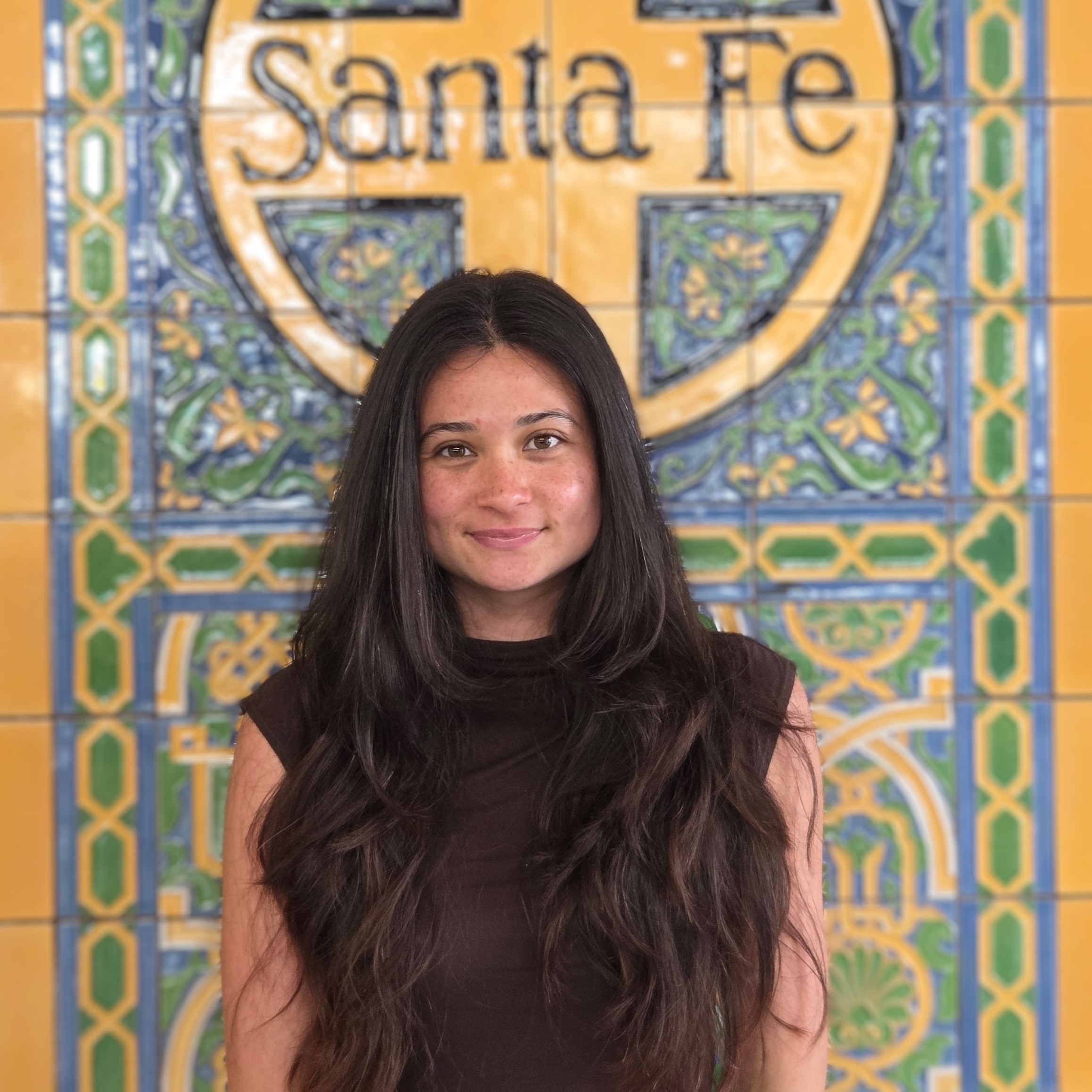
Aria is the Policy Manager at Circulate Planning & Policy. Prior to working at Circulate, Aria spent three years working as a legislative staffer in the United States Senate. She primarily worked on transportation and appropriations policy. Aria graduated from Washington University in St. Louis in 2022 with a double major in Global Studies and Finance. She also minored in Chinese Language and Culture.
During her free time, you can find her hiking, going to the beach, exploring new neighborhoods, and crocheting.
Aria Grossman's activity stream
-
Aria Grossman published Policy Letter: Comments on the Streets for All Program in Policy Letters 2026-11-13 10:58:05 -0800
Policy Letter: Comments on the Streets for All Program
Policy Letter: Comments on the Streets for All Program
Members of the Vision Zero Coalition sent a letter to the City making recommendations on the City's draft Streets for All Program manual. We are excited by the prospect of the program, and encourage the City to use this as an opportunity to ease the permitting burden and costs associated with implementing demonstration projects.
Read more -
Aria Grossman published Policy Letter: Balboa Park Master Plan Update Mobility Priorities in Policy Letters 2026-11-06 12:27:42 -0800
Policy Letter: Balboa Park Master Plan Update Mobility Priorities
Balboa Park Master Plan Update Mobility Priorities
The City of San Diego is beginning community engagement to inform its update to the Balboa Park Master Plan. Unfortunately, initial community engagement omitted any input on mobility improvements to and within the park. Circulate sent a letter to leaders urging them to seek input on priority mobility improvements.
Read more -
Aria Grossman published Vision Zero Coalition FY 2028 Budget Priorities in Policy Letters 2026-11-05 10:01:19 -0800
Policy Letter: Vision Zero Coalition FY 2028 Budget Priorities
Policy Letter: Vision Zero Coalition FY 2028 Budget Priorities
Every year, the Vision Zero Coalition advocates for the City to fund priorities to make city streets safer. This year, the Vision Zero Coalition is urging the Mayor and City Council to
- Fix the Fatal 15;
- Make streets near schools safer; and
- Invest in adequate safety staffing at the transportation department.
Achieving vision zero will require sustained investment in safer infrastructure. We urge the city council to build on our previous investments to work towards ending senseless deaths on our streets.
---
November 5, 2026
To:
Council President Joe LaCava
Council President Pro Tem Kent Lee
Councilmember Dr. Jennifer Campbell
Councilmember Stephen Whitburn
Councilmember Henry Foster
Councilmember Marni von Wilpert
Councilmember Raul Campillo
Councilmember Vivian Moreno
Councilmember Sean Elo-Rivera
SUBJECT: Vision Zero Coalition FY 2028 Budget Priorities
Dear Council President Joe LaCava and members of the San Diego City Council:
We write on behalf of the Vision Zero Coalition to outline our budget priorities for fiscal year (FY) 2028. These priorities will make it safer for children, older adults, and everyone else walking, biking, and rolling on San Diego streets. We urge you to name these requests in your budget priority memos and advocate for full funding of these priorities throughout the budget season.
1. Now is the time to invest in safety.
The Vision Zero Coalition is a group of organizations committed to ending senseless death by traffic violence on city streets. In 2015, when the City committed to a goal of zero traffic fatalities in ten years, 96 people were killed by traffic violence in the city.1 In 2025, 92 people were killed.2 We have a very long way to go, and it will take sustained investment to keep these promises.
Fortunately, the FY 2027 budget was a positive step in the right direction. This year’s budget requests build on this progress. We urge you to prioritize advocating for these requests to turn this momentum into sustained progress.
2. The City has the funds for Vision Zero investments.
While the City’s general fund is increasingly stretched thin, the Transportation Department’s budget continues to grow year over year. State and federal formula funding that flows to the city increases on an annual basis, and as such the funding environment for transportation priorities at the City is different from most other departments. It’s not a question of whether the City has the funds to make Vision Zero investments, it’s about how the Council and Mayor choose to prioritize the transportation funds we do have.
3. Fix the Fatal 15, the deadliest intersections in the city.
Eliminating traffic fatalities with limited resources requires data-driven prioritization.
Making the most dangerous hot spots safer is the most efficient way to make progress. The Fatal 15 intersections listed below have seen the highest rates of pedestrian and cyclist fatalities or serious injuries in the past ten years. The Vision Zero Coalition prioritizes improvements at dangerous areas for vulnerable road users, as collisions are more likely to result in serious injury or death.
The intersections below have all seen at least three crashes resulting in fatalities or serious injuries in the past ten years.
Intersection
District
Grand Ave & Kendall St
1
Garnet Ave & Haines St
1
Camino Del Rio West & Hancock St
2
Ollie St & Sports Arena Blvd
2
Camino Del Rio North & Qualcomm Way
3
54th St & Laurel St
4
54th St & Redwood St
4
63rd St & Imperial Ave
4
Genesee Ave & Linda Vista Road
7
Frazee Road & Friars Road
7
Beyer Way & Palm Ave
8
25th St & Market St
8
20th St & Market St
8
Fairmount Av & University Av
9
Gateway Dr & Home Ave
9
$1.5 million[1] should be dedicated to assessing and making improvements to the Fatal 15 intersections. Upgrades should consist of, but not be limited to:
• Stripes: Paint ladder or zebra stripes across the crosswalk for increased visibility
• Signal: Install a countdown signal with leading pedestrian intervals and audible prompts.
• Quick build curb extensions: Install quick build curb extensions, which improves pedestrian visibility while shortening the crossing and slowing turning vehicles.
• Daylighting: Paint curbs red in enhanced daylighting zones to improve visibility for pedestrians, cyclists, and motorists.
We request that each council office individually name each of the Fatal 15 intersections in your budget memos. Full funding of this entire list is important to achieving city-wide safety goals.
4. Invest in getting kids to school safely.
This past year saw tragic fatalities of school-aged children in and around schools. 11year-old Andrew Olsen was killed and his two siblings seriously injured while crossing the street on their way to school. Six-year-old Hudson O'Loughlin was killed while biking with his family one block away from Crown Point Elementary. The routes to and surrounding schools should be the safest in the City.
In response to these tragedies, Superintendent Bagula and the San Diego Unified School District published a report identifying priority traffic safety needs near schools.[2] The City of San Diego should set aside $2 million in the FY 2028 Transportation Department budget to implement the highest priority requests for signage, traffic calming, and visibility improvements that are within City right of way.
5. Employ sufficient staff dedicated to transportation safety.
Staffing within the Transportation Department reflects the City’s priorities. If the City wants to make progress towards achieving Vision Zero, it must have adequate staff dedicated to making streets safer. Staff dedicated to quick builds and complete streets improvements can make an outsized impact without leveraging additional CIP funds.
The City of San Diego has historically employed a 14-person Multi-Modal Team responsible for making complete streets improvements. The City Transportation Department has also repeatedly requested funding to establish a quick-build team. The FY 2028 budget should allocate funding to staffing the functions of both of these teams at the city in a permanent capacity. A full stand-alone Multi-Modal Team costs $2.56 million (14 FTEs), and a full stand-alone Quick Build Team costs $6.7 million (24 FTEs). A quick build team will be able to deliver the following five traffic calming projects for $3 million, at a fraction of the cost and time it would take through the CIP process.
• University Ave & Centre St Pedestrian Refuge (District Three) ($600,000)
• Meadowbrook Dr & Brookhaven Rd Roundabout (District Four) ($600,000)
• Alta View Dr. & Parkside Ave Roundabout (District Four) ($600,000)
• Del Sol Blvd & Piccard Ave Roundabout (District Eight) ($600,000)
• Del Sol Bl & Del Sur Bl Roundabout (District Eight ($600,000)
The quick build and multimodal teams will build on implementation of the speed management plan, which was funded in the FY 2027 budget and is currently lowering speed limits across the City. The next step in realizing the safety benefits of speed limit reductions is installing traffic calming infrastructure. Quick builds are the fastest and most cost-effective way to do so. Funding these dedicated safety teams will generate exponential safety returns on the city’s investment in speed reductions.
6. Conclusion
The FY 2027 budget demonstrated that the city has the funding and the will to make San Diego streets safer. We must build on last year’s successes if we want to make real progress towards vision zero. The requests outlined in this letter will keep us moving along this path. In addition to these requests the City must finalize budget-neutral safety policies like completing the updated Street Design Manual and the Bike Master Plan Update. These policies combined with dedicated funding will make progress towards achieving our shared goal of eliminating deaths on San Diego streets.
Sincerely,
Aria Grossman
Policy Manager
Circulate Planning & Policy
Laura Keenan
Co-Founder
Families for Safe Streets San Diego
Ian Hembree
Advocacy and Community Manager
San Diego County Bicycle Coalition
Israel Hernandez
Associate State Director, Advocacy
AARP California
Anar Salayev
Executive Director BikeSD
Chris Roberts
Transportation Team Lead SanDiego350
Katie Matchett
Beautiful PB
CC:
Mayor Todd Gloria
Bethany Bezak, City of San Diego Chief Operating Officer
Charles Modica, City of San Diego Independent Budget Analyst
Naomi Chavez, Interim Director, Transportation Department
Heidi Vonblum, Director, City Planning Department
Jordan More, Office of the Independent Budget Analyst
[1] Cost estimations are based on recent local Highway Safety Improvement Program applications from cities in the San Diego region.
[2] San Diego Unified School District, Building Safe Routes to School: Principal Survey Results by
Councilmember District (July 22, 2026), available at
https://www.sandiegounified.org/about/newscenter/all_news/traffic_safety_around_schools (last visited August 18, 2026).
-
Aria Grossman published PRESS RELEASE: Circulate Bill Becomes Law in Press Room 2026-09-29 15:35:16 -0700
Governor Newsom Signs the Affordable Homeownership Bonus Law, Circulate’s sponsored legislation to Build More Affordable Homes
PRESS RELEASE - FOR IMMEDIATE RELEASE
September 29, 2026
ContactColin Parent, (619) 567-6856, [email protected]
Governor Newsom Signs the Affordable Homeownership Bonus Law, Circulate’s sponsored legislation to Build More Affordable Homes
SAN DIEGO – Today, Governor Newsom signed the Affordable Homeownership Bonus Law (AB 2433) into law. The new law, authored by Assemblymember David Alvarez and sponsored by Circulate Planning & Policy, will boost homeownership, create more affordable homes, and streamline housing approvals.
The law reforms California Bonus Law, a state law that streamlines approvals by granting benefits to projects that build affordable homes. Bonus law is already California’s most utilized housing incentive program. The reforms just enacted by AB 2433 will take this already effective program and make it even more conducive to building more affordable homes more quickly.
“We are grateful to Governor Newsom for continuing to improve Bonus Law, the most effective housing streamlining law in California,” said Colin Parent, CEO and General Counsel of Circulate. “By the numbers, legislation to enhance this statute have created more housing approvals than any other legislation Governor Newsom has signed during his two terms.”
“The Affordable Homeownership Bonus Law will make it easier to build homes that working families can purchase,” said Assemblymember David Alvarez. “I thank Governor Newsom for signing this bill and for his commitment to housing that people can actually afford. Families in the South Bay and across California are waiting to buy their first home, and this law will help give them that opportunity."
"AB 2433 strengthens and improves a powerful tool for producing mixed-income and 100% affordable housing developments, both rental and for-sale. The measure builds on past success by incentivizing developers to include below market-rate homes in their apartment buildings and subdivisions while enhancing feasibility. We are grateful to Assemblymember Alvarez for his commitment to ensuring this program can be implemented seamlessly at the local level to produce the housing we need,” said Michael Lane, State Policy Director with SPUR.
"Assembly Bill 2433 is a critical step toward expanding the supply of affordable housing in the San Diego region and across California,” said San Diego Regional Chamber of Commerce President and CEO Chris Cate. “The bill addresses one of the most pressing challenges facing businesses in our region: attracting and retaining talent amid persistently high housing costs and a severe shortage of available homes. By expanding housing opportunities, this legislation helps strengthen our workforce and supports the long-term economic competitiveness of the San Diego region. We commend Assemblymember Alvarez for his leadership on this urgent issue and thank Governor Newsom for signing AB 2433 and delivering real advancements for housing affordability.”
“AB 2433 strengthens California’s Bonus Law by increasing incentives for affordable homes and streamlining project approvals. We applaud Governor Newsom for signing this important measure and thank Assemblymember Alvarez for his leadership,” said Inner City Law Center Policy Director, Mahdi Manji.
The bill’s reforms focus on boosting homeownership, creating more affordable homes, and streamlining approvals through the following policy reforms:
· Create More For-Sale Affordable Homes: Grants additional incentives to homebuilders creating deed-restricted for-sale homes for low- and moderate-income families.
· Deeply Affordable Housing: Ensures that homebuilders can deed-restrict their units at levels more affordable than the levels outlined in statute. This will ensure that 100 percent affordable homebuilders can access the full stacked bonus available under AB 1287.
· Streamlining Approvals: Streamlines the approval process for homebuilders to make sure that homes are approved more quickly and face less barriers. Policy reforms include making benefits automatic, reaffirming the non-discretionary approval of benefits, and clarifying that Bonus Law projects receive development certainty after their initial application.
California Bonus Law has strong roots in San Diego. Bonus Law has been on the books since 1979, but has only been widely effective in recent years, thanks in part to reforms born and bred in San Diego. Mayor Falconer adopted an enhanced bonus in the City of San Diego. In 2020, Circulate sponsored this policy for statewide adoption, with AB 2345 (Gonzalez). Circulate later worked with Assemblymember Alvarez to enact AB 1287 in 2023, which created an additional bonus. The adoption of AB 2433 is now the third successful enhancement to Bonus Law sponsored by Circulate.
Earlier this year, Circulate published a report “Win-Win Bonus,” which details how Bonus Law has become the most widely used law for housing streamlining in California. For example, in 2024, Bonus Law was used ten times more than all other streamlining laws combined. AB 2433 makes further enhancements to this successful law.
Circulate Planning & Policy sponsored AB 2433 with the San Diego Regional Chamber of Commerce, SPUR, the Inner City Law Center, and the Greenbelt Alliance.
###
A downloadable PDF version can be found here.
-
Aria Grossman published Policy Letter: Support for Airport Transit Connection in Policy Letters 2026-09-17 11:07:50 -0700
Policy Letter: Support for Airport Transit Connection
Policy Letter: Support for Airport Transit Connection
Circulate has advocated for a rail connection to San Diego International Airport since 2018. Our advocacy efforts have resulted in slow but sure progress. As SANDAG's Transportation Committee is set to consider next steps, we sent a letter detailing why continued progress is urgent.
-
Aria Grossman published Policy Letter: Opposition to Restrictions on Autonomous Vehicles in Policy Letters 2026-09-15 09:07:19 -0700
Policy Letter: Opposition to Restrictions on Autonomous Vehicles
Policy Letter: Opposition to Restrictions on Autonomous Vehicles
Circulate joined a coalition of organizations writing in opposition to proposed restrictions on autonomous vehicles. Human error is the leading cause of traffic related severe injuries and fatalities. Autonomous vehicles take human error out of the equation, and as such are demonstrated to be significantly safer than human drivers. These vehicles will help San Diego make progress towards reaching its vision zero and mobility goals.
-
Aria Grossman published Policy Letter: Vision Zero Coalition Writes in Support of Encinitas Red-Light Camera Proposal in Policy Letters 2026-09-04 12:24:01 -0700
Policy Letter: Vision Zero Coalition Writes in Support of Encinitas Red-Light Camera Proposal
Policy Letter: Vision Zero Coalition Writes in Support of Encinitas Red-Light Camera Proposal
The Vision Zero Coalition sent a letter to the Encinitas City Council urging adoption of a proposal to pilot a red-light camera program. Right-light cameras are known to significantly reduce reckless and dangerous driving behavior. The program would be established under SB 720, new legislation overhauling the state's Red-Light Camera framework with improved liability and oversight provisions.
-
Aria Grossman published Policy Letter: Circulate Supports the Midway Rising Housing and Community Revitalization Act in Policy Letters 2026-08-27 09:04:08 -0700
Policy Letter: Circulate Supports the Midway Rising Housing and Community Revitalization Act
Policy Letter: Circulate Supports the Midway Rising Housing and Community Revitalization Act
Circulate sent a letter in support of SB 344, the Midway Rising Housing and Community Revitalization Act. This bill would create a path for the Midway Rising Development project to move forward in San Diego. Under this bill, once the City Council approves the project's environmental impact report, builders can move forward with building the homes San Diego desperately needs.
-
Aria Grossman published Policy Letter: Circulate Joins Statewide Coalition Advocating for Housing and Transit Funding in Policy Letters 2026-08-13 15:32:42 -0700
Policy Letter: Circulate Joins Statewide Coalition Advocating for Housing and Transit Funding
Policy Letter: Circulate Joins Statewide Coalition Advocating for Housing and Transit Funding
Circulate continues to push decisionmakers at the state level to uphold funding commitments for critical housing and transit programs. Absent action by the legislature, California will lose out on billions to help meet our housing and climate goals.
-
Aria Grossman published Why Circulate Planning & Policy Supports Prop 45 in Blog 2026-08-03 12:31:04 -0700
Why Circulate Planning & Policy Supports Prop 45
Why Circulate Planning & Policy Supports Prop 45
California's cost of living is out of control because our outdated system for approving essential projects is too slow, too bureaucratic, and too costly—making it harder to build the housing, transit, and other infrastructure our communities depend on. These unnecessary delays drive up costs for families, businesses, and taxpayers while making California less affordable for everyone.
That's why Circulate supports Prop 45, the Building an Affordable California Act on the November 2026 ballot.
Prop 45 creates clear, enforceable timelines for environmental review, agency permitting, and judicial review for eligible projects. Rather than allowing projects to become trapped in years of bureaucratic delay and costly litigation, Prop 45 establishes accountability from application through final court decisions. By creating certainty throughout the approval process, the measure is expected to accelerate essential projects by 2 to 10 or more years, reducing costs and delivering benefits to Californians sooner.
Just as importantly, Prop 45 does not eliminate environmental review or weaken environmental protections. Every eligible project must still comply with the California Environmental Quality Act (CEQA) and all applicable federal, state, and local environmental laws and regulations. The measure simply ensures that environmental review, permitting decisions, and any legal challenges are completed within reasonable, enforceable deadlines instead of dragging on indefinitely.
For too long, unnecessary delays have increased the cost of nearly everything Californians rely on. Permitting delays can add years to building timelines, forcing families to wait even longer to realize the benefits of affordable housing. Further, permitting delays alone add more than $75,000 to the cost of a new home. Prop 45 cuts unnecessary red tape, lowers project costs, and helps deliver the infrastructure Californians need faster. This means California will be able to more quickly deliver affordable housing that strengthens our communities and economy.
Prop 45 also preserves local control. Cities and counties retain their authority to approve or deny projects, and Californians continue to have meaningful opportunities to participate throughout the project approval process. The measure creates a process that is faster, fairer, and more predictable—not one that sacrifices accountability or environmental protections.
More than 145 organizations representing affordable housing, healthcare, water providers, agricultural producers, clean energy leaders, social justice advocates, and small business leaders support Prop 45 because California cannot afford to keep delaying the essential projects that improve quality of life and make our state more affordable.
California deserves a permitting system that protects the environment and delivers the infrastructure families, workers, businesses, and communities need.
Learn more about Prop 45 at: www.YesOnProp45.com
-
Aria Grossman published PRESS RELEASE - Circulate Planning & Policy Statement on Transit Fare Increase in Press Room 2026-07-17 10:46:50 -0700
PRESS RELEASE - Circulate Planning & Policy Statement on Transit Fare Increase
PRESS RELEASE - FOR IMMEDIATE RELEASE
July 17, 2026
Contact
Aria Grossman, [email protected]
Circulate Planning & Policy Statement on Transit Fare Increase
SAN DIEGO—Today, the San Diego Association of Governments (SANDAG) voted to increase fares across the Metropolitan Transit System (MTS) and North County Transit District (NCTD) systems. Beginning on October 1, a standard one-way MTS trip will cost $3 and a monthly pass will cost $85. Riders eligible for Senior, Disabled, Medicare, and Youth discounted fares will pay $28 for a monthly pass.
“Making it more expensive to ride transit is never ideal, but this fare increase is necessary to maintain the levels of transit service that San Diego residents rely on,” said Aria Grossman, Policy Manager at Circulate Planning & Policy. “Raising fares was the only way to avoid reducing transit service, a trade off that transit riders time and time again say they prefer.”
The fare increases were adopted through an amendment to the Comprehensive Fare Ordinance. The amendment maintains long-standing fare affordability measures that Circulate has advocated for, like free transfers and fare capping. Using fare capping, riders can purchase individual daily rides, and never pay more than the cost of a daily and monthly pass. MTS and NCTD are also developing a Low-Income Fare Eligible (LIFE) Program, which will also maintain current fare levels for certain eligible riders.
Fares are set to increase one additional time on October 1, 2027. While necessary, these fare increases are only a temporary solution. MTS and NCTD will need to come up will additional revenue streams to address long-term deficits. As they seek long-term solutions, MTS and NCTD must identify funding measures that do not further burden riders, like ballot measures, seeking state operations funding, and creative advertising strategies.
About Circulate Planning & Policy
Circulate Planning & Policy is a nonprofit think tank based in San Diego, dedicated to advancing mobility and making the region a better place to move, work, and play. Our work focuses on creating great mobility choices, more walkable and bikeable neighborhoods, and land uses that promote sustainable growth. For more information, visit CirculateSD.org.
###
-
Aria Grossman published Comments on the Proposed Residential Rental Fee Ordinance in Policy Letters 2026-06-29 17:12:15 -0700
Policy Letter: Comments on the Proposed Residential Rental Fee Ordinance
Policy Letter: Comments on the Proposed Residential Rental Fee Ordinance
Circulate sent a letter commenting on Councilmember Elo-Rivera's proposed Residential Rental Price Gouging Fee Exploitation and Cost Transparency Ordinance. The proposal would cap rental fees. However, in some case where parking fees are required to be unbundled from rent, this would cap the fees below market rate and undermine the parking policy's intended equity and environmental intentions.
-
Aria Grossman published PRESS RELEASE - San Diego City Council-Passed Budget to Advance Vision Zero in San Diego in Press Room 2026-06-11 15:11:19 -0700
PRESS RELEASE - San Diego City Council-Passed Budget to Advance Vision Zero in San Diego
PRESS RELEASE - FOR IMMEDIATE RELEASE
June 9, 2026Contact
Aria Grossman, (619) 736-0072, [email protected]
San Diego City Council-Passed Budget to Advance Vision Zero in San Diego
SAN DIEGO—Today, the San Diego City Council advanced a FY 2027 budget that makes strong progress towards Vision Zero in San Diego. The budget includes funding for two of the Vision Zero Coalition’s longstanding priorities: fixing the Fatal 15 and implementing the Speed Management plan. The budget also includes funding to maintain the Multi-Modal Team, which the initial draft budget proposed eliminating in its entirety.
Thanks to the strong leadership of Council President LaCava, Councilmember Whitburn, and Councilmember Campillo, the budget adopted by the Council today maintains the Multi-Modal Team, a team of engineers dedicated to making San Diego streets safer.
"Traffic safety is a public safety issue,” said Councilmember Raul Campillo. “Safe streets keep people alive in my district every day. Today, my colleagues and I ensured that we don't go back on our commitment to safety for our young people, seniors, and everyone who moves through the city. I will continue fighting to ensure we are doing everything possible to keep our residents safe, especially our children as they travel to and from school."
“Street safety is public safety. Throughout this budget cycle I have been committed to funding Vision Zero,” said Council President Joe LaCava. “The safety measures included in today’s budget advance the shared priorities the coalition and I hold by making driving, walking, and cycling safer. The recent tragedies in my district are a painful, and constant reminder why we must continue making these critical investments.”
“As Chair of the City of San Diego's Active Transportation and Infrastructure Committee, I know how much families depend on safe, well-designed streets, whether they are biking to school, walking to a neighborhood park, or simply getting around their community”, said Councilmember Stephen Whitburn. “I am proud that today's budget restores the Multimodal Team and invests in the Fatal 15 and Speed Management Plan. Thank you to Circulate Planning & Policy, Families for Safe Streets, and the entire Vision Zero Coalition for their persistent advocacy and for never ceasing to make the case for the safety of San Diego families."
The budget includes the following highlights for traffic safety:
- $551,000 to make necessary improvements to the Fatal 15, the 15 deadliest intersections in the City.
- $2.4 million to implement the speed management plan, which would slow speeds near schools and in targeted safety corridors.
- $1.45 million to maintain the Multi-Modal Team within the Transportation Department. This team designs safety improvements like crosswalks, stop signs, and bike lanes that make our neighborhoods safer.
“This budget represents a strong commitment by the City Council to prioritize traffic safety,” said Aria Grossman, Policy Manager at Circulate Planning and Policy. “Making sure that our streets are safe for drivers, pedestrians, and cyclists is a core city responsibility. However, too often, the safety of those who walk and roll is treated as a nice to have. The budget passed today reflects a commitment to building a city that is safe for all road users.”
“I lost my husband to a preventable traffic crash, and through Families for Safe Streets San Diego I’ve met far too many families whose lives have been forever changed by traffic violence. Today’s decision is an investment in preventing future tragedies and making our streets safer for everyone. We’re grateful the City Council chose to preserve the team responsible for designing the safety improvements that help save lives,” said Laura Keenan, Co-Founder, Families for Safe Streets San Diego.
“The budget passed by the San Diego City Council affirms a fundamental truth, that traffic safety is public safety,” said Ian Hembree, Advocacy and Community Manager for the San Diego County Bicycle Coalition. “The residents of America’s Finest City deserve a transportation system that enables safe choices to get around. Kids riding their bikes to school, seniors walking to church, and adults traveling to work will be safer because of the priorities identified in this year’s budget.”
“We are deeply grateful to all the advocates that continue to demand safer streets, cleaner air, and a more livable San Diego,” Anar Salayev, Executive Director of BikeSD, shared. “A budget reflects our values, and I am glad to see that our City’s leaders value traffic safety. This last-minute decision to ensure the preservation of the multimodal team is significant and a step towards protecting our citizens. I look forward to seeing their good work around our beautiful city.”
###
-
Aria Grossman published Policy Letter: SANDAG's SB 79 Obligations in Policy Letters 2026-05-29 13:17:37 -0700
Policy Letter: SANDAG's SB 79 Obligations
Policy Letter: SANDAG's SB 79 Obligations
Circulate joined a coalition of organizations in sending a letter to SANDAG outlining its obligations under SB 79. The letter identifies transit corridors and stations that legally qualify under SB79 to inform SANDAG's upcoming implementation map.
-
Aria Grossman published Policy Letter: Support for SB 1292 in Policy Letters 2026-05-26 14:53:41 -0700
Policy Letter: Support for SB 1292
Policy Letter: Support for SB 1292
Circulate sent a letter in support for SB 1292 (Richardson). This legislation would allow eligible cities to opt into an enhanced curb management framework. By allowing local jurisdictions to utilize stationary camera systems for parking enforcement and automated payment collection, this bill provides a tool to reduce congestion, improve safety, and optimize curb usage.
-
Aria Grossman published Policy Letter: 21st Century ROAD to Housing Act in Policy Letters 2026-05-19 13:54:28 -0700
Policy Letter: 21st Century ROAD to Housing Act
Policy Letter: 21st Century ROAD to Housing Act
Circulate joined nationwide coalition partners in helping to improve and advance the 21s Century Road to Housing Act. We are excited to be able to continue working with partners across the country to pass pro-housing federal legislation!
-
Aria Grossman published Policy Letter: Vision Zero Advocates Outline Ways to Fund Traffic Safety in FY 2027 in Policy Letters 2026-05-13 12:55:37 -0700
Policy Letter: Vision Zero Advocates Outline Ways to Fund Traffic Safety in FY 2027
As the Mayor plans to eliminate a critical traffic safety team within the Transportation Department, safety advocates propose ways to fund this team without impacting the general fund.
-
Aria Grossman published Policy Letter: Safety Advocates Response to the Mayor's FY 2027 Budget Proposal in Policy Letters 2026-05-01 11:16:20 -0700
Policy Letter: Safety Advocates Response to the Mayor's FY 2027 Budget Proposal
Policy Letter: Safety Advocates Response to the Mayor's FY 2027 Budget Proposal
Safety, mobility, climate, business, and community advocates sent a letter to the Mayor and City Council in response to the mayor's draft FY 2027 budget. While the budget contains some of the Vision Zero Coalition's priorities, it also takes a major step back in proposing the elimination of the Multi-Modal team. This team is responsible for critical complete streets work that makes San Diego safer.
-
Aria Grossman published Policy Letter: Maintain Funding for Critical Housing and Transit Projects in Policy Letters 2026-05-01 11:03:44 -0700
Policy Letter: Maintain Funding for Critical Housing and Transit Programs
Policy Letter: Maintain Funding for Critical Housing and Transit Programs
Circulate joined partner organizations in calling on the California Air Resources Board (CARB) to revisit proposed amendments to a critical climate program. The proposed amendments would put funding for critical housing and transit programs, like the Affordable Housing and Sustainable Communities Program and the Transit and Intercity Rail Capital Program, at risk.
-
Aria Grossman published Vision Zero Coalition Bike Master Plan Update Comments in Policy Letters 2026-04-30 16:57:58 -0700
Policy Letter: Vision Zero Coalition Bike Master Plan Update Comments
This week, Circulate and the Vision Zero Coalition sent a letter to City officials commenting on the City's bike master plan update.
